Monday, September 30, 2013
CONGRESS KEEPS ITS SUBSIDIES


Friday, September 20, 2013
OBAMACARE: separating fact from fiction in the Affordable Care Act (ACA)
On 20 September 2013, President Obama stated that Obamacare would enable millions of Americans who were locked out of the system to get quality health care. He did not mention Section 10320 of the Affordable Care Act (ACA) that can be implemented when the government feels that costs are getting too high -- at this point the Indpendent Payment Advisory Board (IPAB) is enabled by law to bypass Congress and simply eliminate or disqualify specific services from coverage. While we understand the fiscal imperatives of this Section of the ACA we also feel that the public should be properly advised how such a provision might work, for instance, insulin injections for patients over 80 years of age could be denied payment, so could dialysis coverage for patients over 75 years old, or surgery for brainstem tumors in children. When push comes to shove, it will be of interest to notice if there's equity in denials of care, for instance, will Congressional representatives and staff be subject to the same denials of coverage that will be imposed on rank and file citizens? These questions have come to the surface since our original posting. The ACA under the IPAB Section is empowered to delete coverage under the act, not to tell citizens they can't pay independently for care denied coverage under the ACA. For many patients denial of coverage is tantamount to denial of care.
Previously, we've touched upon whether or not Obamacare (ACA) exempts Congress and staff from the full effect of the law as Representative Jim Jordan, R-Ohio, claimed in his August 8th statement which asserted that Congress was getting "special treatment." Jordan stated that Obamacare "exempted Congress and their staff from the full effect of the law." True or not?
The Office of Personnel Management says that the federal government usually pays around 75% of employees' health insurance premiums. Newly issued rules regarding payment of employees' health plans bought on the exchange won't be more than the government's contribution for other federally insured workers. Congressional representatives will decide who is employed by the "official office" as opposed to Congressional committees -- the former will be obliged to buy insurance from the exchanges whereas staffers retained by committees will not be obligated to buy from the exchanges. The group hired directly by a Congressional office will be eligible for up to 75% reimbursement or contribution to premium costs. The fact is that "all full-time and part-time employees employed by the official office of a Member of Congress" will be obliged to buy insurance through the exchanges. These employees are eligible for the Congressional co-pay which the Office of Personnel Management says is between 72 and 75% of its employees' health insurance premiums.
So what's the uproar about? It is clear that there is a difference in how Congressional employees get treated under the ACA. A large part of the credit or blame for this difference goes to Senator Grassley's amendment to the ACA: it was Senator Grassley whose amendment specified that Congressional staffers "fully participate in the exchange by picking a plan, paying for it on their own, and perhaps qualifying for subsidies (italics added)." This reference to "subsidies" bothers Jordan and others who believe that the ACA is not equitable. The fact is that others besides Congressional employees will also be entitled to subsidies. Hence, the ACA is equitable although it may be more expensive than had been originally envisioned. It is also doubtful that Congressional persons will ever suffer from arbitrary decisions by the IPAB.
In a nutshell, Congress and staff are not exempt from the ACA. Co-pays and subsidies are allowed but are not limited to Congress and staff.
My opinion: Grassley intended his amendment to be a poison pill that Democrats wouldn't swallow. He was wrong. The Democrats gulped it down and then shoved it down Republican throats. The real problems will be access to coverage for care. The ACA creates employment worries about full-time versus part-time employment, secretive denials of care by the IPAB under the guise of fiscal restraint whereby specific services are denied or made subject to increasingly onerous rules and regulations. Rising private insurance coverage costs with increasingly higher required deductibles are expected, e.g., middle America will find itself trapped between policies that cover too little and adequate private coverage that costs too much and requires high deductibles. In this scenario, the only winners are the insurance companies.
Credits: Paige Robbins was Chief Research Associate for this piece.
References: The Plain Dealer, PolitiFact.com; News release, Jim Jordan, 8/08/13; Lima News, "Jordan said challenging Obamacare is his top priority," 8/14/13; Office of Personnel Management press release, 8/07/13; News release, Sen. Charles Grassley, "Grassley amendment makes Congress obtain coverage from health care plan established in reform bill," 9/30/09.
My opinion: Grassley intended his amendment to be a poison pill that Democrats wouldn't swallow. He was wrong. The Democrats gulped it down and then shoved it down Republican throats. The real problems will be access to coverage for care. The ACA creates employment worries about full-time versus part-time employment, secretive denials of care by the IPAB under the guise of fiscal restraint whereby specific services are denied or made subject to increasingly onerous rules and regulations. Rising private insurance coverage costs with increasingly higher required deductibles are expected, e.g., middle America will find itself trapped between policies that cover too little and adequate private coverage that costs too much and requires high deductibles. In this scenario, the only winners are the insurance companies.
Credits: Paige Robbins was Chief Research Associate for this piece.
References: The Plain Dealer, PolitiFact.com; News release, Jim Jordan, 8/08/13; Lima News, "Jordan said challenging Obamacare is his top priority," 8/14/13; Office of Personnel Management press release, 8/07/13; News release, Sen. Charles Grassley, "Grassley amendment makes Congress obtain coverage from health care plan established in reform bill," 9/30/09.
AB 1376 DESERVES SUPPORT ...
This bill is intended to make sure that the California workers' comp system continues to have enough interpreters to enable access to care for injured workers who are obliged to rely on interpreters to explain the details of their injuries, how they were incurred, what impairments have been caused, and what level of disability is being experienced. It seems like an easy call -- vote for the bill. In fact, the California legislature did vote for the bill. It passed handily without significant opposition. Now it sits on the Governor's desk as an item of enrolled but not signed legislation. We recommend that Governor Brown sign AB 1376.
Saturday, August 31, 2013
Nurse practitioner bill, SB 491 (Hernandez), is down but not out
In part because of its own hypocrisy, the nurse practitioner bill has for the present taken an inglorious swan dive. Nonetheless, we believe it'll come to the surface again. But first, let's get to the juicy hypocrisy.
Political readers on healthcare will no doubt recall the nurses' efforts this summer to stop schools from allowing teachers and parents to administer insulin injections to diabetic students. The argument the nurses used was that teachers and parents weren't educated and trained to recognize when insulin injections should be given, what harm might occur were such injections not timely given or withheld, and what adverse side-effects might be expected, let alone treated. It was a "safety" issue, nothing to do with job preservation.
Physicians identified with these arguments because these arguments were the same that the physicians' lobbies were using to fend off passage of SB 491 (Hernandez). That the nurse practitioner lobby let itself use these arguments on one hand while arguing against them on the other hand turned out to be the very essence of poor political timing. We doubt they'll repeat the mistake when the bill resurfaces which, in due course, we think it will. So the word we issue to the CMA and its allies is CAVE CANEM (beware of the dog, the sign that was found in the Roman rubble of an ancient eruption of Mt. Vesuvius).
Physicians identified with these arguments because these arguments were the same that the physicians' lobbies were using to fend off passage of SB 491 (Hernandez). That the nurse practitioner lobby let itself use these arguments on one hand while arguing against them on the other hand turned out to be the very essence of poor political timing. We doubt they'll repeat the mistake when the bill resurfaces which, in due course, we think it will. So the word we issue to the CMA and its allies is CAVE CANEM (beware of the dog, the sign that was found in the Roman rubble of an ancient eruption of Mt. Vesuvius).
In essence, relying on the idea that Obamacare will cause a shortage of physicians, emboldened by Senator Hernandez' willingness to take on the traditional physicians' organizations, the nurse practitioners (NPs) sought the right to practice at levels beyond their education and training and to do so without physician supervision. One argument the NPs used was the shortage of sophisticated medical care in rural areas. What they didn't say was that the NPs would actually populate these areas and stay there. They didn't promise to accept lower pay, either. In fact, why should they? If the NPs are licensed to practice medicine as physicians, shouldn't they then be entitled to equivalent remuneration? That, we say, would be the logical next step for the nursing lobby. But first it was necessary to get SB 491 passed and signed into law. That is why it's inevitable that the NPs will try again sooner or later.
The California Medical Association (CMA) successfully argued that quality and safety in medical care was dependent upon proper education and training. Physicians well know that it's hard enough to make diagnoses and render treatment even with 12 to 15 years of college, medical school, and advanced internship and residency training.
The Union of American Physicians and Dentists (UAPD) weighed in heavily on the side of the CMA. The UAPD and the CMA acknowledged the importance of nurse practitioners but stopped short of allowing their level of education and training to be legislated as equivalent to physicians' level of education and training. Both organizations argued that the right way to fix anticipated physician shortage problems would be to expand post-graduate residency training positions for newly minted physicians and to expand the number of medical schools. The key is to provide "properly trained individuals," not simply to invoke a "quick fix" by giving higher priority to the number of licensed professionals as opposed to the quality of the education and training of those professionals.
Other organizations that helped to oppose SB 491 included the California Neurology Society (CNS), California Academy of Family Physicians, Diabetes Coalition of California, California Society of Anesthesiologists, Blind Children's Center, California Academy of Eye Physicians and Surgeons, American Society of Ophthalmic Plastic and Reconstructive Surgery, Latino Physicians of California, Chinese Medical Dental Association, Let's Face it Together, Minority Health Institute, Dream Machine Foundation, Canvasback Missions, Lighthouse Mission, Time for Change Foundation, Here 4 Them, Osteopathic Physicians and Surgeons, etc (if we've left out your organization, just let us know).
References
See our blog of 6 August 2013 and references
The Daily Journal, San Mateo County, "A Slipper (sic) Slope Indeed," Robert L. Weinmann, MD, 8/13/13
Sacramento Bee, "Expanding role of nurses a recipe for malpractice lawsuits," Robert L. Weinmann, MD, 4/24/13
Sacramento Bee, "Expanding role of nurses a recipe for malpractice lawsuits," Robert L. Weinmann, MD, 4/24/13
Tuesday, August 6, 2013
New Post on Obamacare IPAB (Section 10320, ACA) is in preparation -- we are endeavoring to expose the latest Congressional dodges none of which are a surprise to political pundits, e.g., congressional subsidies to cover themselves. Nevertheless, we're still looking into it. We had intended to cover Bill Clinton's talk on the ACA this September 4th, but we didn't find what he said especially revealing, not up to his own standard. We heard him say the expected about persons not currently covered but didn't notice any emphasis on how the program is expected to tout high-deductible policies or that Middle Income people will watch their rates rise in order to finance the newly covered. Our background research continues -- don't hesitate to comment directly to our blog if you wish. -- rlw, editor, www.politicsofhealthcare.com
SB 491 (Hernandez) Gets Stopped in Assembly Committee on Business Professions and Consumer Protection
A united coalition including the California Medical Association (CMA), the Union of American Physicians and Dentists (Local 206 of the American Federation of State, County, and Municipal Employees, AFL-CIO), the California Society of Physical Medicine and Surgery (CSPM&R), the California Neurology Society (CNS), and several others helped to convince the committee that allowing healthcare professionals, no matter how well intentioned, to practice beyond their levels of education and training was unwise and a recipe for disaster. Accordingly, SB 491 failed today to clear the Assembly Committee on Business Professions and Consumer Protection. The name of the game was consumer protection.
In one of our previous blogs we pointed out that nurses and/or nurse practitioners (NPs), once enfranchised to practice medicine without physician supervision, already well disciplined and organized into a proper union would be well poised to negotiate for equal pay. It was not expected that the newly enfranchised nurses would rush to the hinterlands of California where medical back-up in the form of well trained physicians and surgeons would be lacking or that the nurses would rush to places where resources and money were scarce.
One should not expect the nurses to quit this quest. A new campaign should be expected as soon as the old wounds have healed and their regenerative powers have been regained.
References and a footnote
"SB 491 (Hernandez) clears committee," www.politicsofhealthcare.com, 5/17/13
"If the work is equal, shouldn't the pay be equal?" www.politicsofhealthcare.com, 4/26/13
"No, no, no on SB 491, 492, 493," www.politicsofhealthcare.com, 4/18/13
Footnote: notice that in this instance an AFL-CIO union was on the same side as the CMA and other traditional physician organizations -- editor.
A united coalition including the California Medical Association (CMA), the Union of American Physicians and Dentists (Local 206 of the American Federation of State, County, and Municipal Employees, AFL-CIO), the California Society of Physical Medicine and Surgery (CSPM&R), the California Neurology Society (CNS), and several others helped to convince the committee that allowing healthcare professionals, no matter how well intentioned, to practice beyond their levels of education and training was unwise and a recipe for disaster. Accordingly, SB 491 failed today to clear the Assembly Committee on Business Professions and Consumer Protection. The name of the game was consumer protection.
In one of our previous blogs we pointed out that nurses and/or nurse practitioners (NPs), once enfranchised to practice medicine without physician supervision, already well disciplined and organized into a proper union would be well poised to negotiate for equal pay. It was not expected that the newly enfranchised nurses would rush to the hinterlands of California where medical back-up in the form of well trained physicians and surgeons would be lacking or that the nurses would rush to places where resources and money were scarce.
One should not expect the nurses to quit this quest. A new campaign should be expected as soon as the old wounds have healed and their regenerative powers have been regained.
References and a footnote
"SB 491 (Hernandez) clears committee," www.politicsofhealthcare.com, 5/17/13
"If the work is equal, shouldn't the pay be equal?" www.politicsofhealthcare.com, 4/26/13
"No, no, no on SB 491, 492, 493," www.politicsofhealthcare.com, 4/18/13
Footnote: notice that in this instance an AFL-CIO union was on the same side as the CMA and other traditional physician organizations -- editor.
Subscribe to:
Posts (Atom)
Subscribe To


 Posts
All Comments
Posts
All Comments
Subscribe by RSS
Posts
All Comments
View My LinkedIn Profile

About Me
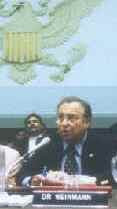
- Robert Weinmann
- San Jose, California, United States
- Writing in Neurology Today, Vol. 3 (8), August 2003, Dawn Antoline writes "Robert L. Weinmann, MD, has never been one to shy away from controversy. Whether he is writing muckraking editorials about HMOs that deny physician claims or ... billing practices ... he has committed himself to a life of activism. At the heart of his advocacy is a passionate regard for his patients -- and the ability of physicians to provide unfettered optimal care."