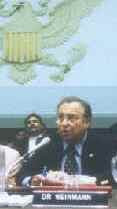
The Multiple Assassinations of Robert F. Kennedy
Most followers of the assassination of RFK know about two principal arguments that cast doubt on the official version of this event, namely, that Sirhan Bishara Sirhan, as a lone gunman, shot RFK. The first disputable evidence that any of Sirhan's shots could have done the damage is that Sirhan was in front of RFK. The second disputable evidence is that it is still claimed that more than 8 shots were fired -- important because Sirhan's gun was a revolver with a maximum of 8 shots. If there were more than 8 shots, the reasonable assumption would be that there was another shooter. We know that CNN is covering the story and have advised that their reporters study the original autopsy and pathology reports. It is no secret, in fact, it has been known for years, that the kill shot penetrated RFK's skull behind the right ear -- maybe from only inches away. We need to ask if the autopsy showed evidence of a close-up gun shot wound behind the right ear.
We have eyewitness testimony that cannot be accepted without study because so many years have passed since the shooting and since the testimony was originally offered. On the other hand, if it can be shown beyond reasonable doubt that more than 8 shots were fired, the "lone gunman" theory bites the dust and gives rise to a bona fide "conspiracy" theory -- with all of the conspirators having fled the coop, leaving Sirhan holding the bag alone.
That leaves the following question as the critical mass: does the autopsy report and any pathology reports that followed establish with reasonable medical and legal probability that the kill shot was delivered from behind and that the area of penetration was behind RFK's right ear? When the kill shot is fired from close enough, gunshot residue may be present.
If that's correct, not only is the lone gunman theory gone, but so are the other perpetrators and most of those who may've helped to curtail whatever investigation might have been appropriate at the time.
Never mind. It's never too late to learn the truth. We owe that to history.
Monday, April 30, 2012


Wednesday, April 25, 2012
CONSUMER ATTORNEYS WIN ONE WHILE APPLICANTS' ATTORNEYS, DOCTORS, AND PATIENTS LOSE, AGAIN!
In our post of 4/21/2012 we indicated favorable consideration for two bills that would alter Utilization Review practices. We indicated why we felt that AB 1848 (Atkins) was the stronger of the two bills. We're now informed that the Atkins' bill has been withdrawn. AB 1687 (Fong) now stands alone.
Our take:
In a letter from the Consumer Attorneys of California (CAC), 19 April 2012, the following is stated: "AB 1848 (Atkins) creates unnecessary, but very harmful, hurdles for medical experts seeking to testify on behalf of injured Plaintiffs."
In a not surprising nod to the CAC, it is understood that Committee Chair Hayashi is not likely to recommend passage of AB 1848. In a nutshell, that means her committee doesn't have the votes to pass it. The bill dies, more likely than not, for the rest of the year (a rules change may be required to revive it).
The Achilles' Heel in the Atkins bill is probably not having limited it to Utilization Review in Workers Comp. Its far reaching effects extend beyond the legislative interests of the California Applicants' Attorneys Association (CAAA) which deals with injured workers and beyond the interests of the California Society of Industrial Medicine and Surgery (CSIMS) which was the chief sponsor of AB 584 (Fong) which Governor Brown vetoed last year.
What is still needed is a requirement that doctors who do Utilization Review (UR) for injured workers in California and who have the power to delay or deny care or even to modify care be obliged to meet the same requirements as the treating doctors who are required in California to be licensed and who are obliged to take a 12 hour pain management course (not required if one doesn't have a California license to begin with). An appropriate amendment could still be added to AB 1687 (Fong) as long as it's clear that the application is for UR for industrial medicine (injured workers) and does not apply to personal injury litigation.
Stay tuned. More to come, for sure!
In our post of 4/21/2012 we indicated favorable consideration for two bills that would alter Utilization Review practices. We indicated why we felt that AB 1848 (Atkins) was the stronger of the two bills. We're now informed that the Atkins' bill has been withdrawn. AB 1687 (Fong) now stands alone.
Our take:
In a letter from the Consumer Attorneys of California (CAC), 19 April 2012, the following is stated: "AB 1848 (Atkins) creates unnecessary, but very harmful, hurdles for medical experts seeking to testify on behalf of injured Plaintiffs."
In a not surprising nod to the CAC, it is understood that Committee Chair Hayashi is not likely to recommend passage of AB 1848. In a nutshell, that means her committee doesn't have the votes to pass it. The bill dies, more likely than not, for the rest of the year (a rules change may be required to revive it).
The Achilles' Heel in the Atkins bill is probably not having limited it to Utilization Review in Workers Comp. Its far reaching effects extend beyond the legislative interests of the California Applicants' Attorneys Association (CAAA) which deals with injured workers and beyond the interests of the California Society of Industrial Medicine and Surgery (CSIMS) which was the chief sponsor of AB 584 (Fong) which Governor Brown vetoed last year.
What is still needed is a requirement that doctors who do Utilization Review (UR) for injured workers in California and who have the power to delay or deny care or even to modify care be obliged to meet the same requirements as the treating doctors who are required in California to be licensed and who are obliged to take a 12 hour pain management course (not required if one doesn't have a California license to begin with). An appropriate amendment could still be added to AB 1687 (Fong) as long as it's clear that the application is for UR for industrial medicine (injured workers) and does not apply to personal injury litigation.
Stay tuned. More to come, for sure!
Tuesday, April 24, 2012
POISON PILLS AND HOT TICKETS -- IS THE IPAB BOTH?
The Hot Ticket for health care on a national basis is the fate of the Affordable Care Act (ACA), also called Obamacare, and its controversial arm to keep costs in check, namely, the Independent Payment Review Board (IPAB). Congressional Representative, Anna Eshoo, D-Ca, in a recent exchange with this writer, said that demands to repeal the IPAB were ill considered because we need to control costs.
Medical historians know that the IPAB began life as the IMAB or Independent Medicare Advisory Board. When the Medicare community learned to what extent it was being targeted, cries of "death panels," exaggerated though they were, brought the IMAB to its knees, well, to one knee anyway, because it's now back on its feet as the IPAB in the ACA (Section 10320 thereof).
Meeting now in New Orleans is the American Academy of Neurology (AAN). In an official publication dated 23 March 2012, the following was stated: "The AAN strongly supports both IPAB repeal and medical malpractice reform ... with the addition of the poison pill (italics added) of liability reform, House Republicans were still able to pass IPAB repeal but lost most of the Democratic support."
For the uninitiated, a poison pill in legislation may be an element added as an amendment to a bill that causes a substantial number of legislators to pull away from the bill though they might otherwise support it. In this case, medical malpractice reform is not what the trial lawyers or their legislative allies want. So to them linking repeal of the IPAB to medical malpractice reform is a poison pill that works for their interests since it'll stop medical malpractice reform just as it's emerging again as a force.
In an earlier publication dated 14 July 2011, "Tell Congress to Eliminate the IPAB," AAN stated that the "IPAB effectively removes Medicare spending decisions from Congress and leaves them up to an unelected, unaccountable board." Actually, the board members will be responsible to the politicians who get them appointed to the board.
If the name of the game, as Eshoo said, is to control costs, the meaning is clear -- cost control gets priority over the medical care that we as individual patients may actually get. It means that treatments favorably reviewed by professional organizations may not be approved for use by the IPAB because of obeisance to cost-control rules and regulations, not yet even codified. Political considerations, not medical indications, now govern medical care.
In this instance, all it took to slow down IPAB repeal was to link it to medical malpractice reform. That's how poison pills work. Is there palliation for this poison pill? Yes, there could be.
Requiring Congress to be covered by the ACA and the IPAB should it survive could be palliative. Congress, knowing little about the bill, having passed it "to see what's in it," knew enough about it all along to know that they didn't want to be covered by it. So Congress exempted itself from ACA coverage. We should insist they extend the ACA, if it survives court challenge, so that Congress itself is covered by it -- that's when, and only then, will we know with reasonable medical probability that the IPAB will either be eliminated or will conduct itself equitably.
Repeal of the IPAB or, at the least, modification of the ACA should be a top priority for any organization purportedly devoted to equitable medical care.
The Hot Ticket for health care on a national basis is the fate of the Affordable Care Act (ACA), also called Obamacare, and its controversial arm to keep costs in check, namely, the Independent Payment Review Board (IPAB). Congressional Representative, Anna Eshoo, D-Ca, in a recent exchange with this writer, said that demands to repeal the IPAB were ill considered because we need to control costs.
Medical historians know that the IPAB began life as the IMAB or Independent Medicare Advisory Board. When the Medicare community learned to what extent it was being targeted, cries of "death panels," exaggerated though they were, brought the IMAB to its knees, well, to one knee anyway, because it's now back on its feet as the IPAB in the ACA (Section 10320 thereof).
Meeting now in New Orleans is the American Academy of Neurology (AAN). In an official publication dated 23 March 2012, the following was stated: "The AAN strongly supports both IPAB repeal and medical malpractice reform ... with the addition of the poison pill (italics added) of liability reform, House Republicans were still able to pass IPAB repeal but lost most of the Democratic support."
For the uninitiated, a poison pill in legislation may be an element added as an amendment to a bill that causes a substantial number of legislators to pull away from the bill though they might otherwise support it. In this case, medical malpractice reform is not what the trial lawyers or their legislative allies want. So to them linking repeal of the IPAB to medical malpractice reform is a poison pill that works for their interests since it'll stop medical malpractice reform just as it's emerging again as a force.
In an earlier publication dated 14 July 2011, "Tell Congress to Eliminate the IPAB," AAN stated that the "IPAB effectively removes Medicare spending decisions from Congress and leaves them up to an unelected, unaccountable board." Actually, the board members will be responsible to the politicians who get them appointed to the board.
If the name of the game, as Eshoo said, is to control costs, the meaning is clear -- cost control gets priority over the medical care that we as individual patients may actually get. It means that treatments favorably reviewed by professional organizations may not be approved for use by the IPAB because of obeisance to cost-control rules and regulations, not yet even codified. Political considerations, not medical indications, now govern medical care.
In this instance, all it took to slow down IPAB repeal was to link it to medical malpractice reform. That's how poison pills work. Is there palliation for this poison pill? Yes, there could be.
Requiring Congress to be covered by the ACA and the IPAB should it survive could be palliative. Congress, knowing little about the bill, having passed it "to see what's in it," knew enough about it all along to know that they didn't want to be covered by it. So Congress exempted itself from ACA coverage. We should insist they extend the ACA, if it survives court challenge, so that Congress itself is covered by it -- that's when, and only then, will we know with reasonable medical probability that the IPAB will either be eliminated or will conduct itself equitably.
Repeal of the IPAB or, at the least, modification of the ACA should be a top priority for any organization purportedly devoted to equitable medical care.
Saturday, April 21, 2012
DID CALIFORNIA LOSE $30,000,000 IN GENERAL FUND REVENUES?
Yes, indeed, asserts this author: here's how. The State of California gives away de facto licensure to practice medicine to out-of-state doctors who are not licensed in California. Since passage of SB 899 in California, insurance companies have had the right to seek utilization review (UR) from doctors who aren't licensed in California and who haven't done the 12-hour pain management course that is required of doctors licensed in California. Non-California licensed doctors are not held accountable for wrong-doing by the Medical Board of California since they're not licensed in this state. Neither are they reponsible to the medical boards of their own states since their own medical state boards don't have jurisdiction in California. This largesse has allowed insurance companies to retain utilization reviewers from out-of-state who are compliant with the interests of insurance and UR companies. These UR doctors don't pay fees to the medical board of California. Wrongful decisions which delay or deny care to injured workers conserve money for the insurance industry and reduce taxable income since providers of care don't have to be paid.
Protest has evolved. In 2008 Assemblywoman Sally Lieber presented AB 2968 which would have required licensure. The bill passed the legislature but Governor Schwarzenegger vetoed it. That veto is estimated to have caused California to lose about $10,000,000 in fees and taxable revenues that would have gone to the General Fund. Then Assemblyman Paul Fong presented AB 933 to accomplish the same goal. This bill also passed the legislature but Governor Schwarzenegger vetoed it again. So now the state was down another $10,000,000 for a total of $20,000,000. But Paul Fong got a second chance with AB 584 which also passed the legislature. The surprise came when Governor Brown vetoed it ostensibly because he didn't want piecemeal changes in workers comp legislation (although he approved piecemeal legislation in other areas). Now the state's loss was an estimated $30,000,000. Not to worry, of course, tax payers can always make up the loss.
COMES NOW AB 1687 (Fong) and AB 1848 (Atkins). Both bills offer corrective measures and deserve serious consideration. Fong's bill would require clear and concise language to explain delays or denials of care by utilization reviewers. It would not require California licensure. It would not require the out-of-state non-California licensed doctors to complete the 12-hour pain management course that is a requirement in law for licensed California doctors. All the same it is a step in the right direction. Atkins' bill is the stronger bill since it would require a specified level of certification and would bring the out-of-state doctors under the purview of the medical board of California. Its wording doesn't specify that these doctors would have to comply with the 12-hour pain management requirement. Both bills can still be amended further if the authors want it done.
Cave Canem (beware of the dog) Get it done lest the next time we turn around our state will have lost $40,000,000 -- not to worry, right? We tax payers always make up the difference.
Yes, indeed, asserts this author: here's how. The State of California gives away de facto licensure to practice medicine to out-of-state doctors who are not licensed in California. Since passage of SB 899 in California, insurance companies have had the right to seek utilization review (UR) from doctors who aren't licensed in California and who haven't done the 12-hour pain management course that is required of doctors licensed in California. Non-California licensed doctors are not held accountable for wrong-doing by the Medical Board of California since they're not licensed in this state. Neither are they reponsible to the medical boards of their own states since their own medical state boards don't have jurisdiction in California. This largesse has allowed insurance companies to retain utilization reviewers from out-of-state who are compliant with the interests of insurance and UR companies. These UR doctors don't pay fees to the medical board of California. Wrongful decisions which delay or deny care to injured workers conserve money for the insurance industry and reduce taxable income since providers of care don't have to be paid.
Protest has evolved. In 2008 Assemblywoman Sally Lieber presented AB 2968 which would have required licensure. The bill passed the legislature but Governor Schwarzenegger vetoed it. That veto is estimated to have caused California to lose about $10,000,000 in fees and taxable revenues that would have gone to the General Fund. Then Assemblyman Paul Fong presented AB 933 to accomplish the same goal. This bill also passed the legislature but Governor Schwarzenegger vetoed it again. So now the state was down another $10,000,000 for a total of $20,000,000. But Paul Fong got a second chance with AB 584 which also passed the legislature. The surprise came when Governor Brown vetoed it ostensibly because he didn't want piecemeal changes in workers comp legislation (although he approved piecemeal legislation in other areas). Now the state's loss was an estimated $30,000,000. Not to worry, of course, tax payers can always make up the loss.
COMES NOW AB 1687 (Fong) and AB 1848 (Atkins). Both bills offer corrective measures and deserve serious consideration. Fong's bill would require clear and concise language to explain delays or denials of care by utilization reviewers. It would not require California licensure. It would not require the out-of-state non-California licensed doctors to complete the 12-hour pain management course that is a requirement in law for licensed California doctors. All the same it is a step in the right direction. Atkins' bill is the stronger bill since it would require a specified level of certification and would bring the out-of-state doctors under the purview of the medical board of California. Its wording doesn't specify that these doctors would have to comply with the 12-hour pain management requirement. Both bills can still be amended further if the authors want it done.
Cave Canem (beware of the dog) Get it done lest the next time we turn around our state will have lost $40,000,000 -- not to worry, right? We tax payers always make up the difference.
Wednesday, March 28, 2012
AFFORDABLE CARE ACT AND THE IPAB: whose sails should be trimmed?
THE INDEPENDENT PAYMENT ADVISORY BOARD (IPAB) of the Affordable Care Act (ACA) was written into the ACA to control costs. It is a regulatory mechanism included in the ACA to regulate the commerce that the ACA creates. Congress cannot reasonably argue that the ACA doesn't create commerce while at the same time inserting into the ACA a mechanism to regulate newly created commerce. The argument comes down to this point: either Congress has the right to create commerce or it does not.
As a regulatory mechanism, the IPAB will have the authority to deny access to care to methods of diagnosis and treatment prescribed by licensed physicians. The IPAB will not report to Congress nor to the population at large. As a politically appointed board the IPAB will report to the political persons who appointed them.
The Supreme Court of the United States (SCOTUS) could invalidate some but not all parts of the ACA which was characterized in court as consisting of over 2,000 pages which many members of Congress haven't read and don't understand. On the other hand, everyone understands that insurance companies, left to their own devices, have often arbitrarily denied forms of treatment or engaged in retroactive denials of care and coverage. Nobody trusts the insurance companies to do the right thing, least of all Congress which exempted itself from the ACA. A modest proposal would be to preclude retroactive denials of coverage and arbitrary utilization review by doctors who haven't interviewed and examined the patients for whom specific diagnostic and treatment protocols have been prescribed. Another modest proposal would be to repeal the IPAB.
The more radical proposals are to do away with the entire ACA which would strip away protection from denials of care based on pre-existing conditions, e.g., life, and which could also pave the way for wrongful denials of care especially to the poor and elederly and to Medicaid and Medicare in particular.
Both sides have in common a distrust of the insurance companies; however, the Justices are supposed to deal with issues of law, not justice. It is strange then, isn't it, that we already know how at least four of the justices will rule. We don't need law degrees to know that. Neither do the justices need medical degrees to know the consequences of their decisions about the accessibility of medical care.
References
See The Weinmann Report on POLITICO Forums, POLITICO.com, 3/28/2012, Reply # 43, http://dyn.politico.com/members/forums/thread.cfm?catid=1&su ...
As a regulatory mechanism, the IPAB will have the authority to deny access to care to methods of diagnosis and treatment prescribed by licensed physicians. The IPAB will not report to Congress nor to the population at large. As a politically appointed board the IPAB will report to the political persons who appointed them.
The Supreme Court of the United States (SCOTUS) could invalidate some but not all parts of the ACA which was characterized in court as consisting of over 2,000 pages which many members of Congress haven't read and don't understand. On the other hand, everyone understands that insurance companies, left to their own devices, have often arbitrarily denied forms of treatment or engaged in retroactive denials of care and coverage. Nobody trusts the insurance companies to do the right thing, least of all Congress which exempted itself from the ACA. A modest proposal would be to preclude retroactive denials of coverage and arbitrary utilization review by doctors who haven't interviewed and examined the patients for whom specific diagnostic and treatment protocols have been prescribed. Another modest proposal would be to repeal the IPAB.
The more radical proposals are to do away with the entire ACA which would strip away protection from denials of care based on pre-existing conditions, e.g., life, and which could also pave the way for wrongful denials of care especially to the poor and elederly and to Medicaid and Medicare in particular.
Both sides have in common a distrust of the insurance companies; however, the Justices are supposed to deal with issues of law, not justice. It is strange then, isn't it, that we already know how at least four of the justices will rule. We don't need law degrees to know that. Neither do the justices need medical degrees to know the consequences of their decisions about the accessibility of medical care.
References
See The Weinmann Report on POLITICO Forums, POLITICO.com, 3/28/2012, Reply # 43, http://dyn.politico.com/members/forums/thread.cfm?catid=1&su ...
Tuesday, March 27, 2012
CAN CONGRESS CREATE COMMERCE? That's the question that was asked today in the United States Supreme Court with reference to the Affordable Care Act.
While it was acknowledged that Congress can regulate commerce, it was not accepted that Congress can create commerce. The basic question is whether or not the creation of the Individual Mandate creates commerce. It is this concept, requiring persons to purchase a product, that opponents argue is a step too far. Can government require the purchase of specific products on the grounds that they're good for us, e.g., the now famous broccoli argument, or exercise. What would prevent government from requiring the purchase of this or that vegetable if it were deemed good for the general health? Why not require everyone to buy a gym membership and then police the purchasers to be sure they exercise? The argument is that so doing would be an unconstitutional extension of federal authority even if the argument that "it's good for you" is correct.
WHAT IF THE LAW IS STRUCK DOWN? Will we then get return to policies that allow disqualification from health insurance because of pre-existing conditions?
WHAT IF THE LAW IS UPHELD BUT THEN WE TURN OUT TO HAVE A SHORTAGE OF DOCTORS? A shortage of 20,000 primary care doctors is predicted over the next few years. To this question we have an answer, i.e., government will allow non-physicians to practice medicine by setting up alternative credentialing processes that will allow persons with "alternative credentials" to practice (after all, in stiff white laboratory coats don't they all look alike anyway?).
WHAT ABOUT PIECEMEAL DISMANTLING OR ENABLEMENT OF THE ACA? The court could rule in such a way that insurance companies are precluded from denying insurance to persons with pre-existing conditions. The court could throw out the Independent Payment Advisory Board (IPAB) which many of us see as a thinly veiled ruse to deny access to care without invoking formal rationing (see our previous columns wherein the IPAB as a cost-control mechanism is discussed).
SOME PUNDITS THINK THAT BOTH OBAMA AND ROMNEY ARE ON THE ROPES, Obama because the ACA is largely his doing, Romney because he developed a similar plan in Massachusetts. Although Romney is campaigning against the ACA on a federal level, he avers that so doing within individual states is a matter of states rights, not unlike mandatory automobile insurance. On the other hand, Obama has let several of his health-care promises slip away, e.g., "I will ensure that no government bureaucrat gets between you and the care you need."
The IPAB was inserted into the ACA for cost control, in short, to stand "between you and the care you need." But for now, the ringing question is whether or not cramming mandatory health insurance down our throats is a wise extension of government policy or an unconstitutional creation of commerce as opposed to a regulation of commerce. Stay tuned.
Reference
"What Obama should've said about health reform," Robert L. Weinmann, MD, THE HILL NEWSPAPER, Washington, DC, 16 September 2009
While it was acknowledged that Congress can regulate commerce, it was not accepted that Congress can create commerce. The basic question is whether or not the creation of the Individual Mandate creates commerce. It is this concept, requiring persons to purchase a product, that opponents argue is a step too far. Can government require the purchase of specific products on the grounds that they're good for us, e.g., the now famous broccoli argument, or exercise. What would prevent government from requiring the purchase of this or that vegetable if it were deemed good for the general health? Why not require everyone to buy a gym membership and then police the purchasers to be sure they exercise? The argument is that so doing would be an unconstitutional extension of federal authority even if the argument that "it's good for you" is correct.
WHAT IF THE LAW IS STRUCK DOWN? Will we then get return to policies that allow disqualification from health insurance because of pre-existing conditions?
WHAT IF THE LAW IS UPHELD BUT THEN WE TURN OUT TO HAVE A SHORTAGE OF DOCTORS? A shortage of 20,000 primary care doctors is predicted over the next few years. To this question we have an answer, i.e., government will allow non-physicians to practice medicine by setting up alternative credentialing processes that will allow persons with "alternative credentials" to practice (after all, in stiff white laboratory coats don't they all look alike anyway?).
WHAT ABOUT PIECEMEAL DISMANTLING OR ENABLEMENT OF THE ACA? The court could rule in such a way that insurance companies are precluded from denying insurance to persons with pre-existing conditions. The court could throw out the Independent Payment Advisory Board (IPAB) which many of us see as a thinly veiled ruse to deny access to care without invoking formal rationing (see our previous columns wherein the IPAB as a cost-control mechanism is discussed).
SOME PUNDITS THINK THAT BOTH OBAMA AND ROMNEY ARE ON THE ROPES, Obama because the ACA is largely his doing, Romney because he developed a similar plan in Massachusetts. Although Romney is campaigning against the ACA on a federal level, he avers that so doing within individual states is a matter of states rights, not unlike mandatory automobile insurance. On the other hand, Obama has let several of his health-care promises slip away, e.g., "I will ensure that no government bureaucrat gets between you and the care you need."
The IPAB was inserted into the ACA for cost control, in short, to stand "between you and the care you need." But for now, the ringing question is whether or not cramming mandatory health insurance down our throats is a wise extension of government policy or an unconstitutional creation of commerce as opposed to a regulation of commerce. Stay tuned.
Reference
"What Obama should've said about health reform," Robert L. Weinmann, MD, THE HILL NEWSPAPER, Washington, DC, 16 September 2009
Sunday, March 4, 2012
UTILIZATION REVIEW AND THE CALIFORNIA PROFESSIONAL FIREFIGHTERS
On 14 February 2012 Assemblyman Paul Fong introduced AB 1687 at the request of California Professional Firefighters. The purpose of the bill is to improve how Utilization Review (UR) is applied in California's workers comp system. Currently the UR process may be used by insurance companies to delay and deny care to injured workers. Doctors retained by the insurance companies and their affiliated UR companies are not required to have California licenses. If these doctors make mistakes, wrongfully deny care, and cause harm to injured workers, they do not answer to the Medical Board of California as would treating doctors, known as PTPs or Primary Treating Physicians, who are licensed in the states in which they practice.
Non-California licensed doctors do not answer to their own state boards because out-of-state medical boards do not have jurisdiction in California. Insurance companies derive financial benefits from this method because they don't pay for care that has been disallowed by the unlicensed doctors even if the care was actually prescribed by licensed doctors. This form of retroactive denial of care has previously been discussed in these pages.
Efforts to pass legislation to correct this situation by requiring UR doctors to be licensed in California have been successfully opposed by insurance companies who easily convinced Gov. Schwarzenegger to deny access to care to injured workers but who also persuaded Gov. Brown to veto AB 584 in 2011 (AB 584, also by Paul Fong, would have required UR doctors who do California cases to be licensed in California).
Fong's current bill, AB 1687, says that
Without this provision the UR doctor and the medical director employed by the UR company, in turn retained by the insurance company, may assert that whatever reason is presented for delay or denial of care is "clear and concise." The change in language requested by the California Professional Firefighter is a step in the right direction and deserves support even though it isn't strong enough to challenge wrongful and harmful decisions by non-California licensed doctors who can simply state that their reasons for delaying or denying care are "clear and concise."
Rather than get involved in debates about whether or not language was "clear and concise," beleagured doctors who prefer to practice medicine will leave the system. The large clinics that see patients at breakneck speed will inherit the patients. Injured workers will once again inherit the wind.
Non-California licensed doctors do not answer to their own state boards because out-of-state medical boards do not have jurisdiction in California. Insurance companies derive financial benefits from this method because they don't pay for care that has been disallowed by the unlicensed doctors even if the care was actually prescribed by licensed doctors. This form of retroactive denial of care has previously been discussed in these pages.
Efforts to pass legislation to correct this situation by requiring UR doctors to be licensed in California have been successfully opposed by insurance companies who easily convinced Gov. Schwarzenegger to deny access to care to injured workers but who also persuaded Gov. Brown to veto AB 584 in 2011 (AB 584, also by Paul Fong, would have required UR doctors who do California cases to be licensed in California).
Fong's current bill, AB 1687, says that
"communications or responses regarding decisions to modify, delay, or deny medical treatment services requested by physicians also shall include a clear and concise explanation of the available options for objecting to the modification, delay, or denial of those medical services."It does not say that the UR doctors who make these decisions should be licensed in California. This omission is the Achilles' heel of AB 1687.
Without this provision the UR doctor and the medical director employed by the UR company, in turn retained by the insurance company, may assert that whatever reason is presented for delay or denial of care is "clear and concise." The change in language requested by the California Professional Firefighter is a step in the right direction and deserves support even though it isn't strong enough to challenge wrongful and harmful decisions by non-California licensed doctors who can simply state that their reasons for delaying or denying care are "clear and concise."
Rather than get involved in debates about whether or not language was "clear and concise," beleagured doctors who prefer to practice medicine will leave the system. The large clinics that see patients at breakneck speed will inherit the patients. Injured workers will once again inherit the wind.
Subscribe to:
Posts (Atom)

 Posts
Posts