Showing posts with label medical specialty boards. Show all posts

Wednesday, February 12, 2014

How Physicians Eat their Young


"Dear Colleague," begins the 5 February 2014 issue of the American College of Physicians newsletter just before it tells the recipient that "our records indicate that you earned your ABIM certification prior to 1990 and therefore hold a time-unlimited certificate." The newsletter then reminds internists in this category that they're sometimes  referred to as "grandfathered" because they don't have to recertify every ten years. Next comes the financially self-serving bombshell with the newsletter's announcements of the "ABIM Maintenance of Certification Changes" and the disclosure that "as of March 31, 2014, ABIM will begin reporting whether or not board-certified internists (including those with time-unlimited certification) are meeting 'Meeting MOC Requirements.' "


In other words, starting on 3/31/14 some internists will be more equal than others (see George Orwell's 1984).


The hammer falls on the next page where the newsletter tells its readers that "If you do not complete the ABIM MOC program requirements, you  will be reported as 'Certified, not Meeting MOC Requirements.' You will NOT be reported as "Not Certified" for failing to meet MOC requirements." Internists who don't measure up can count their lucky stars for ACP's largesse and also for the advice of its lawyers about what ACP needed to do to avoid individual and class action lawsuits.


This article from ACP does not disclose costs to prospective participants but it does mention that passing the MOC exam by 12/31/23 "is in addition to continuing to meeting the point requirements of the MOC program (including the two- and five-year milestones."


The first comment we've received by one of the board-certified internists with a time-unlimited certificate is this wry remark : "So ... they are going to allow those of us that do not have to recertify to continue to be listed as certified but will list us in a way that sounds LESS CERTIFIED than those that pay them (underlining added)."


We looked up some of the information that we think all physicians should be interested in, boarded or not, recertified or not. We relied on IRS Form 990, a public document few physicians ever see.


As of 2011, total assets of the American Board of Internal Medicine were $57,586,843. Internists should ask themselves why ABIM needs total assets of nearly $60 million. ABIM's Chairman of the Board's pay package was about $800,000 -- not bad, eh?  Recertification costs for an allergist were $2,700 while MOC costs for allergists were $2,850. Why shouldn't ACP want to get in on the action if there's a ready contingent eager to pay?


In fact, the door is open, not so much for complainants, but for competitors who can identify a possible need and a probable payer (the latter is the crucial element!). It's part of physicians' flight or fight response from the practice of medicine, unfortunately, with the focus on flight.


References


Journal  of American Physicians and Dentists, V. 16, #2, Summer, 2011, "Board Certification -- a Malignant Growth," Dubravic, Martin, MD


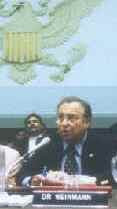
www.politicsofhealthcare.com, Saturday, 7/21/12, "Money and Medicine," Weinmann, Robert, MD


Journal of American Physicians and Dentists, V. 18, # 3, Fall, 2013, "Maintenance of Certification (MOC): the Elite Agenda for  Medicine," Christman, Kenneth, MD ("the elite medical establishment correctly foresaw that there was a huge treasure in the medical certification business")


Saturday, July 21, 2012

MONEY AND MEDICINE:  a new series in keeping financial score.  

Assets of boards that are members of the American Board of Medical Specialties (ABMS) according to IRS Form 990 for 2009.

Total assets of the American Board of Internal Medicine were $57,586,843. Total assets for the American Board of Pediatrics were $41,759,971.  It is reasonable to ask how this money was earned.

The Chairman of the American Board of Medical Specialties was paid about  $800,000 (OK, maybe a little over that) whereas the Chairman of the American Board of Allergy and Immunology was paid $98,000 (OK, OK, he reportedly worked about two hours per week).  The Chairman of the holding board, the ABMS, received salary of $492,517. It is also reasonable to ask what tasks these chairholders undertook for this level of payment.

As to how the money was earned, our information is that recertification for an allergist in 2011 cost $2,700 while maintenance of certification cost $2,850. These costs don't include costs of courses to prepare for the exams. The boards have found it even more profitable when they oblige their members to take recertifcation exams on a periodic basis with new fees each time.

Reference: Dubravic, Martin, MD: J of American Physicians and Surgeons, V. 16, # 2, Summer  2011, "Board Certification ... A Malignant Growth," 

How about Hospital Administrators?

Hospital adminstrators and CEOs basically command a force of state-licensed professionals including nurses, physicians, and technologists. Yet there is no requirement that the CEO be board-certified or state-licensed. This discrepancy came to light recently at Washington Hospital in Fremont, California where the hospital non-physician CEO was recommended for a salary increase from $614,000 per year to $632,000 with total compensation set at about $857,000 with $245,502 in performance bonuses.

Reference: Artz, Matthew: San Jose Mercury News, 12/27/12

Several years ago State Senator Dan McCorquodale authored legislation to require licensure of hospital administrators. The hospitals squawked loudly and poured money into defeat of the bill. All the same, there were unexpected supporters who also poured in money, e.g., universities  that taught courses in hospital administration and that suddenly saw their walls papered with greenbacks. In the end, the issue became a "juice" bill with each side contributing money hand over fist.

How about the American Board of Medical Specialties?

The Federation of State Medical Boards (FSMB) and the American Board of Medical Specialties (ABMS), non-profit private business entities, reported annual gross receipts in excess of $350,000,000 (see annual IRS Forms 990).

The FSMB reported a corporate lobbying budget of $221,222 although it provides no continuing medical education (CME) to physicians and no direct patient care.

How about the Joint Commission on the Accreditation of Healthcare Organizations (JCAHO)?

Gross receipts for JCAHO were reported at $148,737,915 according to its 2009 IRS Form 990.

References: Orient, Jane, MD: "White paper in opposition to Federation of State Medical Boards," J Am Phys Surg 2008: 13: 23-26.

Kempen, Paul Martin, MD, PhD: "Wrong methodologies to improve medical care."

Conclusions: financial incentives in medicine are now tied to factors other than clinical excellence. Caring for corporate health in medicine is the goal to which many otherwise superb clinicians are redirecting their efforts. Academic associations in addition to boards, seeking profitable affiliations  and courting political influence, are pointing the way. These organizations have become profit centers. National organizations seek clones at the state and county levels. It is not unusual to find that a national academic organization seeks state and regional affiliates so that members pay dues at both national and state or regional levels.

Meanwhile, hospital CEOs eschew demands for licensure even though their responsibility is as much to the public as nurses, physicians, and technologists. In a state of flux such as this one, opportunities are abundant, but not in the care of patients. In due course specialty boards may seek empowerment to license clinical practitioners and in so doing reduce the authority of state boards or even render them obsolete. 

Individual physicians may want to ask their specialty boards and national academies for copies of their IRS Forms 990, then learn how to interpret and  use the knowledge for individual assertiveness.

Our intent is to update this piece from time to time and to include as many readers' comments as possible.