Ordinarily, California's injured workers have issues to worry about other than how doctors do their billings. Not so anymore. Here's why: the change over from the Official Medical Fee Schedule (OMFS) to the RBRVS system has come with severe restrictions against injured workers and their doctors. Even though the OMFS paid near the lowest in the nation, insurance companies weren't satisfied. Here's an example: under the OMFS consulting doctors were allowed to bill for review of medical records. Such reviews often entail studying boxes filled to the brim with medical records. These cases are often complicated by divergent opinions from treating doctors, utilization review denials by doctors, many of whom are unlicensed in California, and by doctors who haven't reviewed the patient's complete medical file. Sometimes the shear complexity of injured workers' injuries is overwhelming, e.g, as when multiple injuries occur, for instance, a fall from a ladder causing broken arms or legs, neck or back injury, and a head injury.
Treating doctors and consultants often spend extended amounts of time on such cases. Hours just to review medical records is common and until adoption of the new billing codes was compensated under Code 99358. That code has now been eliminated. The next step for the doctor would be to file an independent report for which the code was 99080. That code has also been eliminated even though such reports quite commonly would be around 20 typed pages and would also have required lengthy preparation.
As a further slap in the face, the actual consultation codes, e.g., 99245, have also been eliminated and have been replaced by RBRVS codes based on Medicare that cost the insurance companies less despite a minimal increase in Medicare. In a nutshell, consultation for and treatment of complicated injuries has become so prohibitive that primary treating doctors can often not get either. Recently, this writer had a case turned down by a teaching hospital: we were told outright that they don't accept workers' comp cases anymore (i.e., their reimbursement level was cut below the minimum standard the hospital felt it could live with).
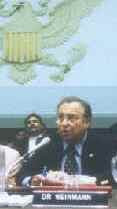
A few years ago, when an attempt was being made to push SB 923 (Deleon) through the legislature, Stuart Bussey, MD, JD, family practice specialist and President of the Union of American Physicians and Dentists, Local 206 of the American Federation of State, County and Municipal Employees (AFSCME), AFL-CIO, testified that passage of the bill could tie his hands when specialty consultations were needed but were also unavailable. He said that this situation could leave him holding the malpractice bag. The bill crashed but some of its odious provisions were resurrected in SB 863 which is now the law and which mandates replacement of the OMFS by the RBRVS.
Here's the rub: the deletion of the 99358 code for review of medical records means that many specialists will be unable to review cases as they should. The deletion of the 99080 code means that consultants, if and when they can be obtained, will not be able to file comprehensive reports for their patients. It means that Independent Medical Review (IMR) doctors may be much more likely to make decisions (75% of which deny care) without reviewing medical facts.
The billing code changes are a boon for insurance companies because it lowers their administrative expenses. It will also lower actual medical and surgical costs since absent these consultations and reports definitive medical and surgical steps will not be implemented. In chronic pain patients, for instance, it's likely to decrease physicians' treatment options. In this way chronic pain patients may end up on chronic opioids longer than would otherwise be necessary. It's a chilling thought when this example is extended to other diagnoses requiring complicated orthopedic, neurosurgical, and psychiatric care.
As a result of SB 863, Independent Medical Review (IMR) Physicians will review the necessity of care after Utilization Review (UR) doctors have first had their shot. Readers of this column know that in an op-ed in the San Francisco Chronicle, 8/29/08, entitled "How to practice medicine without a license," it was pointed out that UR doctors don't have to be licensed in California (union leaders should be interested in knowing that AFSCME, at its International Convention in Chicago in 2006, passed a resolution against this practice).
Upshot: not only does the UR physician not have to interview or examine the injured worker, the UR doc does not even have to be licensed in California, the state in which he practices. Errors the non-California-licensed UR physician make cannot be evaluated by the California Medical Board. Alleged errors cannot be evaluated by the medical board of the state in which the UR physician is licensed, either, because the out-of-state board doesn't have jurisdiction in California.
All of this largesse is now extended to the IMR physicians thanks to SB 863. The position of the insurance industry is now buttressed by the deletion of codes 99245, 99358, and 99080. Once again the injured worker takes it in the teeth. Nothing new in that, is there? It's just another injury to the already injured worker.
We recommend repeal of SB 863 and support for SB 626 (Beall) or similar legislation since Senator Beall pulled SB 626 in 2013.


 Posts
Posts