Showing posts with label Network contraction. Show all posts

Monday, October 17, 2016

UNIONIZING PHYSICIANS IN WASHINGTON STATE -- Taking on MultiCare


In a historic development for professional unions, Stuart Bussey, MD, JD, president of the Union of American Physicians and Dentists (UAPD), stated on 15 October 2016 that the private practice physicians at Auburn Medical Center (AMC) in Tacoma, Washington, voted to join the UAPD -- the occasion is historic because it is the first time that the UAPD has formally organized a hospital medical staff outside of California. Although the UAPD has had non-California membership throughout its history, this effort marks the first successful organizational campaign outside of California. This step means that the UAPD and its AMC members can now negotiate legally with MultiCare which had opposed the formation of a doctors' union but which also indicated its intent to work with the physicians' elected union representative.

Local leadership was provided by Virginia Stowell, MD, general surgeon, whose concerns included winning more autonomy for physicians in the disposition of patient care, developing more clout in the negotiation of compensation and working conditions, and preventing the arbitrary outsourcing of professional work by hospital administration. Stowell's history includes having worked at MultiCare since 2012. Before that she was in private practice for 16 years. At the present time, MultiCare reviews physician compensation and makes its own decisions. From now on the UAPD will be enabled to participate in these decisions. In leading up to this historic vote, Stowell won two cases with NLRB that prevented MultiCare from foisting its will upon their physicians. In a nutshell, NLRB ruled that efforts by MultiCare  to prevent its doctors from discussing wages and working conditions violated the National Labor Relations Act which protects this activity.

It was pointed out during the voting process that hospitals have many committees staffed by physicians but that in the final analysis such committees have minimal ability to oppose administrative decisions decided upon by management. Stowell and others, including Neil Partain, a hospitalist at AMC, agreed that it would be better for the physicians and their patients if the doctors had a union to represent their views before the hospital and MultiCare.

Representing the UAPD in this effort was Theodore Gashaw, Lead Organizer, 916-796-3124, tgashaw@uapd.com.  Gashaw said that members of other systems have also called him although at this time MultiCare is where the UAPD has received the most interest.

Meanwhile in California, expanded interest in private practice organization is anticipated especially since Governor Brown signed AB 72 (Bonta) into law. This bill slashes "surprise billing" (see our previous editorial about "surprise billing" and AB 72, 6 October 2016) but leaves "network contraction" intact. Critics point out to what extent this legislation, under the guise of patient protection, actually promotes corporate compensation at the expense of patient care.

Thursday, October 6, 2016

AB 72 (Bonta) targets physicians but leaves insurance companies and MPNs unscathed


Governor Brown signed AB 72 (Bonta) to put a stop to "surprise billing" but he left intact the ability of Medical Provider Networks (MPNs) and insurance companies to skimp on medical coverage, for instance, by not retaining enough specialists. When the MPN's patients then need the specialist that the MPN can't provide, "out-of-network" specialists are summoned. The "out-of-network" physicians, since they're not in-network, may bill at higher rates than the MPNs -- this practice has resulted in unpleasant surprises to patients when they learn that the medical bills they're getting are higher than expected because the specialist called in at the last minute was "out-of-network." This practice ends with Bonta's legislation which targets doctors but spares MPNs. Here's the scoop: the MPN purposefully retains too few doctors, especially specialists, in order to avoid paying "in-network" specialists. This desultory practice is known as "network contraction" or "in-network sharing." It allows more of subscribers' premium payments to be used for increased executive compensation instead of for patient care. Bonta's bill could have fixed this aspect of the problem along with the smack-down on "surprise billing." Only Bonta didn't want to ruffle the feathers of the insurers and MPNs. This writer recommends for legislative year 2017 that CMA, CSIMS, CNS, and UAPD seek legislation requiring MPNs to field fully staffed networks so that "out-of-network" doctors are no longer needed. The legislation needed would require that MPNs be fully  staffed or else -- the or else would be dissolution of the MPN for non-compliance.


Friday, September 16, 2016

VETO OR AMEND AB 72 (Bonta)


This memo was sent as a personal message to Governor Brown re AB 72 (Bonta) earlier this month just after the bill was enrolled and sent to his desk. Now we make it public:

"Because AB 72 leaves 'network contraction' as a viable business method, eliminating only the 'surprise billing' element,  if you let AB 72 slip into law, you might want to add a memo of your own that there should be follow-up legislation to make sure that the medical networks are fully staffed. 'Fully staffed' means that they include a complete range of medical and surgical specialists. 

Meantime, we recommend a veto."


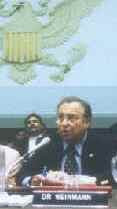
Robert L. Weinmann, MD, Editor

Robert L. Weinmann, MD, Editor, The Weinmann Report (www.politicsofhealthcare.com) 

Reference for our readers:

Our original piece was posted on-line at www.politicsofhealthcare.com on 12 August 2016.  The title was "Assembly Bill 72 (Bonta): Oppose Unless Amended, a pending bait and switch bill," in other words, a bill to disallow "surprise billing" while leaving the underlying mechanism enabling appointment of out-of-network doctors intact. The mechanism is called "network contraction" and is also  known as "in-network cost sharing." It allows networks to understaff by purposefully not carrying enough network doctors to cover all medical and surgical specialties. It's a profitable network move at the expense of services to network subscribers or customers who don't know their insurance plan is not required by law to retain a full network of physicians and surgeons. So here is the amendment we recommended as of 8/12/16:

Health-care plans should be required to maintain full provider lists covering all specialties. The plans should provide these lists to their in-network providers and to all of their subscribers and customers. Networks that fail in this requirement should be penalized by fines and disciplinary action against their managers and officers.

9/23/2016 -- flash! Governor Brown signed AB 72 into law. There are no provisions in the bill to prevent corporate greed, e.g., "network contraction." The bill is aimed squarely between the eyes of "out-of-network" providers.