AB 655 (Hayashi) passed the legislature without a dissenting vote. Its alleged purpose, to facilitate transfer of peer review information from one hospital to another, is belied by a current Appellate decision for which the CMA appropriately filed an amicus for Dr. El-Attar.
AB 655 (Hayashi) is now on the governor's desk awaiting his signature or possible veto despite lopsided approval by a legislature that ignored numerous protests from physicians, lawyers, and physicians who are also lawyers.
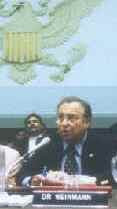
The chief reason for the protests has to do with the repeatedly deceptive promotion of the bill by the author and her staff. The legislature was repeatedly told that there was no opposition to the bill. We now have a smoking gun, namely, a video where Assemblyperson Hayashi actually says as much to the legislature before the final vote. In that video, Assemblyperson Halderman, a physician and experienced staff member before getting elected to the Assembly, act out what appears to this writer to be a charade. Halderman points out that her office received considerable notice of opposition to the bill. Would Assemblyperson Hayashi explain? Hayashi obliges. Hayashi then ignores the sham peer review issue, hints that the opposition came from doctors without licenses, and implies that the legitimate points of opposition were solved by amendments.
Wrong, wrong: the opposition focussed on the failure of the bill to make sure that sham peer review material, false or defamatory material, was excluded from peer review transer. The author didn't want that, the hospital association didn't want that, and, mirabile dictu, neither did the lobbyists for the California Medical Association. More mirabile dictu, the CMA sponsored AB 655 despite the work of its own lawyers who worked in support of Dr. El-Ettar in the court case.
When Halderman rose to speak to the Assembly, she said by way of introduction that she supported the bill. Then, in closing, she repeated her support of the bill. Nevertheless, it was Hayashi herself who declined to acknowledge problems with sham peer review in the bill. It is our postion that AB 655 as currently written will enable sham peer review.
AB 655 runs afoul of the recent Appellate Court decision in Osamah A. El-Attar v. Presbyterian Hollywood Medical Center which states why peer review must be conducted fairly. The CMA said that "peer review that is not conducted fairly and results in the unwarranted loss of a qualified physician's right or privilege to use a hospital's facilities deprives the physician of a property interest."
CMA also stated that "peer review that is not conducted fairly results in harm to both patients and healing arts practioners by limiting access to care."
While the court case in support of El-Attar was in progress, CMA lobbying promoted AB 655 and resisted significant amendments to identify and exclude sham peer review. Are we being unduly argumentative by asking how one hand of an organization appears to have worked in opposition to the other hand?
This blog has asked for an explanation from the CMA. So should anyone interested in preserving honest peer review. In the meantime, a veto recommendation is appropriate.
The CMA could reconsider its support of AB 655 on September 22nd. We'll see what happens, then provide an update on what appears to be a comedy of errors without anyone laughing.
Showing posts with label Hayashi. Show all posts
Showing posts with label Hayashi. Show all posts
Monday, September 19, 2011


Friday, August 26, 2011
CMA DECLARES "NO CONTROVERSY" RE EL-ATTAR PEER REVIEW CASE!
In response to a query from The Alliance for Patient Safety posed by Gil Mileikowsky, MD, a question indicating that there was "confusion" about which side CMA was on in the case of the El-Attar versus Hollywood Presbyterian Medical Center peer review case, the following response was provided by Astrid Meghrigian: "There is no controversy - the Court made a mistake and CMA is working to get it corrected."
Meghrigian attached the CMA brief in support of the physician (relax, just read it -- it's an important judicial statement and it's only 5 pages!). All physicians involved in peer review should read it. So should CMA staff and officers who worked on AB 655 (Hayashi).
John Young, MD, commented on Hayashi's peer review bill: "AB 655 serves no useful purpose and ... should be dumped."
Hayashi's bill spits in the face of the Appeals Court findings in El-Attar versus Hollywood Presbyterian Medical Center because as it's currently written it enables sham peer review. By contrast, CMA says that "peer review, fairly conducted, is essential to preserving the highest standards of medical practice" and that "peer review that is not conducted fairly results in harm to both patients and healing arts practitioners by limiting access to care."
AB 655 (Hayashi) enables sham peer review. The surprise should be that, once this weakness in the bill was discovered, the author declined to make indicated amendments while the CMA continued to sponsor it.
Meghrigian attached the CMA brief in support of the physician (relax, just read it -- it's an important judicial statement and it's only 5 pages!). All physicians involved in peer review should read it. So should CMA staff and officers who worked on AB 655 (Hayashi).
John Young, MD, commented on Hayashi's peer review bill: "AB 655 serves no useful purpose and ... should be dumped."
Hayashi's bill spits in the face of the Appeals Court findings in El-Attar versus Hollywood Presbyterian Medical Center because as it's currently written it enables sham peer review. By contrast, CMA says that "peer review, fairly conducted, is essential to preserving the highest standards of medical practice" and that "peer review that is not conducted fairly results in harm to both patients and healing arts practitioners by limiting access to care."
AB 655 (Hayashi) enables sham peer review. The surprise should be that, once this weakness in the bill was discovered, the author declined to make indicated amendments while the CMA continued to sponsor it.
Wednesday, August 24, 2011
AB 655 (Hayashi) versus Osamah A. El-Attar v. Hollywood Presbyterian Med Ctr
"Allowing the Governing Board to select the hearing officer and JRC panel is not an inconsequential violation of the Bylaws. Rather, it undermines the purpose of the peer review mechansim ... Peer review that is not conducted fairly and results in the unwarranted loss of a qualified physician's right or privilege to use a hospital's facilities deprives the physician of a property interest directly connected to the physician's livelihood."
AB 655 (Hayashi) flies in the face of this case and needs corrective language in the form of amendments. Better still would be to hold the bill over until next year (making it a two-year bill) so it can be re-worked and re-submitted with language that'll protect against sham peer review.
The California Society of Industrial Medicine and Surgery (CSIMS) filed a letter of "Concern" on August 24th. To the best of this writer's knowledge, the Union of American Physicians and Dentists (UAPD) remains "watch" while the California Medical Association (CMA) remains the sponsor for a bill that looks as though it were written by the California Hospital Association (CHA). In the Osamah A. El-Attar case, 2nd Appellate District, Division 4, B209056, the CMA provided Amicus Curiae on behalf of Defendant and Respondent (Hollywood Presbyterian Medical Center).
Source: Court document "Certified for Paritial Publication," Court of Appeal of the State of California, Second Appellate District, Division Four, filed 8/19/11 (Los Angeles County Super. Ct. No. BS105623).
However, from the CMA website, "Peer Review: El-Attar, MD, v. Hollywood Presbyterian Medical Center," we learn that "Dr. El-Attar's medical staff privileges were not renewed by the hospital's governing Board. Following a finding by the Medical Executive Committee (MEC) that there was no basis for the hospital to deny Dr. El-Attar's reappointment to the medical staff, the hospital bypassed the MEC and picked its own panel and hearing officer over Dr. El-Attar's objections. CMA filed an amicus brief in support of Dr. El-Attar (italics added).
The El-Attar court case and AB 655 (Hayahsi) have in common that they both reflect increasing tension over control of the medical staff. Hospitals want control of physicians. It's an end-run around the bar on corporate practice because it's a way for hospitals to become de facto bosses over physicians' practices. Physicians are supposed to work in the interest of patients, not corporate entities.
AB 655 (Hayashi) as currently written tilts too far in favor of hospital administrations. Unamended, the bill pours physicians' rights and privileges down the proverbial drain. Language recently offered by the California Society of Industrial Medicine and Surgery (CSIMS) could cure this defect. We urge its incorporation into the bill. Absent that, we recommend converting AB 655 into a two-year bill.
AB 655 (Hayashi) flies in the face of this case and needs corrective language in the form of amendments. Better still would be to hold the bill over until next year (making it a two-year bill) so it can be re-worked and re-submitted with language that'll protect against sham peer review.
The California Society of Industrial Medicine and Surgery (CSIMS) filed a letter of "Concern" on August 24th. To the best of this writer's knowledge, the Union of American Physicians and Dentists (UAPD) remains "watch" while the California Medical Association (CMA) remains the sponsor for a bill that looks as though it were written by the California Hospital Association (CHA). In the Osamah A. El-Attar case, 2nd Appellate District, Division 4, B209056, the CMA provided Amicus Curiae on behalf of Defendant and Respondent (Hollywood Presbyterian Medical Center).
Source: Court document "Certified for Paritial Publication," Court of Appeal of the State of California, Second Appellate District, Division Four, filed 8/19/11 (Los Angeles County Super. Ct. No. BS105623).
However, from the CMA website, "Peer Review: El-Attar, MD, v. Hollywood Presbyterian Medical Center," we learn that "Dr. El-Attar's medical staff privileges were not renewed by the hospital's governing Board. Following a finding by the Medical Executive Committee (MEC) that there was no basis for the hospital to deny Dr. El-Attar's reappointment to the medical staff, the hospital bypassed the MEC and picked its own panel and hearing officer over Dr. El-Attar's objections. CMA filed an amicus brief in support of Dr. El-Attar (italics added).
The El-Attar court case and AB 655 (Hayahsi) have in common that they both reflect increasing tension over control of the medical staff. Hospitals want control of physicians. It's an end-run around the bar on corporate practice because it's a way for hospitals to become de facto bosses over physicians' practices. Physicians are supposed to work in the interest of patients, not corporate entities.
AB 655 (Hayashi) as currently written tilts too far in favor of hospital administrations. Unamended, the bill pours physicians' rights and privileges down the proverbial drain. Language recently offered by the California Society of Industrial Medicine and Surgery (CSIMS) could cure this defect. We urge its incorporation into the bill. Absent that, we recommend converting AB 655 into a two-year bill.
Subscribe to:
Posts (Atom)

 Posts
Posts