Wednesday, June 18, 2014

AB 1805 (Skinner & Pan): supporting Medi-Cal; SB 1215 (Hernandez): this one bites the dust.


Now that the State Budget has in effect told Medi-Cal patients to wander off and die quietly someplace, the next step is to push for passage of AB 1805 (Skinner and Pan). This bill aims to restore the 10% cut that was put into effect with the State Budget Act of 2011. It is this 10% cut that the State Budget that just passed this past Sunday could have restored. If AB 1805 passes it still risks veto by the Governor. In fact, AB 1805 isn't going anywhere very fast since it is as of this writing being held, some would say smothered, in Assembly Appropriations.


On the other hand, we're glad to report that SB 1215 (Hernandez) took its final dive for this year when it failed to clear the Senate Business and Professions Committee. One of the principal purposes of this bill was to eliminate the exception for in-office referrals for selected specific services such as advanced imaging, radiation therapy, and even physical therapy, in other words, as mean spirited a bill as one could envision.


The Skinner-Pan bill needs help because it is on a collision course with the newly accepted State Budget which went out of its way do kick the Medi-Cal patient in the butt by denying access to services. In support of this bill is the California Medical Association, the California Neurology Society, the Union of American Physicians and Dentists, and most organized professional medical groups.


Individual letters to your Assembly representatives and State Senators are needed to assist in the passage of AB 1805 and to try to turn aside the anticipated gubernatorial veto.

Monday, June 16, 2014

MED-CAL PATIENTS SNUBBED BY STATE BUDGET

The 10 percent pay cut for reimbursement for providing medical care to Medi-Cal patients was not restored by the state budget that was accepted this past Sunday. Reimbursement for California's Medicaid patients remains among the lowest in the United States.  Although the budget did not make the cut retroactive, it's bad enough as it is -- patients on Medi-Cal often cannot get care. Restoration of the 10 percent cut would have alleviated but not cured this problem. So why would the Governor leave his Medi-Cal constituency in the lurch?


This writer spoke to the Governor about this problem during his first years as Governor when he was often known as "Gov. Moonbeam." This writer can attest that Brown was never a moonbeamer, maybe a little tilted towards idealism, but always realistic and politically savvy.


I asked him then about the  pro and con arguments for supporting increased Medi-Cal benefits.  He said the pro argument was that the Medi-Cal population might need the support and even benefit from it. But to do it money would have to be poured into Medi-Cal that was also desired and equally needed by other programs, programs more popular with the voters, and more vital to the interests of tax-payers. Brown wryly pointed out that if he supported increased funding for Medi-Cal, he'd probably not hear a word of appreciation from the Medi-Cal patients but he sure as heck would hear about it from other agencies that got stiffed and miffed.


Needless to say, the Medi-Cal raise didn't happen then, just as it didn't happen now. This time, however, there is a consolation prize:  the budget now includes $41.3 million for technical assistance to Medi-Cal providers that will help set up electronic health records pursuant to the federal Electronic Health Records incentive program.  $3.75 million will come from state funds, 37.5 million from matching federal funds. Not a bad deal for the techies!


When it comes to governing, nobody holds a candle to our Gov. Brown.


Sunday, June 15, 2014

DRGs and HENRY MAYO NEWHALL HOSPITAL: was there malfeasance by the hospital's Board of Directions or the Medical Executive Committee?

THE EFFECT OF Diagnostic Related Groups (DRGs) and Nurse Practitioners (NPs) on hospital policy and Economic Credentials and Corporate Income


When the DRGs were originally thrust upon the unwitting medical profession in 1982, the purpose was to determine how much Medicare would be obliged to pay hospitals for "products" where "products" became the new word for services, e.g., an appendectomy became a "product" instead of a service or an operation. Application of DRGs has since widened and may be used for non-Medicare patients. Some healthcare pundits find DRGs effective for controlling Medicare costs and hospital costs in particular. An early challenge occurred when Hillary Clinton's father was admitted to hospital and was allowed more than the DRG-allotted time for his hospital stay and more advanced diagnostic studies than the DRGs recommended. Most physicians, this one among them, favored the doctors' decisions in favor of the patient and the hospital's willingness to set the DRGs aside.


Now enters Henry Mayo Newhall Hospital in Santa Clarita which has just determined that Nurse Practitioners (NPs) can have admitting privileges. We will discuss how the two  problems have common ground, namely, cost and reimbursement control. Keep in mind that only one year ago a California Senate Bill (SB 491) to give advanced recognition to NPs failed passage.


Here's the story according to our correspondent, Gene Uzawa Dorio, MD, from his guest commentaries in the SCV Beacon. Doctor Dorio is at the time of this writing, to the best of my knowledge, a member of the hospital's Medical Executive Committee (MEC).


For the last three years, the hospital administration has sought to allow NPs to practice at the hospital. The NPs will be employees of the hospital. That means that the hospital  administration will be able to influence admission and discharge decisions. That there is a likely financial relationship is obvious, for instance, it's why physicians are not allowed to own pharmacies and refer their patients to them. When the effect of the DRGs became of concern to the hospital management, statistics were developed. If a heart attack patient with a DRG of 4 days stayed more than 4 days in the hospital then the additional days were an extra "cost" to the hospital and would not be reimbursed under the DRGs. Doctors whose patients stayed longer than the DRG designations became a liability. The name of the game was how to control these doctors. Doctor Dorio said in his piece on the subject that "every primary care admitting physician was given a total dollar amount ... claiming now the MD was responsible for this 'lost' money." So how did the hospital's BOD bring about change?


The hospital had received an NP application for practice privileges which the MEC rejected when it was determined by the MEC that the hospital had withheld information which Dr. Dorio's editorial asserted showed "the candidate was not qualified to care for hospitalized patients." In any case, the MEC decision not to accept the NP's application was set aside by the BOD which granted practice privileges to the NP in question. That is how matters stand now. While broad-based legislation to grant practice privileges may have failed, one hospital, on its own, has managed to install an NP in precisely the role that the hospital's own MEC found incompatible with the applicant's education and training. Stay tuned: we don't think this issue is finished.


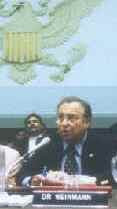
Editor's confession:  I have  testified in Congress on the issue of economic credentials for physicians, see references below. My opinion in the Henry Mayo Newhall Hospital case is that the hospital's BOD wants to wrest control over medical decisions and their economic impact on the hospital from the Medical Executive Committee in particular and from the physicians in general.


References


"Why is Private Practice on the Way to Obsolescence?" (www.politicsofhealthcare.com, 6/10/13)


"Medical Red-Lining, Economic Credentials for Physicians," San Francisco Examiner, 1/12/96


The Congressional Record,  Vol.  144,  # 118, with  comments by former Representative Tom Campbell, R-CA, 09/09/98


Friday, May 30, 2014

VA SECRETARY SHINSEKI TAKES THE HIT OVER VETERANS ADMINISTRATION FIASCO


Dateline, Washington, DC, 5/30/14 -- Our posting of 21 May 2014 in www.politicsofhealthcare.com stated that General Shinseki was "being prepared and prepped to take a fall." It can now be stated with reasonable legal certainty that the foreplay is over. The General has resigned. He has been sliced and diced, his head served on a platter to an irate public, while other problems with veterans outside the VA  system continue to be buried in the avalanche of scandal.


Among these items is  how a forensic panel reportedly altered the diagnosis of post-traumatic stress disorder (PTSD) for 14 formerly active duty soldiers in order to rescind their expensive PTSD  retirement benefits. In our previous release on this subject (see reference below) we told how this diagnosis and its attendant retirement benefits were predicted to cost the government from $400,000 to possibly over one million dollars. So, in a process akin to Utilization Review for injured workers in California, akin also to the Independent Medical Review process in California, officials who did not interview or examine the patients were reported to have altered the medical diagnoses from PTSD to "anxiety disorder" or something else less expensive in terms of retirement benefits to satisfy fiscal demands (see Army's denial in NBC story cited below under references).  Our opinion is that the PTSD benefits for these soldiers were sacrificed just as the veterans who were denied care were disenfranchised.  Now that  Shinseki has taken the hit, we can expect  more self-serving outrage and maybe even prompt house cleaning at the VA. There is still time to see whether or not there are  PTSD retirement benefits to other injured veterans at Madigan and elsewhere that should be restored lest they lose out in a smokescreen of retaliation against a bureaucrat who turned out to be out of his métier as the VA Secretary.


References


"Army releases findings of Madigan PTSD investigation," Rebecca Ruiz, NBC News, 3/15/13


"What we don't want is people making decisions based on money instead of care of troops," comment by Rep. Norman Dicks, The Weinmann Report, www.politicsofhealthcare.com, 2/26/12

Wednesday, May 28, 2014

DRUG TESTING FOR LAWYERS AND PHARMACEUTICAL EXECUTIVES


District Attorney Tony Rackauckas representing Orange County and County Counsel Orry Korb from Santa Clara County have filed a consumer protection lawsuit against five opioid manufacturers. The accusation is that the five companies conducted a more than decade-long marketing campaign to mislead doctors about the risk of long-term opioid management. The named defendants are Purdue Pharma, Teva Pharmaceutical Industries Cephalon, Janssen Pharmaceutical, Endo Health Solutions, and Actavis. The lawsuit also names the American Pain Foundation, the American Academy of Pain Medicine, and the American Geriatric Society.

The lawsuit asserts that "opiod makers were not the first to mask their deceptive marketing efforts in purported science. The tobacco industry also used key opinion leaders in its effort to persuade the public and regulators that tobacco use was not addictive or dangerous."

We owe this information to Tom Lynch whose editorial, "Another Day, Another Battle in the War on Over-Prescribing," was published as a column by WorkCompCentral on 5/28/14.

Our interest is how this matter now dovetails with the Malpractice Initiative that the trial lawyers are expected to qualify for the November ballot in California in an effort to repeal the MICRA reform instituted by Gov. Brown during his first administration. The Initiative is aimed at drug-testing for physicians and doesn't mention that annual insurance premiums for a family of four may be increased by as much as $1,000.

Although the trial lawyers espouse drug testing for physicians, pilots, and others, they do not include themselves.

We now recommend that they find a way to include drug testing not only for themselves but also for pharmaceutical companies, their executives, and all of their employees including sales department personnel.

Just call it The Full Employment Drug Testing Act (FEDTA).

Late Flash: the trial lawyers' initiative to increase malpractice awards for themselves has been designated Proposition 46 while the campaign against it, which we support, will be called the No on 46 Campaign.

Additional References

"When Should Lawyers be Drug Tested?" by Dr. Robert Weinmann, www.workcompcentral.com, 4/28/14

"Random Drug Testing for Lawyers," The Weinmann Report (www.politicsofhealthcare.com, 4/24/14)

"California's Ballot initiative will mandate random drug testing ONLY for doctors (why not attorneys?)," by Rehan Sheikh, facebook.com/PhysiciansForFairness, {https://www.facebook.com/PhysiciansForFairness}, twitter.com?Voice_MD {https://twitter.com/Voice_MD} 5/20/14


Wednesday, May 21, 2014

WE ARE ALL VETERANS: COMMENTS ON THE CURRENT VETERANS' ADMINISTRATION FIASCO


WE ARE ALL VETERANS: will the same dismal outlook overtake our military veterans in the VA system as it did the Post-Traumatic Stress Disorder victims at Madigan General Hospital (see our blog from Sunday, February 26, 2012)?

The latest ringing quote from President Obama, "I  will not stand for it!" is vaguely reminiscent of other outstanding verbalizations from the president, e.g, when he said that "I will not let any bureaucrat stand in the way of the care that you need," then stalwartly pushed ahead with the IPAB (Independent Payment Advisory Board) woven deftly into the ACA (Affordable Care Act) in Section 10320 (see our previous posts on this issue wherein we tell how the IPAB is designed to limit access to care without pesky Congressional oversight).

The latest medical scandal concerns the Veterans Administration (VA). On the rack at the moment is former General Ric Shinseki. The issue is to what extent the VA may have cooked the appointment books such that 40 veteran patient-deaths are attributable to delayed medical care at the Phoenix VA.

Speaking out in evident ire, President Obama said "it is dishonorable ... it is disgraceful." As a result 26 VA facilities are now under investigation. While Shinseki  promises to get to the bottom of the matter, the press noticed he wasn't standing next to President Obama during the president's  press conference (speculation is the General was in a roadside foxhole  as would be any sensible soldier while a hostile straffing mission worked the skies above).

"If there is misconduct it will be punished," the president declared, ringingly adding, "I will not stand for it!" Meanwhile, Ron Nabors will supervise review of the VA and the expected IG Report which will tell us what's to be done and whether or not Shinseki still has a job. Obama, meanwhile, declares "we all know it takes too long for veterans to get care" while simultaneously inserting commens that the problem was also true for previous administrations regardless of party lineage. Trouble is these remarks come from the same source that first promised that no bureaucrat would interfere with the care we need, then said that we could keep our doctors, and finally for strike three that we could keep our current insurance if that's what we wanted to do.

"What we don't want is people making ... decisions based on money instead of care of the troops!" So said Representative Norman Dicks, D-Belfair.  The issue then was lifetime benefits for soldiers diagnosed with PTSD (post-traumatic stress disorder). 14 soldiers with this diagnosis were reportedly costing the government from $400,000 to $1.5 million in lifetime benefits. To save this money, a forensic psychiatry team changed the diagnosis.  President Obama needs to apply the same language he used re the Veterans Administration, in short, it's time to ask if bureaucrats in the Madigan decision "cooked the books."

This writer was never satisfied with the explanations put forward at the time. Neither are we satisfied with the way in which the VA situation is being investigated -- it looks like Gen. Shinseki is being prepared and prepped to take a fall. The immediate reasonable solution is to assign more physicians to each of the 26 VA facilities now under review. This adjustment should start in Phoenix. The Madigan  situation should also be reviewed with possible restoration of benefits that remain denied.


The overriding issue is whether or not the entire country is being prepared for reduced access to  care, what Philip Klein referred to as "access shock." The issue is to what extent "choice" will be sacrificed by the ordinary citizen so that insurance companies can enhance profits by reducing costs by such methods as simply offering less in terms of physician access and access to diagnostic and treatment facilities. It's called scrimping and skimming.

Now we find out that scrimping and skimming in the Veterans Administration may have led to the death of former troops just as it is expected that the IPAB portion of the ACA will lead to derelict care, diminished levels of treatment, and even to the death of patients mired in a bureucracy of healthcare mandates that has been a disappointment from rollout despite constant revisions.

"I will not stand for it," he said? No, WE will not stand for it, or better not, lest we hoist ourselves on the same rope we used to strangle PTSD care at Madigan and VA care everywhere. We are all veterans of unwise decisions that have converted medicine into a succession of programs beneficial mostly to insurance companies and like-minded corporate interests.

The time has come for all of us to shout "I will not stand for it!"

Disclaimer

The writer is an Army veteran, Captain, USAMC (U.S. Army Medical Corps), and admits to bias on the part of the veterans.

References

The Weinmann Report (www.politicsofhealthcare.com, 2/26/12

"Head of Madigan removed from command amidst PTSD probe," Seattle Times, 2/20/12,  by Hal Bernton

"Army insists doctors at Madigan aren't discouraged from diagnosing PTSD," The News Tribune, 2/10/12,  by Adam Ashtone

"Rationing comes home to roost in the form of denial of care," www.politicsofhealthcare.com, 2/17/12, and www.workcompcentral.com, 2/24/12

"President Obama's oblique references to healthcare," www.politicsofhealthcare.com, 2/27/12

"President Obama apologizes and promises to interfere with care you don't need," www.politicsofhealthcare.com, 11/08/13

"Obamacare insurer says Americans have to break the 'choice' habit," www.washingtonexaminer.com/article/2548386, 5/13/14
 

Monday, May 12, 2014

DO DOCTORS EXPIRE IN 10 YEARS?


"Do doctors expire in 10 years" is the title of the lead article in AAPS news from the Association of American Physicians and Surgeons, Vol. 70, No. 5, May 2014. Our readers may enjoy comparing this piece with items from The Weinmann Report, www.politicsofhealthcare.com, "How Physicians Eat their Young," 12 Feb 2014 and "Money and Medicine," 21 July 2012.

The subject is recertification and reveals how boards, associations, and other organizations may use Maintenance of Certification (MOC) to enrich themselves and their organizational coffers at the expense of their own members. The AAPS poses this theoretical question: if "one day a highly trained, experienced physician may be board certified -- and the next day, after examination results are revealed or a deadline for MOC compliance passes, he may be decertified and unemployable. In that one day, could he have become demented, or fallen behind in keeping up with this field?"

The article points out that "resolutions against MOC have been enacted recently by the American Medical Association and the state medical societies of New Jersey, Michigan, Ohio, Oklahoma, New York, and North Carolina."

In the same issue, Larry Huntoon, MD, PhD, points out that the American Academy  of Neurology (AAN) was to feature an MOC International Session but did not feel required to file a conflict-of-interest disclosure from Lois Margaret Nora, MD, CEO of ABMS. In 2012 Nora earned about $330,000 in compensation from ABMS and associated organizations according to the ABMS form 990."

AAN reportedly told AAPS that no such disclosure was necessary because AAN did not give CME credits for attendance at this session.

Once again we see an assault on physician autonomy, this time from within, from persons who benefit financially by imposing MOC requirements on hapless physicians whose evolving practices may not meet the confinements of MOC predators.

Additional References

Journal of American Physicians and Dentists, V. 18, # 3, Fall, 2013, "Maintenance of Certification (MOC) : the elite Agenda for Medicine," Christman, Kenneth, "the elite medical establishment correctly foresaw that there as a huge treasure in the medical certification  business").

Journal of American Physicians and Dentists, V. 16, #2, Summer, 2011, "Board Certification -- a Malignant Growth," Dubravic, Martin, MD.