Monday, February 11, 2013
OBAMACARE IN THE STATE OF THE UNION ; WRONGFUL DENIALS OF CARE IN CALIFORNIA
WILL PRESIDENT OBAMA'S STATE OF THE UNION MESSAGE CONTAIN MEANINGFUL COMMENT RE THE AFFORDABLE CARE ACT?
"I will ensure that no government bureaucrat gets between you and the care you need." These words tumbled effortlessly from a confident President Obama in the autumn of 2009 but were immediately set aside in favor of more bureaucracy than healthcare has ever known. Healthcare pundits know that Obamacare as currently written allows for regulation of healthcare by non-physicians through a mechanism known as the Independent Payment Advisory Board (IPAB) whose concern is fiscal health as opposed to the health of patients. The Affordable Care Act (ACA) also has a built-in mechanism starting in 2014 that will require $1.5 trillion in costs for families and businesses according to Stephen Frank, publisher & editor, California Political News and Views, 9/21/11. This dire prediction for the ACA worries fiscal conservatives. If the estimate is accurate it should worry everyone. We'll wait for President Obama to set our concerns aside before we comment further on Obamacare's managerial accounting.
Remember: the IPAB was once known as the IMAB or Independent Medicare Advisory Board. When the nation's Medicare patients realized they were being targeted for denial of care and supervision of allowable care as a form of rationing, they raised a hue and cry. The IMAB was brought down. When the storm subsided, it was resurrected as the IPAB.
In the second debate with Governor Romney the president was asked about the make-up of the IPAB. He said it would be "doctors et cetera." There is nothing in the language creating the ACA that requires even one physician to be appointed to the IPAB. That's because, although expanded medical care was the ostensible reason for the ACA, fiscal control has always trumped medical excellence in its design. The provision of the latest and best in medical care is spoken about but the IPAB is there to restrict what's actually offered. Congress itself wants none of it and opted out of the ACA. Nonetheless, it's likely that at least one physician who is cooperative enough with the administration will be appointed to the IPAB. During the debate when the president said "doctors et cetera" he gave a false assurance that Governor Romney didn't recognize as such and let pass. We hope the the president will do better in the state of the union speech.
HOW ABOUT CALIFORNIA?
WILL CALIFORNIA STOP DENIALS OF CARE BY IMR DOCTORS WHOSE NAMES ARE KEPT SECRET OR WHO ARE NOT LICENSED TO PRACTICE IN CALIFORNIA?
WILL INSURANCE COMPANIES IN CALIFORNIA BE ALLOWED TO CONTINUE TO RETAIN UR PHYSICIANS WITHOUT CALIFORNIA LICENSES?
We await legislation to abolish secret review of utilization review (UR) denials by so-called Independent Medical Review (IMR) physicians whose names will be concealed by law as mandated by SB 863. We await restoration of the WCAB's ability to overrule wrong and harmful decisions that deny medical care to injured workers. We also still await law that requires physicians who do Utilization Review and Independent Medical Review to be licensed in California. As matters stand now, doctors not licensed in California can do UR and IMR reviews and deny care to injured workers in California. As the law stands now, the non-California-licensed physician cannot be disciplined in California even for the stupidest and most harmful denials of care since these doctors aren't subject to the medical board of this state. The doctor may be licensed in other states but those other states don't have jurisdiction in California. The time to correct this travesty is overdue. Labor unions and legislators should revisit SB 863.
As matters stand now, a company named Maximus from Maryland is seeking doctors to do Medical Necessity Reviews for $150 to $200 per review. We do not have reliable information at this time as to what percentage of cases reviewed by Maximus end up in denial of care for injured workers. We don't know how much Maximus will actually pay for each review or how the money will be divided up -- we do know that the doctors are being offered a small enough percentage so that the deal remains attractive in terms of corporate compensation. We presume that the labor unions around the state would be interested in the details. Do we guess wrong? Tell us where we may've gone astray, please!
We will be adding to these comments on Obamacare, SB 863 in California, and wrongful denials of care over the next few days. Stay tuned. These issues are hot potatoes.


Tuesday, January 15, 2013
IN-STATE V. OUT-OF-STATE UTILIZATION AND INDEPENDENT MEDICAL REVIEW
OPEN LETTER TO ASSEMBLYMAN RICHARD PAN, MD
Chair, Assembly Committee on Health
15 January 2013
Dear Doctor Pan,
I am asking you to carry or sponsor legislation to repeal language within SB 863 that allows doctors who are not even licensed to practice medicine in California but who are allowed to do utilization reivew here to have their names kept secret. This secrecy is a way of making it even more difficult than it already is for injured workers to appeal wrongful denials of care.
SB 863 became effective as of 1 January 2013. An injured worker who is victimized by a stupid and harmful denial of care will not be allowed to file an appeal unless fraud, bias, or conflict of interest is suspected. The trouble is that since the legislation allows these doctors' names to be concealed, it will be truly challenging to file an appeal based on fraud, bias, or conflict of interest. The real problem, actually, is that the WCAB is no longer empowered to reverse wrongful decisions that harm injured workers. As a doctor, I don't think you would favor denials of treatment you prescribed to be done by doctors whose reports and names are not fully known to you. Am I wrong about that?
As matters stand now traditional Utilization Review does not need to be done by doctors who are licensed in California and are therefore responsible to our state medical board. Insurance companies can scour the country in search of malleable and cooperative doctors who will deny care on a myriad of technicalities no matter how harmful these denials of care are to injured workers. This injustice cannot happen in Texas. In Texas if California doctors want to do utilization review the doctors must be licensed in Texas. Since each state's medical board's jurisdiction is limited to its own state, many of the doctors doing utilization review or independent medical review in California may not come under the medical board jurisdiction of any state at all for their UR or IMR work in California. This largesse is estimated to cost California $10,000,000 annually -- an unwise choice for a state with financial woes.
Richard Fantozzi, MD, as president of the California Medical Board in 2008, told Governor Schwarzenegger that this step "would provide increased consumer protection over decisions that do not have patients as its primary concern." At the request of the insurance companies and the Chambers of Commerce, Gov. Schwarzenegger vetoed a bill that would have corrected this abuse. Under similar pressure, Gov. Brown also vetoed legislation that would have corrected this abuse. SB 863 now makes the denial process even more vicious since the IMR doctors' names will be protected.
That's why treating physicians and their patients need you and like minded colleagues to amend SB 863 so that injured workers get fair and equitable access to treatment. What say you?
Yours truly,
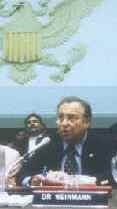
Robert L. Weinmann, MD, Editor, www.politicsofhealthcare.com
References
WorkCompcentral, 1/12/13, Comment by this writer to News Article by John P. Kamin, Legal Editor
Work Compcentral, 1/10/13, "Out-of-state v. In-state Utilization Review," Robert Weinmann, MD
TotalCapitol.com, 3/11/12, "Utilization Review as a gift to insurance companies," Bob Weinmann
Chair, Assembly Committee on Health
15 January 2013
Dear Doctor Pan,
I am asking you to carry or sponsor legislation to repeal language within SB 863 that allows doctors who are not even licensed to practice medicine in California but who are allowed to do utilization reivew here to have their names kept secret. This secrecy is a way of making it even more difficult than it already is for injured workers to appeal wrongful denials of care.
SB 863 became effective as of 1 January 2013. An injured worker who is victimized by a stupid and harmful denial of care will not be allowed to file an appeal unless fraud, bias, or conflict of interest is suspected. The trouble is that since the legislation allows these doctors' names to be concealed, it will be truly challenging to file an appeal based on fraud, bias, or conflict of interest. The real problem, actually, is that the WCAB is no longer empowered to reverse wrongful decisions that harm injured workers. As a doctor, I don't think you would favor denials of treatment you prescribed to be done by doctors whose reports and names are not fully known to you. Am I wrong about that?
As matters stand now traditional Utilization Review does not need to be done by doctors who are licensed in California and are therefore responsible to our state medical board. Insurance companies can scour the country in search of malleable and cooperative doctors who will deny care on a myriad of technicalities no matter how harmful these denials of care are to injured workers. This injustice cannot happen in Texas. In Texas if California doctors want to do utilization review the doctors must be licensed in Texas. Since each state's medical board's jurisdiction is limited to its own state, many of the doctors doing utilization review or independent medical review in California may not come under the medical board jurisdiction of any state at all for their UR or IMR work in California. This largesse is estimated to cost California $10,000,000 annually -- an unwise choice for a state with financial woes.
Richard Fantozzi, MD, as president of the California Medical Board in 2008, told Governor Schwarzenegger that this step "would provide increased consumer protection over decisions that do not have patients as its primary concern." At the request of the insurance companies and the Chambers of Commerce, Gov. Schwarzenegger vetoed a bill that would have corrected this abuse. Under similar pressure, Gov. Brown also vetoed legislation that would have corrected this abuse. SB 863 now makes the denial process even more vicious since the IMR doctors' names will be protected.
That's why treating physicians and their patients need you and like minded colleagues to amend SB 863 so that injured workers get fair and equitable access to treatment. What say you?
Yours truly,
Robert L. Weinmann, MD, Editor, www.politicsofhealthcare.com
References
WorkCompcentral, 1/12/13, Comment by this writer to News Article by John P. Kamin, Legal Editor
Work Compcentral, 1/10/13, "Out-of-state v. In-state Utilization Review," Robert Weinmann, MD
TotalCapitol.com, 3/11/12, "Utilization Review as a gift to insurance companies," Bob Weinmann
Monday, January 7, 2013
OUT-OF-STATE VERSUS IN-STATE UTILIZATION REVIEW (UR)
UNDERSTANDING CALIFORNIA'S BIAS AGAINST INJURED WORKERS
David J. DePaolo says "I don't understand" in his article entitled "Out of State UR" dated January 4, 2013. I do understand. At the end of his article, DePaolo declares that "mandating that utilization review be conducted by physicians located in the state doesn't make any logical sense. I'm sure someone will try to enlighten me." Who can resist such an invitation? Not me!
DePaolo states in his piece that "Dr. Robert L. Weinmann, of San Jose, Caif., an openly critical and long time advocate of requiring in-state residency for reviewing doctors in the California system argues that physicians who are not licensed in California will not be responsive to the needs of California residents." Well, DePaolo at least named the city correctly. The mistake is the assertion that I would require in-state residency. I have written in other articles and have testified in committee hearing that in-state residency need not be a requirement whereas in-state licensure should be. The Medical Board of California (MBC) agrees. In a letter dated 8/25/08, Richard Fanozzi, MD, board president, stated that the MBC supported a bill that "would require a physician who is conducting utilization review to be licensed in California" and that so doing "would provide increased consumer protection over decisions that do not have patients as its primary concern." This "increased consumer protection" has been steadily and successfully opposed by the insurance industry.
The American Federation of State, County and Municipal Employees (AFSCME), AFL-CIO, took a strong stand on this issue at its International Convention in Chicago in 2006. In a resolution entitled "Unions fight to protect injured workers" it was resolved that "physicians working for utilization review companies reviewing the claims of injured workers be licensed in the states in which their decisions are used and where their decisions may influence the provision or denial of medical care to injured workers." Right on!
The California AFSCME nonetheless voted in favor of SB 863 which would appear to suggest a schism with the international's resolution adopted in 2006. SB 863 continues the anti-injured worker policy that so far has been rescinded three times by the California legislature only to have two Governors veto the efforts (Schwarzenegger twice, Brown once, both times supported by the Chambers of Commerce and the insurance industry generally).
Now here's the rub which, I believe, Attorney David DePaolo understands: as matters stand now in California, Utilization Review (UR) doctors need not be licensed in California. In fact, SB 863 carries this laissez faire even further. It turns out that SB 863 mandates Independent Medical Review (IMR) doctors' names to be protected, that is, kept secret. IMR doctors will also not need to be licensed in California. Their protection under the new law goes even further: these doctors won't be able to be challenged for blatant stupidity, being flat out wrong, or for decisions harmful to patients. The only grounds for challenging the IMR doctors will be bias, fraud, or conflict of interest (it may be difficult to challenge someone for bias if one doesn't know his name).
DePaolo summarizes my main argument as follows: "Because reviewing doctors out of state can't be controlled by California licensing authorities, insurance companies are then free to 'scour the country' for doctors who are willing to give favorable reviews to the insurers, Weinmann told WorkCompCentral."
DePaolo argues that insurance companies don't have to "scour the country" because "there are plenty of in-state physicians who would be willing to opine such ... it doesn't matter where the doctor is located." If that is so we have to ask why in previous years the insurance industry has argued that there aren't enough doctors in California willing to do UR and that is why they've had to go out of state to recruit doctors to do UR. In any case, my opinion is that in-state licensure should be required, not in-state residency. In the meantime, we thank DePalo for his vote of confidence in California's doctors.
DePaolo admits that in Texas the utilization review doctors and their companies must be licensed in the state although "the companies and providers may be located outside of the state." What now propels this issue to the forefront once again is that Illinois recently passed utilization review legislation and is working on rules and regulations to implement the process. De Paolo referred to David Manchetti of Cullen, Haskins, and Menchetti in Chicago who stated that utilization review doctors "need to be familiar with how medicine is practiced in Illinois ... which may be different from how it's practiced in Indiana or India." The phrase, "how it's practiced," is the key to everybody's pending disaster. The point is that there are ways to diagnose and treat broken bones that are correct and that are incorrect. Our concern should be to promote the former, deny the latter, and make little or no allowance for whether or not we're talking about Illinois, Indiana, India, or California. But that's not how it works in practice. The truth is that some insurers are widely believed to "scour the country" for compliant and subservient doctors just as some applicants' attorneys are believed to seek out equally compliant doctors for their clients. The process has become increasingly adversarial with the passage of SB 863.
So here's the summary: as matters stand now, UR and IMR doctors need not be licensed in California and need not be responsible to the Medical Board of California. These doctors are also not subject to discipline by the medical boards of their own states for review decisions in California because those boards don't have jurisdiction in California.
Our position is that UR and IMR doctors should be licensed in the states where their decisions are used. Residency is not the issue. The issue is public responsibility through the state medical board. The letter from the MBC and the resolution by the International Convention of AFSCME got it right.
As it stands now, SB 863 promotes misguided public policy with reference to Utilization Review (UR) and Independent Medical Review (IMR). These aspects of the bill deserve to be challenged, revised, or repealed. In-state licensure for doctors who do UR and IMR should be mandatory.
Friday, December 14, 2012
CALIFORNIA WORKERS COMP DEVELOPMENT
SB 863 FALLOUT BEGINS TO SETTLE ON HAPLESS HEADS
It doesn't appear that DWC will have time to consider the comments submitted on DWC Forums and to that extent the request for comments seems to have been a charade. The idea now is to put the newly proposed regulations into effect on an emergency basis and then to consider comments later, weeks or months from now. Our information is that many current liens that are awaiting payment will be held until the Spring of 2013. In the meantime, the $150 IMR lien filing fee will go into effect for the Independent Medical Review system and so will the $325 IBR fee for the Independent Billing Review system.
The presumption is that these onerous requirements will drive many providers out of the system altogether. In due course DWC will adopt the requirements that it wants if the insurance companies don't object too strenuously. Insurance companies will be conveniently enabled to pay providers at 65 to 70% of the fee schedule. Then they'll dare the provoked providers to try to collect the rest. The requirement to pay as much as $475 for the right to challenge a wrongful denial of care and a rejected bill is expected to encourage providers to drop out of the workers' comp system.
In other states where similar reductions took place, so many doctors dropped out that the theorized dearth of physicians became real enough so that fees were restored and even raised (Hawaii is an example). The trouble is that the perpetrators of these adverse changes managed to destroy faith in the system so that many of the doctors didn't return. That created a permanent deficit of access to care. So far that looks to be where SB 863 is going.
Early lien filing may be the PTP's only option. It looks as though injured workers lose again even though Permanent Disability was given an infusion by SB 863. The trouble is that the infusion has been diluted. Our injured workers have been left worse off and now need a transfusion.
It doesn't appear that DWC will have time to consider the comments submitted on DWC Forums and to that extent the request for comments seems to have been a charade. The idea now is to put the newly proposed regulations into effect on an emergency basis and then to consider comments later, weeks or months from now. Our information is that many current liens that are awaiting payment will be held until the Spring of 2013. In the meantime, the $150 IMR lien filing fee will go into effect for the Independent Medical Review system and so will the $325 IBR fee for the Independent Billing Review system.
The presumption is that these onerous requirements will drive many providers out of the system altogether. In due course DWC will adopt the requirements that it wants if the insurance companies don't object too strenuously. Insurance companies will be conveniently enabled to pay providers at 65 to 70% of the fee schedule. Then they'll dare the provoked providers to try to collect the rest. The requirement to pay as much as $475 for the right to challenge a wrongful denial of care and a rejected bill is expected to encourage providers to drop out of the workers' comp system.
In other states where similar reductions took place, so many doctors dropped out that the theorized dearth of physicians became real enough so that fees were restored and even raised (Hawaii is an example). The trouble is that the perpetrators of these adverse changes managed to destroy faith in the system so that many of the doctors didn't return. That created a permanent deficit of access to care. So far that looks to be where SB 863 is going.
Early lien filing may be the PTP's only option. It looks as though injured workers lose again even though Permanent Disability was given an infusion by SB 863. The trouble is that the infusion has been diluted. Our injured workers have been left worse off and now need a transfusion.
Sunday, December 9, 2012
SB 863: A Political Tsunami in California
When Governor Brown declined to accept legislation that would have been a partial fix for workers' compensation at the end of 2011, he said he wanted an overall solution, not a piecemeal adjustment.
Among the politically savvy persons who heeded this admonition was Angie Wei, indefatigable chief lobbyist and legislative director for the California Labor Federation. Wei deftly developed her version of a comprehensive fix. What labor wanted most was an increase in permanent disability. Wei got that, or so it seemed, in the form of $740 million added to permanent disability. Speaking early on about SB 863, Wei said "there is no other path to getting $740 million back in benefits to injured workers. The legislature must pass SB 863." Wei, not exactly a friend of specialty medical doctors, also protested against them when she complained that previous legislation caused medical treatment to be delayed because of "opposition from vendors who profit from the status quo."
SB 863 doesn't appear so far to be as good as its promise. Wei quickly understood that Governor Brown wanted a bipartisan bill, not one crafted only by the labor federation, and not one crafted entirely by insurance companies. Score one for Brown: he forced the two extremes to work together.
Grimmway Farms, Sean McNally, Vice President for corporate and Government Affairs, soon became the chief player for business. No way Big Biz was going to let $740 million slip into Permanent Disability (PD) funding without getting something in return. Pouncing on some of the more abused parts of PD funding, Grimmway et al focussed on out-patient surgery centers, sleep impairments (dyssomnia), and sexual dysfunction (impaired sexual ability even when secondary to spinal injury). The open sesame to the assault on sex-and-sleep was the frequent inclusion of these complaints by applicants' attorneys into their legal pleadings. Deductions emerged:
* Sleep impairment remains open for treatment but not for inclusion in permanent disability claims: this exclusion alone takes $40 million away from the PD pot.
* Sexual impairment remains open for treatment but not for inclusion in permanent disability claims: this exclusion takes $10 million from the PD pot.
* The big slam is the removal of $110 million for out-patient surgery centers.
* All in all, current estimates are that of the $740 million Wei originally sought, about $200 million has already been lost thanks to the maneuvering of Grimmway which in this matter out-maneuvered Wei and Cal Fed.
* Two pro-injured workers bills bit the dust as SB 863 paddled furiously to victory: AB 369 (Huffman) and AB 1867 (Fong). The fun-filled irony in the case of these two bills was that their authors voted in favor of SB 863 the passage of which was then used to tell authors Huffman and Fong that their bills were no longer needed. Huffman's bill was designed to put a stop to step-therapy and was supported by Big Pharmacy, Pfizer, among others. Fong's bill would have required 12-point bold type on the first page of treatment authorization denial letters "so as to be prominently visible to the employee."
So step-therapy which prevents doctors from prescribing medications of choice is still the rule and so is keeping injured workers in the dark. The insurance companies wanted both bills defeated: they got their wish because Brown obliged and used SB 863 as the cudgel to do it. Score another for Brown, in fact, a double-score since he nailed both bills. The workers, ostensibly the constituents that Wei and Cal Fed wanted to serve, lost.
A big time score goes to Governor Brown because one day before passage of SB 863 when it looked as though the bill was going down to defeat Brown went to work in high gear and took up his own lobbying cudgel. Effective lobbying from the California Society of Industrial Medicine and Surgery (CSIMS), directed by Carl Brakensiek and Steve Cattolica of AdvoCal, assisted by the California Society of Physical Medicine and Rehabilitation (CSPMR), the California Neurology Society (CNS), The California Chapter of the International Association of Rehabilitation Professionals, VQ OrthoCare, and the Californa Workers Compensation Services Association, almost defeated the bill despite abandonment of the California Medical Association (CMA) and the American Federation of State, County and Municipal Employees (AFSCME) both of whom voted for passage of SB 863. CMA and AFSCME knuckled under to Brown.
The CMA is credited with getting the Medicare RBRVS modified and once that was done agreed to support the bill. Consultations in workers' comp will be allowed although they're no longer allowed in standard Medicare. AFSCME which represents a few thousand doctors in California wanted to befriend Brown more than it wanted to support its dues-paying doctors and assumed that its doctor members wouldn't protest with too much vigor. AFSCME's political judgment so far has turned out to be correct.
When Brown saw that SB 863 was in trouble, he went to work. He lobbied and asserted the bill would "reduce litigation, claims administration costs, and other frictional costs." He personally lobbied for the bill, actually, furiously in the last two days. His hard work paid off. Score a personal hard-earned political triumph for Governor Brown and chalk up a loss for a medical community that knows how to provide services but not how to persuade anybody that what we do is as worthwhile as we say.
Our opposing position was, and still is, that the bill strips injured workers of their ability to appeal wrongful decisions while also cutting the $740 million for PD by at least $200 million. What Brown calls "frictional costs" are actually the lifeblood costs that injured workers incur in appeals. Appeals for wrongful decisions to the WCAB are eliminated by SB 863 which creates an Independent Medical Review (IMR) process that'll rely on anonymous doctors whose decisions are nearly appeal-proof.
In fact, what Brown was really after all along was Proposition 30 to allow increased taxes. To get it he needed to take down the heat from Big Business. Brown worked to get SB 863 passed to reduce the level of interest against Proposition 30. The strategy worked. The trouble now is the fiscal cliff which, if the country falls off it, will result in widespread financial hardship and will nullify much of what Proposition 30 just won.
Our focus now is on the Independent Medical Review system that has been designed to replace the current Utilization Review system. The IMR system retains the worst aspects of UR, i.e., no need to be licensed to practice medicine in California and no need to interview or examine the patients from whom treatment opportunities may be withdrawn. The IMR method gets an additional advantage, namely, the promise of anonymity so that appeals against even the stupidest of judgments resulting in harmful denial of care will be turned away and will not be eligible for appeal to the WCAB.
Statewide implications
The move is on to restrict access to medical care and shift the blame to doctors, particularly the conveniently convened IMR doctors. The name of the game is cost-reduction while touting improved quality of care. In California, access to the WCAB is being restricted; however, similar wrongful uses of denial-of-care are used by HMOs and in Knox-Keene plans. This accelerating trend deserves to be derailed.
Federal implications
The current IPAB derived from the ACA (Obamacare) also promotes cost conservation at the risk of harming patients. These techniques are being adopted by the ACOs even faster than they were by the HMOs. This trend also begs to be derailed.
When Governor Brown declined to accept legislation that would have been a partial fix for workers' compensation at the end of 2011, he said he wanted an overall solution, not a piecemeal adjustment.
Among the politically savvy persons who heeded this admonition was Angie Wei, indefatigable chief lobbyist and legislative director for the California Labor Federation. Wei deftly developed her version of a comprehensive fix. What labor wanted most was an increase in permanent disability. Wei got that, or so it seemed, in the form of $740 million added to permanent disability. Speaking early on about SB 863, Wei said "there is no other path to getting $740 million back in benefits to injured workers. The legislature must pass SB 863." Wei, not exactly a friend of specialty medical doctors, also protested against them when she complained that previous legislation caused medical treatment to be delayed because of "opposition from vendors who profit from the status quo."
SB 863 doesn't appear so far to be as good as its promise. Wei quickly understood that Governor Brown wanted a bipartisan bill, not one crafted only by the labor federation, and not one crafted entirely by insurance companies. Score one for Brown: he forced the two extremes to work together.
Grimmway Farms, Sean McNally, Vice President for corporate and Government Affairs, soon became the chief player for business. No way Big Biz was going to let $740 million slip into Permanent Disability (PD) funding without getting something in return. Pouncing on some of the more abused parts of PD funding, Grimmway et al focussed on out-patient surgery centers, sleep impairments (dyssomnia), and sexual dysfunction (impaired sexual ability even when secondary to spinal injury). The open sesame to the assault on sex-and-sleep was the frequent inclusion of these complaints by applicants' attorneys into their legal pleadings. Deductions emerged:
* Sleep impairment remains open for treatment but not for inclusion in permanent disability claims: this exclusion alone takes $40 million away from the PD pot.
* Sexual impairment remains open for treatment but not for inclusion in permanent disability claims: this exclusion takes $10 million from the PD pot.
* The big slam is the removal of $110 million for out-patient surgery centers.
* All in all, current estimates are that of the $740 million Wei originally sought, about $200 million has already been lost thanks to the maneuvering of Grimmway which in this matter out-maneuvered Wei and Cal Fed.
* Two pro-injured workers bills bit the dust as SB 863 paddled furiously to victory: AB 369 (Huffman) and AB 1867 (Fong). The fun-filled irony in the case of these two bills was that their authors voted in favor of SB 863 the passage of which was then used to tell authors Huffman and Fong that their bills were no longer needed. Huffman's bill was designed to put a stop to step-therapy and was supported by Big Pharmacy, Pfizer, among others. Fong's bill would have required 12-point bold type on the first page of treatment authorization denial letters "so as to be prominently visible to the employee."
So step-therapy which prevents doctors from prescribing medications of choice is still the rule and so is keeping injured workers in the dark. The insurance companies wanted both bills defeated: they got their wish because Brown obliged and used SB 863 as the cudgel to do it. Score another for Brown, in fact, a double-score since he nailed both bills. The workers, ostensibly the constituents that Wei and Cal Fed wanted to serve, lost.
A big time score goes to Governor Brown because one day before passage of SB 863 when it looked as though the bill was going down to defeat Brown went to work in high gear and took up his own lobbying cudgel. Effective lobbying from the California Society of Industrial Medicine and Surgery (CSIMS), directed by Carl Brakensiek and Steve Cattolica of AdvoCal, assisted by the California Society of Physical Medicine and Rehabilitation (CSPMR), the California Neurology Society (CNS), The California Chapter of the International Association of Rehabilitation Professionals, VQ OrthoCare, and the Californa Workers Compensation Services Association, almost defeated the bill despite abandonment of the California Medical Association (CMA) and the American Federation of State, County and Municipal Employees (AFSCME) both of whom voted for passage of SB 863. CMA and AFSCME knuckled under to Brown.
The CMA is credited with getting the Medicare RBRVS modified and once that was done agreed to support the bill. Consultations in workers' comp will be allowed although they're no longer allowed in standard Medicare. AFSCME which represents a few thousand doctors in California wanted to befriend Brown more than it wanted to support its dues-paying doctors and assumed that its doctor members wouldn't protest with too much vigor. AFSCME's political judgment so far has turned out to be correct.
When Brown saw that SB 863 was in trouble, he went to work. He lobbied and asserted the bill would "reduce litigation, claims administration costs, and other frictional costs." He personally lobbied for the bill, actually, furiously in the last two days. His hard work paid off. Score a personal hard-earned political triumph for Governor Brown and chalk up a loss for a medical community that knows how to provide services but not how to persuade anybody that what we do is as worthwhile as we say.
Our opposing position was, and still is, that the bill strips injured workers of their ability to appeal wrongful decisions while also cutting the $740 million for PD by at least $200 million. What Brown calls "frictional costs" are actually the lifeblood costs that injured workers incur in appeals. Appeals for wrongful decisions to the WCAB are eliminated by SB 863 which creates an Independent Medical Review (IMR) process that'll rely on anonymous doctors whose decisions are nearly appeal-proof.
In fact, what Brown was really after all along was Proposition 30 to allow increased taxes. To get it he needed to take down the heat from Big Business. Brown worked to get SB 863 passed to reduce the level of interest against Proposition 30. The strategy worked. The trouble now is the fiscal cliff which, if the country falls off it, will result in widespread financial hardship and will nullify much of what Proposition 30 just won.
Our focus now is on the Independent Medical Review system that has been designed to replace the current Utilization Review system. The IMR system retains the worst aspects of UR, i.e., no need to be licensed to practice medicine in California and no need to interview or examine the patients from whom treatment opportunities may be withdrawn. The IMR method gets an additional advantage, namely, the promise of anonymity so that appeals against even the stupidest of judgments resulting in harmful denial of care will be turned away and will not be eligible for appeal to the WCAB.
Statewide implications
The move is on to restrict access to medical care and shift the blame to doctors, particularly the conveniently convened IMR doctors. The name of the game is cost-reduction while touting improved quality of care. In California, access to the WCAB is being restricted; however, similar wrongful uses of denial-of-care are used by HMOs and in Knox-Keene plans. This accelerating trend deserves to be derailed.
Federal implications
The current IPAB derived from the ACA (Obamacare) also promotes cost conservation at the risk of harming patients. These techniques are being adopted by the ACOs even faster than they were by the HMOs. This trend also begs to be derailed.
Sunday, November 25, 2012
Accountable Care Organizations: Gag clauses, firing doctors, liability, and profits
Accountable Care Organizations (ACOs), encouraged by the Affordable Care Act (ACA), aka Obamacare, brace for trouble while preparing for profits.
One of the questions we're being asked is whether or not ACOs may impose gag clauses, e.g., if a treating physician wants to prescribe a diagnostic test or treatment, and said diagnostic test or treatment is not authorized or is denied by the ACO, may the treating physician tell that to the patient who has been denied a diagnostic test or treatment? May the cost of the procedure to the ACO be discussed with the employee or patient?
Our initial reaction to reply affirmatively is tempered by our understanding that a recommended study or treatment would have been discussed first with the patient who would presumably already have agreed to it and would know about any non-authorization or denial. But we also observe contract language that physicians are precluded from discussing disagreements about compensation "and other matters" with patients. The treating physician is told in contractual language that where "disagreement cannot be resolved ... under no circumstances shall such disagreement be expressed to the Enrollee."
Contractual language tells the doctors that they may not discuss what the ACO has determined is protected information "to any person ... until such person agrees in writing to be bound by the provisions of this Agreement ..." We take this preclusion to mean that doctors cannot discuss ACO disagreements even with their own lawyers unless the lawyers agree to be gagged!
What lawyer would agree to being gagged before having heard the case?
These gag clauses are reminiscent of the 1990s when HMOs sought to muzzle doctors (see references below). Both the HMOs at that time and the ACOs as currently construed have contract language that allows them to fire doctors at will. Such power is essential to keeping the doctors in their place, compliant, subservient, and dependent.
The ACO agreements we've seen so far carry both "termination without cause" as well as "termination with cause" clauses. The latter are often subsequent to what the ACO may have called a "material breach" which is defined by the ACO itself and generally refers to what the ACO calls information that "that compromises the security or privacy" of information considered proprietary or confidential. Disclosure of this information to patients could be considered a "material breach." That the patient has "right to know" might be a legal defense but it would not preclude ACO management from firing the doctor.
Potential participants, physicians and patients alike, need to understand that ACOs are business organizations selling and dispensing health care services. They are entitled to make profits which they can then distribute to their own business associates as a second source of income in addition to whatever fees have already been paid. One selling point is that ACOs will cut down on unneeded tests and treatment but a countervailing point is that along the way the ACO may deny access to diagnostic tests and treatments with harm coming to patients while participating physicians are not allowed to speak out under penalty of being fired from the ACO.
Questions of medical-legal liability are already being asked: who gets blamed for what if an indicated study or treatment is denied and the patient suffers or dies as a result? Is there liability to physicians who've kept this information under wraps in compliance with ACO non-disclosure policy?
How will profits and payment to providers, including physicians, be determined? One contract we've examined says straight out that the ACO will make that determination, e.g., "Physician agrees that decisions (by the ACO, actual name deleted) ... management and other administrative policies and procedures may be used by (ACO) to deny or reduce payment ..."
In essence this language means that whatever fee schedule the physicians signed may be abrogated, changed, or set aside at the will of the ACO. No bargaining or negotiating is required or encouraged.
All the same "bonus payments" or the prospect thereof will remain in effect. This section of the ACO agreement means that ACOs that actually achieve what they call "savings" will be allowed to allocate a portion of the "savings" to providers as "bonus payments" or additional income, essentially a second source of income, to participating providers. That helps to explain why ACOs will favor primary care physicians as opposed to specialists since it is the latter that usually prescribe expensive tests and the most up-to-date and often most expensive treatment protocols. The "gag clause" will stop timorous physicians from explaining too much to patients about how ACOs work their magic.
ACOs need primary treating physicians to ensure "savings." While specialists with their expensive procedures may be necessary to ensure quality of care, they'll be carefully scrutinized -- call it "economic credentials" (see references below) -- to make sure that they don't have too much impact on profits which the ACOs refer to as "savings." Finally, expect that bonus payments to treating doctors will be limited with the bulk of savings going to the ACO itself and to additional executive compensation.
While the ACO mechanism is more sophisticated than the old HMO methods, they have in common that the goal is financial gain with as much devotion to patient care as can be accommodated.
HMO References
"Why HMOs want to muzzle doctors," San Francisco Examiner, 4 April 96, by Robert L. Weinmann
"Medical Red-Lining, Economic Credentials for Physicians, 12 January 96, by Robert L. Weinmann
The Congressional Record, Vol. 144, # 118, commentary by Hon. Tom Campbell, R-California, 9 September 98
ACO References
"A Hospital War Reflects a Bind for Doctors in the U.S.," New York Times, 11/30/12, by Julie Creswell and Reed Abelson
"Covered California's Plans to Become Self-Sufficient," California Healthline, 11/19/12, by David Gorn
"California's Role In Ensuring That the Potential of Health Reform Becomes Reality," Health Affairs, 30, no. 1 (2011): 71-75
One of the questions we're being asked is whether or not ACOs may impose gag clauses, e.g., if a treating physician wants to prescribe a diagnostic test or treatment, and said diagnostic test or treatment is not authorized or is denied by the ACO, may the treating physician tell that to the patient who has been denied a diagnostic test or treatment? May the cost of the procedure to the ACO be discussed with the employee or patient?
Our initial reaction to reply affirmatively is tempered by our understanding that a recommended study or treatment would have been discussed first with the patient who would presumably already have agreed to it and would know about any non-authorization or denial. But we also observe contract language that physicians are precluded from discussing disagreements about compensation "and other matters" with patients. The treating physician is told in contractual language that where "disagreement cannot be resolved ... under no circumstances shall such disagreement be expressed to the Enrollee."
Contractual language tells the doctors that they may not discuss what the ACO has determined is protected information "to any person ... until such person agrees in writing to be bound by the provisions of this Agreement ..." We take this preclusion to mean that doctors cannot discuss ACO disagreements even with their own lawyers unless the lawyers agree to be gagged!
What lawyer would agree to being gagged before having heard the case?
These gag clauses are reminiscent of the 1990s when HMOs sought to muzzle doctors (see references below). Both the HMOs at that time and the ACOs as currently construed have contract language that allows them to fire doctors at will. Such power is essential to keeping the doctors in their place, compliant, subservient, and dependent.
The ACO agreements we've seen so far carry both "termination without cause" as well as "termination with cause" clauses. The latter are often subsequent to what the ACO may have called a "material breach" which is defined by the ACO itself and generally refers to what the ACO calls information that "that compromises the security or privacy" of information considered proprietary or confidential. Disclosure of this information to patients could be considered a "material breach." That the patient has "right to know" might be a legal defense but it would not preclude ACO management from firing the doctor.
Potential participants, physicians and patients alike, need to understand that ACOs are business organizations selling and dispensing health care services. They are entitled to make profits which they can then distribute to their own business associates as a second source of income in addition to whatever fees have already been paid. One selling point is that ACOs will cut down on unneeded tests and treatment but a countervailing point is that along the way the ACO may deny access to diagnostic tests and treatments with harm coming to patients while participating physicians are not allowed to speak out under penalty of being fired from the ACO.
Questions of medical-legal liability are already being asked: who gets blamed for what if an indicated study or treatment is denied and the patient suffers or dies as a result? Is there liability to physicians who've kept this information under wraps in compliance with ACO non-disclosure policy?
How will profits and payment to providers, including physicians, be determined? One contract we've examined says straight out that the ACO will make that determination, e.g., "Physician agrees that decisions (by the ACO, actual name deleted) ... management and other administrative policies and procedures may be used by (ACO) to deny or reduce payment ..."
In essence this language means that whatever fee schedule the physicians signed may be abrogated, changed, or set aside at the will of the ACO. No bargaining or negotiating is required or encouraged.
All the same "bonus payments" or the prospect thereof will remain in effect. This section of the ACO agreement means that ACOs that actually achieve what they call "savings" will be allowed to allocate a portion of the "savings" to providers as "bonus payments" or additional income, essentially a second source of income, to participating providers. That helps to explain why ACOs will favor primary care physicians as opposed to specialists since it is the latter that usually prescribe expensive tests and the most up-to-date and often most expensive treatment protocols. The "gag clause" will stop timorous physicians from explaining too much to patients about how ACOs work their magic.
ACOs need primary treating physicians to ensure "savings." While specialists with their expensive procedures may be necessary to ensure quality of care, they'll be carefully scrutinized -- call it "economic credentials" (see references below) -- to make sure that they don't have too much impact on profits which the ACOs refer to as "savings." Finally, expect that bonus payments to treating doctors will be limited with the bulk of savings going to the ACO itself and to additional executive compensation.
While the ACO mechanism is more sophisticated than the old HMO methods, they have in common that the goal is financial gain with as much devotion to patient care as can be accommodated.
HMO References
"Why HMOs want to muzzle doctors," San Francisco Examiner, 4 April 96, by Robert L. Weinmann
"Medical Red-Lining, Economic Credentials for Physicians, 12 January 96, by Robert L. Weinmann
The Congressional Record, Vol. 144, # 118, commentary by Hon. Tom Campbell, R-California, 9 September 98
ACO References
"A Hospital War Reflects a Bind for Doctors in the U.S.," New York Times, 11/30/12, by Julie Creswell and Reed Abelson
"Covered California's Plans to Become Self-Sufficient," California Healthline, 11/19/12, by David Gorn
"California's Role In Ensuring That the Potential of Health Reform Becomes Reality," Health Affairs, 30, no. 1 (2011): 71-75
Tuesday, November 20, 2012
ACCOUNTABLE CARE ORGANIZATIONS
The latest hot ticket item in healthcare now that the presidential election is over is the implementation of the most controversial aspects of the Affordable Care Act (ACA), namely, the individual mandate to buy health insurance, or else. Health insurance exchanges are ready to make their move as are specific Accountable Care Organizations (ACOs).
ACOs will be comprised of hospitals, primary care physicians, and specialists who are supposed to accept being held accountable for the cost and quality of the healthcare they provide. Fiscal carrots is the name of the game because providers will continue to be paid on a fee-for-service basis and will share in whatever revenue is brought about by whatever cost-savings techniques the ACOs use, e.g., not accepting doctors who have too many elderly patients or patients with expensive chronic diseases. The days of searching out rare and unusual diseases to care for are over: these unfortunates will be obliged to find whatever comfort is available under the nearest bus. If the ACO is well managed from a fiscal perspective, providing participants will share in the savings as a second source of income. Quietly, with as little fanfare as possible, physicians and hospitals will be encouraged to avoid the sickest, oldest, and most complicated patients. Meanwhile, the ACA calls for expanding Medicaid despite a looming shortage of doctors.
Medicaid is supposedly administered on a state-by-state level. In June of 2012 the Supreme Court (SCOTUS) gave states an option to keep their Medicaid programs as is or expand them. So far, however, only 17 states and the District of Columbia have said they'll develop their own exchanges. Increasingly, therefore, it appears as though the federal government will pick up the exchanges by default and with it increased control of medical care.
Medicare cuts in the amount ot $716 billion are ready. President Obama said he wouldn't cut Medicare itself, just the fees paid to all of the providers. Physicians, already getting only 18 cents on the dollar, will not be overjoyed and many are likely to stop accepting new Medicare patients.
Here's a comment from HHS: "The Department and its partners should be vigilant in identifying ... emerging fraud, waste, and abuse risk areas across all ACA-related programs ... this will require a comprehensive approach to program integrity that integrates effective front-end program gatekeeping (itlaics added)."
In 1998 this writer spoke at the White House in a press conference with then President Clinton. "Gatekeeping" was exposed as a mechanism to reduce patients' access to care. HMOs, seeing the handwriting on the wall, reformed their "gatekeeping" methods. Now, under the ACA, we're seeing new scribbling on the wall that'll enable return of the "gatekeepers."
Beware, patients: your illness may be your ticket to the hoosegow. Not to worry, though, your doctor will be in a near-by cell. The accusations will be "fraud" and "waste."
When your ACO contract arrives, you will need advice about what to do. Your first problem will be where to get that advice. Not to worry. In due course a new legal specialty will emerge.
ACOs will be comprised of hospitals, primary care physicians, and specialists who are supposed to accept being held accountable for the cost and quality of the healthcare they provide. Fiscal carrots is the name of the game because providers will continue to be paid on a fee-for-service basis and will share in whatever revenue is brought about by whatever cost-savings techniques the ACOs use, e.g., not accepting doctors who have too many elderly patients or patients with expensive chronic diseases. The days of searching out rare and unusual diseases to care for are over: these unfortunates will be obliged to find whatever comfort is available under the nearest bus. If the ACO is well managed from a fiscal perspective, providing participants will share in the savings as a second source of income. Quietly, with as little fanfare as possible, physicians and hospitals will be encouraged to avoid the sickest, oldest, and most complicated patients. Meanwhile, the ACA calls for expanding Medicaid despite a looming shortage of doctors.
Medicaid is supposedly administered on a state-by-state level. In June of 2012 the Supreme Court (SCOTUS) gave states an option to keep their Medicaid programs as is or expand them. So far, however, only 17 states and the District of Columbia have said they'll develop their own exchanges. Increasingly, therefore, it appears as though the federal government will pick up the exchanges by default and with it increased control of medical care.
Medicare cuts in the amount ot $716 billion are ready. President Obama said he wouldn't cut Medicare itself, just the fees paid to all of the providers. Physicians, already getting only 18 cents on the dollar, will not be overjoyed and many are likely to stop accepting new Medicare patients.
Here's a comment from HHS: "The Department and its partners should be vigilant in identifying ... emerging fraud, waste, and abuse risk areas across all ACA-related programs ... this will require a comprehensive approach to program integrity that integrates effective front-end program gatekeeping (itlaics added)."
In 1998 this writer spoke at the White House in a press conference with then President Clinton. "Gatekeeping" was exposed as a mechanism to reduce patients' access to care. HMOs, seeing the handwriting on the wall, reformed their "gatekeeping" methods. Now, under the ACA, we're seeing new scribbling on the wall that'll enable return of the "gatekeepers."
Beware, patients: your illness may be your ticket to the hoosegow. Not to worry, though, your doctor will be in a near-by cell. The accusations will be "fraud" and "waste."
When your ACO contract arrives, you will need advice about what to do. Your first problem will be where to get that advice. Not to worry. In due course a new legal specialty will emerge.
Subscribe to:
Posts (Atom)

 Posts