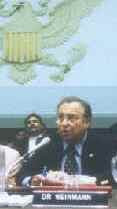
AB 655 (Hayashi) is supposed to be about improving peer review in our hospitals. It's supposed to be about protecting patients. The intent of the bill is to create legislation to facilitate the transfer of peer review information among hospitals. Sadly, the bill is so carelessly written that it would also allow false and defamatory material to be transferred. Although this weakness in the proposed legislation has been repeatedly pointed out to the author, the Assemblywoman has remained unconvinced, in part because the bill is sponsored by the California Medical Association (CMA) but not without internal controversy. Some CMA members are mystified that a physicians' organization would support a bill that hands over power to hospital administrations.
One portion of the proposed legislation states that "all relevant (italics added) peer review information ... shall be made available to the licentiate." Fair enough, right? The physician undergoing peer review gets to know what kind of information is being passed around, right? No, wrong!
The word "relevant" is the bug in this sandwich. It means that the hospital in charge of transferring the peer review material and/or the hospital receiving it will get to decide what's relevant or isn't.
Solution: drop the word, "relevant" and make sure that all, all of the transferred information, is given to the physician undergoing peer review.
Another part of the bill lets the hospital off the hook entirely. Here's how it's done: the bill says that a responding peer review organization "is not obligated" to produce the pertinent peer review information unless the doctor undegoing peer review signs a release.
Solution: the responding peer review organization should not release anything at all until and unless the physician undergoing peer review signs a release.
Hayashi and staff have ignored this advice for the entire career of this bill to date. The bill should be annointed The Sham Peer Review Enabling Bill.
AB 655 (Hayashi) in its present form is an invitation to lawsuits, in fact, it's a litigator's dream, a nightmare for good doctors who run afoul of hospital administrations, and a catastrophe for patients.
The California Society of Industrial Medicine and Surgery (CSIMS) is opposed, the Union of American Physicians and Dentists (UAPD) is watch, and the California Neurology Society (CNS) has declined to have a position.
Monday, August 22, 2011


Monday, August 8, 2011
SHAM PEER REVIEW
Sham peer review in healthcare occurs when a peer review process in a hospital, foundation, or other medical organization accepts false or defamatory material about a physician as part of a peer review hearing.
A famous non-medical example is that of Fyodor Dostoyevsky, Russian novelist of the late 19th century, author of "Crime and Punishment," who, early in his career, participated in an abortive anti-czarist demonstration. He and his colleagues were arrested and sentenced to death by firing squad. Blind folds on and against the proverbial wall, just as the command to fire was about to be given, they heard a messenger from the Czar gallop onto the execution field with a last minute reprieve. It was learned later that the scheduled execution was a sham.
In the United States sham peer review is escalating. In California the situation is getting a boost from lawmakers.
AB 655 (Hayashi), if passed into law without further amendment, would allow transfer of peer review material from one hospital to another and would allow unproved, false, and defamatory material to be included in the transfer if the hospital transferring the information had allowed the bogus accusations to become part of their own peer review record.
AB 655 (Hayashi) would require a peer review body to respond to the request of another peer review body to produce relevant peer review information and would provide that the information produced is not subject to discovery. The bill would require that all relevant information produced be made available to the licentiate by the requesting peer review body. It would require the the requesting peer review body to indemnify the responding peer review body and would require the licentiate under review to, upon request, release the responding peer review body from liability.
In other words, AB 655 (Hayashi) is skewed to the disadvantage of physicians. What is not fully understood is why the bill is sponsored by the California Medical Association. In fact, the CMA has had a flurry of activity on the bill. This writer has been involved. Here's how: I spoke with the CMA president who arranged for me to speak to the CMA CEO. I recommended that the CMA, sponsor of the bill, make AB 655 into a two-year bill if it could not be suitably amended, e.g., so that the physician under peer review could object to peer review material considered false, inaccurate, or defamatory. A small amendment was inserted into the bill, lines 24 to 27, which help somewhat but not enough. However, without CMA participation even this small amendment could not have been achieved. CMA gets credit for this adjustment even if it's not enough to allay fears that the bill puts even good physicians' careers on the chopping block.
It turns out that CMA officers, trustees, and staff were not in accord on how to handle this bill. The final power to oppose or support the bill was with CMA staff, not with CMA officers or trustees. The bill hands over power to hospital administrations. It might just as well have been written by the California Hospital Administration (CHA).
There is oppostion, most authoritatively from The Alliance for Patient Safety, http://allianceforpatientsafety.org -- I recommend visiting this site. In the meantime, my opinion is that AB 655 is not equitable legislation. It is a virtual firing squad aimed at beleagured physicians who had the temerity to challenge hospital administrations as did Evelyn Li, MD, and Vishendra Rao, MD, viz, LifeForSaleMovie.com, a documentary movie that the undersigned said "explores dangerous nooks and crannies of healthcare that until now have remained hidden from public view."
A temporary solution that would give breathing room to legislators and stakeholeders would be to hold this bill over to 2012. In its current form, AB 655 is likely to be a catastrophe for physicians' peer review, an annoyance for hospitals and foundations, and a bonanza for lawyers.
A famous non-medical example is that of Fyodor Dostoyevsky, Russian novelist of the late 19th century, author of "Crime and Punishment," who, early in his career, participated in an abortive anti-czarist demonstration. He and his colleagues were arrested and sentenced to death by firing squad. Blind folds on and against the proverbial wall, just as the command to fire was about to be given, they heard a messenger from the Czar gallop onto the execution field with a last minute reprieve. It was learned later that the scheduled execution was a sham.
In the United States sham peer review is escalating. In California the situation is getting a boost from lawmakers.
AB 655 (Hayashi), if passed into law without further amendment, would allow transfer of peer review material from one hospital to another and would allow unproved, false, and defamatory material to be included in the transfer if the hospital transferring the information had allowed the bogus accusations to become part of their own peer review record.
AB 655 (Hayashi) would require a peer review body to respond to the request of another peer review body to produce relevant peer review information and would provide that the information produced is not subject to discovery. The bill would require that all relevant information produced be made available to the licentiate by the requesting peer review body. It would require the the requesting peer review body to indemnify the responding peer review body and would require the licentiate under review to, upon request, release the responding peer review body from liability.
In other words, AB 655 (Hayashi) is skewed to the disadvantage of physicians. What is not fully understood is why the bill is sponsored by the California Medical Association. In fact, the CMA has had a flurry of activity on the bill. This writer has been involved. Here's how: I spoke with the CMA president who arranged for me to speak to the CMA CEO. I recommended that the CMA, sponsor of the bill, make AB 655 into a two-year bill if it could not be suitably amended, e.g., so that the physician under peer review could object to peer review material considered false, inaccurate, or defamatory. A small amendment was inserted into the bill, lines 24 to 27, which help somewhat but not enough. However, without CMA participation even this small amendment could not have been achieved. CMA gets credit for this adjustment even if it's not enough to allay fears that the bill puts even good physicians' careers on the chopping block.
It turns out that CMA officers, trustees, and staff were not in accord on how to handle this bill. The final power to oppose or support the bill was with CMA staff, not with CMA officers or trustees. The bill hands over power to hospital administrations. It might just as well have been written by the California Hospital Administration (CHA).
There is oppostion, most authoritatively from The Alliance for Patient Safety, http://allianceforpatientsafety.org -- I recommend visiting this site. In the meantime, my opinion is that AB 655 is not equitable legislation. It is a virtual firing squad aimed at beleagured physicians who had the temerity to challenge hospital administrations as did Evelyn Li, MD, and Vishendra Rao, MD, viz, LifeForSaleMovie.com, a documentary movie that the undersigned said "explores dangerous nooks and crannies of healthcare that until now have remained hidden from public view."
A temporary solution that would give breathing room to legislators and stakeholeders would be to hold this bill over to 2012. In its current form, AB 655 is likely to be a catastrophe for physicians' peer review, an annoyance for hospitals and foundations, and a bonanza for lawyers.
Friday, August 5, 2011
UTILIZATION REVIEW BLUNDER COULD BE CORRECTED SOON: MEDICAL BOARD SUPPORTS AB 584 (FONG)
On August 5, 2011, the Medical Board of California (MBC) took a formal stand in favor of AB 584 (Fong), the bill that will give carpetbagger utilization review physicians their walking papers.
The MBC said that AB 584 "clarifies current law to provide that physicians performing utilization review for injured workers must be licensed in California" and that so doing is in line with the MBC's mission of consumer protection. Readers of The Weinmann Report will remember that the previous governor got his Office of Administrative Law to issue a ruling that allowed non-California licensed physicians to overrule duly licensed California doctors in matters of medical treatment and surgery for injured workers.
Non-California licensed doctors doing utilization review can make huge mistakes of judgement or just be plain careless without risking investigation or discipline by the MBC since they aren't subject to the MBC's authority. They are also not subject to discipline in the states where they have licenses because the medical boards of other states don't have jurisdiction in California. In short, carpetbagger physicians get a free ride and also get paid for it.
Meanwhile, cash-short California gets stiffed. Thanks to former Gov. Schwarzenegger, California has been giving away money-by-the-bucket to non-California licensed doctors who aren't obliged to pay fees to the MBC.
California's licensed treating physicians are required to take a 12-hour course in pain management. This requirement need not be met by their non-California licensed colleagues who under current Schwarzenegger law are allowed to deny care for chronic pain ordered by colleagues who have taken the mandatory training in pain management.
Readers interested in the history of this effort may want to review "How to practice medicine without a license," San Francisco Chronicle, 8/29/08, by this author.
It's time to discard this corruption of utilization review. That aim can be achieved if AB 584 (Fong) becomes law.
As of August 5th AB 584 (Fong) is being held on "suspense" in Senate Appropriations, Senator Kehoe, Chair. The Weinmann Report recommends readers to ask Sen. Kehoe to remove the bill from suspense and to support its passage so Gov. Brown can sign it into law.
The MBC said that AB 584 "clarifies current law to provide that physicians performing utilization review for injured workers must be licensed in California" and that so doing is in line with the MBC's mission of consumer protection. Readers of The Weinmann Report will remember that the previous governor got his Office of Administrative Law to issue a ruling that allowed non-California licensed physicians to overrule duly licensed California doctors in matters of medical treatment and surgery for injured workers.
Non-California licensed doctors doing utilization review can make huge mistakes of judgement or just be plain careless without risking investigation or discipline by the MBC since they aren't subject to the MBC's authority. They are also not subject to discipline in the states where they have licenses because the medical boards of other states don't have jurisdiction in California. In short, carpetbagger physicians get a free ride and also get paid for it.
Meanwhile, cash-short California gets stiffed. Thanks to former Gov. Schwarzenegger, California has been giving away money-by-the-bucket to non-California licensed doctors who aren't obliged to pay fees to the MBC.
California's licensed treating physicians are required to take a 12-hour course in pain management. This requirement need not be met by their non-California licensed colleagues who under current Schwarzenegger law are allowed to deny care for chronic pain ordered by colleagues who have taken the mandatory training in pain management.
Readers interested in the history of this effort may want to review "How to practice medicine without a license," San Francisco Chronicle, 8/29/08, by this author.
It's time to discard this corruption of utilization review. That aim can be achieved if AB 584 (Fong) becomes law.
As of August 5th AB 584 (Fong) is being held on "suspense" in Senate Appropriations, Senator Kehoe, Chair. The Weinmann Report recommends readers to ask Sen. Kehoe to remove the bill from suspense and to support its passage so Gov. Brown can sign it into law.
Monday, June 27, 2011
US HealthWorks and the RBRVS
HOT ISSUE: THE RBRVS FEE SCHEDULE IN WORKERS COMP
SB 923 (De Leon) will increase fees to primary treating physicians while reducing payment to specialists. The sponsor of the bill is USHealthWorks (USHW). Ron Kent, MD, neurologist, spoke at the Insurance Committee hearing and said that close to 80% of neurologists stopped treating injured workers in states that adopted the RBRVS schedule. Stuart Bussey, MD, JD, primary practice physician, speaking at the same committee hearing, said "Even though I'm a primary care doctor and I would get a boost from this, losing access to orthopedic surgeons, neurologists and cardiologists, I'll be cutting my own throat." Bussey then pointed out that without access to specialists the primary treating physician could find himself holding the malpractice bag.
By contrast, workcompcentral reported that Andy Parker, MD, Vice President of USHW, reported that he has not seen any access issues because of the RBRVS fee schedule. Did Dr. Parker pay attention when Dr. Kent and Dr. Bussey testified or did he ignore their testimony?
A further question that merits investigation is the extent to which non-physician corporate ownership, even if only partial, dictates how USHW functions as an entity providing medical care to injured workers. My understanding is that there are two entities, a management company and a medical group. One of the non-physician owners of the management company is Daniel Crowley.
PTPs or primary treating physicians are responsible for getting specialty consultation and care for injured workers, but, as Dr. Bussey indicated, that can't be done if they've left the program. It can't be done, as Dr. Kent indicated, if the majority of neurologists and other specialists quit accepting injured workers as patients.
The extent to which non-physician corporate ownership through the management company plays a role in how the medical group dispenses services is a reasonable area to explore further.
SB 923 (De Leon) will increase fees to primary treating physicians while reducing payment to specialists. The sponsor of the bill is USHealthWorks (USHW). Ron Kent, MD, neurologist, spoke at the Insurance Committee hearing and said that close to 80% of neurologists stopped treating injured workers in states that adopted the RBRVS schedule. Stuart Bussey, MD, JD, primary practice physician, speaking at the same committee hearing, said "Even though I'm a primary care doctor and I would get a boost from this, losing access to orthopedic surgeons, neurologists and cardiologists, I'll be cutting my own throat." Bussey then pointed out that without access to specialists the primary treating physician could find himself holding the malpractice bag.
By contrast, workcompcentral reported that Andy Parker, MD, Vice President of USHW, reported that he has not seen any access issues because of the RBRVS fee schedule. Did Dr. Parker pay attention when Dr. Kent and Dr. Bussey testified or did he ignore their testimony?
A further question that merits investigation is the extent to which non-physician corporate ownership, even if only partial, dictates how USHW functions as an entity providing medical care to injured workers. My understanding is that there are two entities, a management company and a medical group. One of the non-physician owners of the management company is Daniel Crowley.
PTPs or primary treating physicians are responsible for getting specialty consultation and care for injured workers, but, as Dr. Bussey indicated, that can't be done if they've left the program. It can't be done, as Dr. Kent indicated, if the majority of neurologists and other specialists quit accepting injured workers as patients.
The extent to which non-physician corporate ownership through the management company plays a role in how the medical group dispenses services is a reasonable area to explore further.
Tuesday, June 21, 2011
HOW TO PROTECT INJURED WORKERS OUT OF CARE BY TAKING A LEAF FROM MEDICARE'S RBRVS SYSTEM
Senate Bill 923 (De Leon) is supposed to assist injured workers by increasing access to care. More likely, if it gets signed into law, it'll protect them out of much of the care they currently get.
As if Utilization Review by doctors without licensure in California weren't bad enough, we now have another opportunity to stick it to injured workers by making them subject to the Medicare RBRVS fee schedule. This schedule was tried in Hawaii and in Texas. Both states lost the participation of so many specialists that both states had to increase the conversion factor to keep their specialists in the system. With this dismal record well known in healthcare circles, it remains a wonder that the good Senator De Leon wants to try it out again with injured workers in California as the latest guinea pigs.
The current method of reimbursement to physicians who treat injured workers in California follows the Office Medical Fee Schedule (OMFS) which currently pays doctors some of the lowest reimbursement rates in the USA. If that's so, then how could the RBRVS be worse? The answer is that the Medicare RBRVS is geared to the elderly and provides largely geriatric care whereas the OMFS is geared to injured workers so they can return to work. The RBRVS is supposed to provide care although at the present time even that is in danger because of Section 10320 of the Affordable Care Act and the directive to establish an unelected Independent Payment Advisory Board (IPAB) whose primary purpose is to cut costs to Medicare. Installing the Medicare RBRVS system into workers comp and replacing the OMFS with it only shows that the researchers for SB 923 didn't do enough homework.
If the RBRVS is inserted into the system, we can count on many specialists including surgeons to withdraw from workers comp and industrial medicine. When the injured workers discover as a community that they've been shortchanged -- such discoveries take a few years -- the politicians who put the screws to them will have left office and gone to greener pastures, e.g., some will be working for insurance companies. The legacy they leave if SB 923 gets signed into law will be one of deprivation and denial of care.
Our advice: since SB 923 is expected to be heard in the Assembly Insurance Committee on June 23rd, there's still time to tell 'em what you think by faxing the committee at 916-319-2086 and its Chair, Assemblyman Jose Solorio, 916-319-2169.
Aside from Texas and Hawaii, the RBRVS has been tried in other states, e.g., Florida, Massachusetts, and Maryland, all without success. In this report we've named five states in which the RBRVS failed. The RBRVS should not be foisted upon our injured workers in California. SB 923 (De Leon) desrves to be soundly defeated, badly enough so that it won't come back for a long time.
As if Utilization Review by doctors without licensure in California weren't bad enough, we now have another opportunity to stick it to injured workers by making them subject to the Medicare RBRVS fee schedule. This schedule was tried in Hawaii and in Texas. Both states lost the participation of so many specialists that both states had to increase the conversion factor to keep their specialists in the system. With this dismal record well known in healthcare circles, it remains a wonder that the good Senator De Leon wants to try it out again with injured workers in California as the latest guinea pigs.
The current method of reimbursement to physicians who treat injured workers in California follows the Office Medical Fee Schedule (OMFS) which currently pays doctors some of the lowest reimbursement rates in the USA. If that's so, then how could the RBRVS be worse? The answer is that the Medicare RBRVS is geared to the elderly and provides largely geriatric care whereas the OMFS is geared to injured workers so they can return to work. The RBRVS is supposed to provide care although at the present time even that is in danger because of Section 10320 of the Affordable Care Act and the directive to establish an unelected Independent Payment Advisory Board (IPAB) whose primary purpose is to cut costs to Medicare. Installing the Medicare RBRVS system into workers comp and replacing the OMFS with it only shows that the researchers for SB 923 didn't do enough homework.
If the RBRVS is inserted into the system, we can count on many specialists including surgeons to withdraw from workers comp and industrial medicine. When the injured workers discover as a community that they've been shortchanged -- such discoveries take a few years -- the politicians who put the screws to them will have left office and gone to greener pastures, e.g., some will be working for insurance companies. The legacy they leave if SB 923 gets signed into law will be one of deprivation and denial of care.
Our advice: since SB 923 is expected to be heard in the Assembly Insurance Committee on June 23rd, there's still time to tell 'em what you think by faxing the committee at 916-319-2086 and its Chair, Assemblyman Jose Solorio, 916-319-2169.
Aside from Texas and Hawaii, the RBRVS has been tried in other states, e.g., Florida, Massachusetts, and Maryland, all without success. In this report we've named five states in which the RBRVS failed. The RBRVS should not be foisted upon our injured workers in California. SB 923 (De Leon) desrves to be soundly defeated, badly enough so that it won't come back for a long time.
Wednesday, June 1, 2011
Assembly Bill 584 (Fong): stops the unlicensed practice of medicine
AB 584 (Fong) is an important step in the right direction and should be supported by physicians and by all of their organizations.
As matters stand now, injured workers may legally be denied access to diagnostic tests and treatment needed to diagnose and treat their injuries even when properly prescribed by duly licensed California doctors.
The legal maneuver used to deprive injured workers of indicated and necessary treatment is based on the Schwarzenegger adaptation of utilization review. Utilization review is required by California law -- it's supposed to be a way to supervise treating doctors and prevent overutilization of services. It is primarily a cost control measure.
In 2005 the Schwarzenegger administration persuaded the Office of Administrative Law to agree that utlization review wasn't medical practice and, therefore, did not require California state licensure. Never mind that the Medical Board of California stated that utilization review was certainly an aspect of medical practice. Once the leash was relaxed on the insurance companies, several insurance groups and their management cohorts hired doctors for utilization review who were not licensed in California and who would not, therefore, be required to take the special 12-hour course in pain management that is required of California licensed doctors.
The upshot is that under current law utilization review doctors who are not licensed in California are allowed to overrule California doctors who are licensed in California.
These non-California licensed doctors are not responsible for their mistakes before the Medical Board of California because they're not licensed in California. They're also not responsible to the medical boards of the states in which they are licensed because those states don't have jurisdiction in California.
The non-California licensed doctors are also not obliged to pay licensure fees to the Medical Board -- they get a free ride while their licensed colleagues are obliged not only to pay for licensure but also for a mandatory pain management course.
Injured workers in California are subjected to delays and denials of treatment by doctors who should not have been allowed to practice in California in the first place.
The Schwarzenegger workers comp policy has caused innumerable delays and denials of treatment and has caused countless workers to lose out on the treatment that could have returned them to work.
Physicians in California should reach out in support of AB 584 (Fong). The bill has already passed the Assembly. It should clear the Senate. Then Gov. Brown should sign it into law.
As matters stand now, injured workers may legally be denied access to diagnostic tests and treatment needed to diagnose and treat their injuries even when properly prescribed by duly licensed California doctors.
The legal maneuver used to deprive injured workers of indicated and necessary treatment is based on the Schwarzenegger adaptation of utilization review. Utilization review is required by California law -- it's supposed to be a way to supervise treating doctors and prevent overutilization of services. It is primarily a cost control measure.
In 2005 the Schwarzenegger administration persuaded the Office of Administrative Law to agree that utlization review wasn't medical practice and, therefore, did not require California state licensure. Never mind that the Medical Board of California stated that utilization review was certainly an aspect of medical practice. Once the leash was relaxed on the insurance companies, several insurance groups and their management cohorts hired doctors for utilization review who were not licensed in California and who would not, therefore, be required to take the special 12-hour course in pain management that is required of California licensed doctors.
The upshot is that under current law utilization review doctors who are not licensed in California are allowed to overrule California doctors who are licensed in California.
These non-California licensed doctors are not responsible for their mistakes before the Medical Board of California because they're not licensed in California. They're also not responsible to the medical boards of the states in which they are licensed because those states don't have jurisdiction in California.
The non-California licensed doctors are also not obliged to pay licensure fees to the Medical Board -- they get a free ride while their licensed colleagues are obliged not only to pay for licensure but also for a mandatory pain management course.
Injured workers in California are subjected to delays and denials of treatment by doctors who should not have been allowed to practice in California in the first place.
The Schwarzenegger workers comp policy has caused innumerable delays and denials of treatment and has caused countless workers to lose out on the treatment that could have returned them to work.
Physicians in California should reach out in support of AB 584 (Fong). The bill has already passed the Assembly. It should clear the Senate. Then Gov. Brown should sign it into law.
Senate Bill 866 (Hernandez) re prescription drug benefits
SB 866 (Hernandez) will facilitate the efforts of physicians to care for patients. It will ease the burden of prior authorization and utilization review. It will cut down on wrongful delays and denials of treatment.
This bill is analogous to AB 584 (Fong) in that it reduces how utilization review obstructs the practice of medicine. Here are the essential points: only one universal form will be required for prior authorization. The form is supposed to be limited to two pages; however, there's nothing in the bill that specifies font size (rumors that the insurance companies are shopping for microscopic print fonts are probably exaggerated). The information is then supposed to be electronically available and transmissible. Most important, the company has 48 hours to reply. After that, in the absence of a reply, automatic approval of the physician's prescription ensues (even though I can think of a way around that). All the same, the bill is unequivocal in its support of patients and their doctors.
Support can be expected from the pharmaceutical industry which stands to benefit from reduced prior authorization. Opposition can be expected from the insurance industry which benefits from as much utilization review and prior authorization as it can foist on the public and the healthcare profession generally. Practicing physicians should support SB 866.
This bill is analogous to AB 584 (Fong) in that it reduces how utilization review obstructs the practice of medicine. Here are the essential points: only one universal form will be required for prior authorization. The form is supposed to be limited to two pages; however, there's nothing in the bill that specifies font size (rumors that the insurance companies are shopping for microscopic print fonts are probably exaggerated). The information is then supposed to be electronically available and transmissible. Most important, the company has 48 hours to reply. After that, in the absence of a reply, automatic approval of the physician's prescription ensues (even though I can think of a way around that). All the same, the bill is unequivocal in its support of patients and their doctors.
Support can be expected from the pharmaceutical industry which stands to benefit from reduced prior authorization. Opposition can be expected from the insurance industry which benefits from as much utilization review and prior authorization as it can foist on the public and the healthcare profession generally. Practicing physicians should support SB 866.
Subscribe to:
Posts (Atom)

 Posts
Posts