Saturday, August 31, 2013

Nurse practitioner bill, SB 491 (Hernandez), is down but not out

In part because of its own hypocrisy, the nurse practitioner bill has for the present taken an inglorious swan dive. Nonetheless, we believe it'll come to the surface again. But first, let's get to the juicy hypocrisy.
 
Political readers on healthcare will no doubt recall the nurses' efforts this summer to stop schools from allowing teachers and parents to administer insulin injections to diabetic students. The argument the nurses used was that teachers and parents weren't educated and trained to recognize when insulin injections should be given, what harm might occur were such injections not timely given or withheld, and what adverse side-effects might be expected, let alone treated.  It was a "safety" issue, nothing to do with job preservation.

Physicians identified with these arguments because these arguments were the same that the physicians' lobbies were using to fend off passage of SB 491 (Hernandez).  That the nurse practitioner lobby let itself use these arguments on one hand while arguing against them on the other hand turned out to be the very essence of poor political timing. We doubt they'll repeat the mistake when the bill resurfaces which, in due course, we think it will. So the word we issue to the CMA and its allies is CAVE CANEM (beware of the dog, the sign that was found in the Roman rubble of an ancient eruption of Mt. Vesuvius).
 
In essence, relying on the idea that Obamacare will cause a shortage of physicians, emboldened by Senator Hernandez' willingness to take on the traditional physicians' organizations, the nurse practitioners (NPs) sought the right to practice at levels beyond their education and training and to do so without physician supervision. One argument the NPs used was the shortage of sophisticated medical care in rural  areas. What they didn't say was that the NPs would actually populate these areas and stay there. They  didn't promise to accept lower pay, either. In fact, why  should they?  If the NPs are licensed to practice medicine as physicians, shouldn't they then be entitled to equivalent remuneration? That, we say, would be the logical next step for the nursing lobby. But first it was necessary to get SB 491 passed and signed into law. That is why it's inevitable that the NPs will try again sooner or later.
 
The California Medical Association (CMA) successfully argued that quality and safety in medical care was dependent upon proper education and training. Physicians well know that it's hard enough  to make diagnoses and render treatment even with 12 to 15 years of college, medical school, and advanced internship and residency training.
 
The Union of American Physicians and Dentists (UAPD) weighed in heavily on the side of the CMA. The UAPD  and the CMA acknowledged the importance of nurse practitioners but stopped short of allowing their level of education and training to be legislated as equivalent to physicians' level of education and training. Both organizations argued that the right way to fix anticipated physician shortage problems would be to expand post-graduate residency training positions for newly minted physicians and to expand the number of medical schools. The key  is to provide "properly trained individuals," not simply to invoke a "quick fix" by giving higher priority to the number of licensed professionals as opposed to the quality of the education and training of those professionals.   
 
Other organizations that helped to  oppose SB 491 included the California Neurology Society (CNS), California Academy of Family Physicians, Diabetes Coalition of California, California Society of Anesthesiologists, Blind Children's Center, California Academy of Eye Physicians and Surgeons, American Society of Ophthalmic Plastic and Reconstructive Surgery, Latino Physicians of California, Chinese Medical Dental Association, Let's Face it Together, Minority Health Institute, Dream Machine Foundation, Canvasback Missions, Lighthouse Mission, Time for Change Foundation, Here 4 Them, Osteopathic Physicians and Surgeons, etc (if we've left out your organization, just let us know).
 
References
 
See our blog of 6 August 2013 and references
 
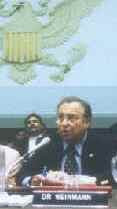
The Daily Journal, San Mateo County, "A Slipper (sic) Slope Indeed," Robert L. Weinmann, MD, 8/13/13

Sacramento Bee, "Expanding role of nurses a recipe for malpractice lawsuits," Robert L. Weinmann, MD, 4/24/13 


Tuesday, August 6, 2013

New Post on Obamacare IPAB (Section 10320, ACA) is in preparation -- we are endeavoring to expose  the latest Congressional dodges none of which are a surprise to political pundits, e.g., congressional subsidies to cover themselves.  Nevertheless, we're still looking into it.  We had intended to cover Bill Clinton's talk on the ACA this September 4th, but we didn't find what he said especially revealing, not up to his own standard. We heard him say the expected about persons not currently covered but didn't notice any emphasis on how the program is expected to tout high-deductible policies or that Middle Income people will watch their rates rise in order to finance the newly covered.  Our background research continues -- don't hesitate to comment directly to our blog if you wish.  -- rlw, editor, www.politicsofhealthcare.com
 
SB 491 (Hernandez) Gets Stopped  in  Assembly Committee on Business Professions and Consumer Protection

A united coalition including the California Medical Association (CMA), the Union of American Physicians and Dentists (Local 206 of the American Federation of State, County, and Municipal Employees, AFL-CIO),  the California Society of Physical Medicine and Surgery (CSPM&R),  the California Neurology Society (CNS), and several others helped to convince the committee that allowing healthcare professionals, no matter how well intentioned, to practice beyond their levels of education and training was unwise and a recipe for disaster. Accordingly,  SB 491 failed today to clear the Assembly Committee on Business Professions and Consumer Protection. The name of the game was consumer protection.

In one of our previous blogs we pointed out that nurses and/or nurse practitioners (NPs), once enfranchised to practice medicine without physician supervision, already well disciplined and organized into a proper union would be well poised to negotiate for equal pay. It was not expected that the newly enfranchised nurses would rush to the hinterlands of California where medical back-up in the form of well trained physicians and surgeons would be lacking or that the nurses would rush to places where resources and money were scarce.

One should not expect the nurses to quit this quest. A new campaign should be expected as soon as the old wounds have healed and their  regenerative powers have been regained.

References and a footnote

"SB 491 (Hernandez) clears committee," www.politicsofhealthcare.com, 5/17/13

"If the work is equal, shouldn't the pay be equal?" www.politicsofhealthcare.com, 4/26/13

"No, no, no on SB 491, 492,  493," www.politicsofhealthcare.com, 4/18/13

Footnote: notice that in this instance an AFL-CIO union was on the same side as the CMA  and other traditional physician organizations -- editor.


Sunday, August 4, 2013

Obamacare, AB 76, SB 71 -- government deception

Governor Brown's veto message for AB 76 is a  sublime essence of deception. Here is the actual  text: "I am returning Assembly Bill 76 without my signature. This bill is unnecessary as I am signing a similar measure, Senate Bill 71. A Constitutional Amendment has also been introduced that will preserve the existing Constitutional and statuatory requirements of the California Public Records Act. -- Sincerely, Edmund G. Brown, Jr.

Readers of this column already know that Brown signed SB 71 while vetoing AB 76. Our readers also know that SB 71 is a mirror image of AB 76. So Brown didn't veto anything. Instead, he has contrived to project an appearance of preserving access to public records with a huge cutback in the only significant benefit injured workers managed to wrangle out of last year's SB 863.

Both bills were run through the legislature at the same time, one in the Assembly, the other, in the Senate. When I spoke to one of the Senators who seemed well disposed to calling the Assembly bill, AB 76, into question no mention was made of the parallel bill on the Senate side, SB 71, lurking around the corner although both bills had the same anti-injured worker provision about return-to-work.

SB 71 pays lip service to the provision in SB 863 that appropriated $120,000,000 per year to pay for a return-to-work program for injured workers. The slap in the face to injured workers is the provision of SB 71 that was also included in AB 76: "the program applies only to injuries that occur on or after January 1, 2013."

When SB 863 was passed this $120,000,000 benefit was applied to all injured workers, not just  injured workers whose injuries occurred on or after January 1, 2013.  It was a key reason why this otherwise hostile bill to injured workers got support from the California Labor Federation which collaborared  with big business (Grimmway Farms) to get it passed. 

Although it is unlikely that this sophisticated a plan was entirely worked out in advance, it has turned out to be stunningly successful for Big Business.

As for Obamacare, we'll next discuss how the Independent Payment Advisory Board (IPAB) will be empowered to work first to limit the franchise to the elderly and then to restrict access to care to all participants while Congress and possibly even IRS fight to remain exempt from its alleged protections.

Monday, July 1, 2013

UNDER COVER OF AB 76, SB 71 GETS SIGNED INTO LAW

SB 71: a stealth move that worked. Governor Brown shrugs off public input ... again!

When AB 76 was hot and heavy, rendering or denying public access to public documents and records,  this column and others exposed the hypocrisy. When I met with one of our State Senators last week, I was advised that the legislature heard the hue and cry and that AB 76 was pulled from the Governor's desk. The expectation was that the bill would return, keeping the language on page 61 that cut benefits from injured workers despite prior legislation awarding them those benefits, but that the language threatening citizens' ability to use the California Public Records Act (CPRA) would be amended out of the bill.

Wrong. Instead, Governor Brown signed SB 71, another "trailer bill,"  which will also allow local governments to restrict access to these records and the information therein. One method will be to let the local agency decide in what format to release electronic data if they release it at all. Local governments will be allowed to deny written requests for public records -- they will not be required to state the reason for denial. Appeals wlll be hard to formulate if no reasons are given for denial.  Transparency in California's open-government law will be sliced and diced.

Has the Governor snubbed the public?

He kept in the language that snubs injured workers and makes SB 863 from last year even more confiscatory than it already is. SB 71 acknowledges that "existing law appropriates $120,000,000 per year" to pay for a return-to-work program but then states "the program applies only to injuries that occur on or after January 1, 2013." One of the few benefits that one could have argued for with reference to last year's SB 863 was that it appropriated $120,000,000 for a return-to-work program. This benefit, presumably, is one reason why Angie Wei, California Federation of Labor, worked so hard to get the bill passed. That benefit has now evaporated for all injuries prior to 1/01/2013.

Did the California Labor Federation,  workers  injured  before 1/01/2013, and all of their supporters get out-maneuvered by Governor Brown? It turns out that AB 76 and SB 71 were mirror bills and that the technical  reason AB 76 got vetoed was because SB 71 was already in the  process of being signed. Either bill was sufficient to take away the benefits from injured workers that had been bestowed on them by SB 863 from 2012. Two weeks later (as of 7/17/13) we  still haven't heard an outcry from the original supporters of SB 863. It does not  appear that this loss of benefits concerns  the labor unions.

Sunday, June 16, 2013

AB 76, a Trailer Bill that Makes a Difference


AB 76 is a 120 page trailer bill that made it through the legislature to the Governor's desk without a public hearing. Trailer bills are expected to be limited to technical changes and are not expected to contain substantive language that should be presented in public hearings.

AB 76 was introduced on January 10, 2013 by the Committee on Budget.  It was amended in the State Senate on June 12, 2013.  In between these dates there were no public hearings.

On page 61 there is mention of "a return-to-work program administered by the director, funded by one hundred twenty million dollars ($120,000,000) ... for the purpose of making supplemental payments  to workers whose permanent disability benefits are disproportionately low in comparison to their earnings loss. Moneys shall remain available for use by the return-to-work program without respect to the fiscal year."

The bill then says "eligibility for payments and the amount of payments shall be determined by regulations adopted by the director  ... subject to review at the trial level of the appeals board  upon the same grounds as prescribed for petitions of reconsideration ... on or after July 1, 2013, all civil penalties collected pursuant to this chapter shall be deposited in the Labor Enforcement and Compliance Fund."

AB 76 deprives  injured workers of benefits if they were injured prior to 2013. The bill states re eligibility that "this section shall apply only to injuries sustained on or after January 1, 2013." 

We are at a loss to explain why language of this importance wasn't deemed worthy of a public hearing. We notice that all of the Democrats voted for the bill while all of the Republicans voted against it.  So the bill passed on partisan or strict party lines -- nothing astonishing about that, is there? What's quizzical in this instance is that organizations representing injured workers did not testify at public committee hearings since there weren't any.  All of the Democrats voted for the bill, all of the Republicans voted against, a traditional and routine party-line vote.   Pundits who find that the language on page 61 is harmful to injured workers should seek comment from organizations that represent injured workers such as the California Labor Federation.  

In the meantime, it can be stated with reasonable political probability that page 61 and the interests of injured workers weren't of top concern  in the consideration of this bill.  Injured workers took back seat to everything else in the other 119 pages.

Monday, June 10, 2013

"Equal Work with Unequal Pay" Revisited


In a recent communique sent privately, I was asked about the meaning of  "equal work with unequal pay" from an earlier blog about pending legislation in California re SB 491, 492, and 493 where nurse practitioners, optometrists, and pharmacists would be equated with physicians. The writer asks "in what sense is the work of a nurse practitioner ever quite the same as the work of a board-certified neurologist?" The writer said "I personally would not be willing to pay a nurse practitioner as much as I would cheerfully pay my neurologist. How about you?"

I agree with the challenger that nurse practitioner education and training is not comparable to the training of a physician, much less  to a physician who  has also done additional specialty training. I agree with the writer.  I would not expect to pay the same for the lesser trained practitioner.

But since that wasn't the point of my editorial I'll take another whack at it. My point is that if SB 491 et al pass in California, the decision as to who gets paid and at what rate will pass into new and untested hands. Unless the nurses' union is asleep at the switch, once SB 491 passes, it can be expected that the nurses' union will lobby to make sure that the newly minted nurse-physicians get paid the same as graduate physicians. The argument will be a legal one, namely, that the legislature, having designated nurses as equivlalent to physicians, is now obligated to see that they get equivalent pay.

In this case I asked my challenger to explain why a certain physicians and surgeons organization wasn't lobbying against SB 491. I was told that the group was "focused on other things." My response is that if the Hernandez series,  SB 491, 492, and 493 get signed into law it won't be long before there are no "other things" on which to focus.

Physicians' groups should oppose SB 491 et al in the interest of making sure that optimal medical care remains the goal, not watered down versions thereof.  So far we know that the California Medical Association, the Union of American Physicians and Dentists, and the California Neurology Society have taken up the campaign and so have many individual physicians.