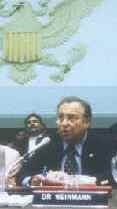
"I will not go back to the days when health insurance companies had unchecked power to cancel your policy, deny your coverage, or charge women differently," was how President Obama summed up the ACA (Obamacare to opponents). It is why many believe the president may feel that the ACA in its present form overshot the mark and is prepared to reform it if the ACA survives the courts. We are particularly interested if Congress is exempting itself, staff, and favored others from coverage by the ACA, supposedly so good that it was made mandatory for the rest of us.
We also remember something else President Obama said in the autumn of 2009: "I will ensure that no government bureaucrat gets between you and the care you need." The trouble is that the IPAB does just that, "gets between you and the care you need." That is reason enough to repeal the IPAB forthwith (or mabe even a tad sooner!).
Stay tuned! We're not finished with this subject.
See also my comments in The Hill Newspaper, Washington, DC, 1/27/2012, http://thehill.com/blogs/healthwatch/politics-elections/206325-obama-largel...
Friday, January 27, 2012


Wednesday, January 25, 2012
WHERE WAS OBAMACARE IN THE PRESIDENT'S STATE OF THE UNION ADDRESS?
OBAMACARE is correctly known as the Affordable Care Act (ACA) or as the Patient Protection and Affordable Care Act, nick-named "Pee-Pahka" after its initials.
Precious little was heard about the ACA in the president's State of the Union speech. Some pundits suspect the president is preparing to slip away quietly from support of the ACA since specific parts of the bill are under bipartisan attack, e.g., Section 10320 which sets up the Independent Payment Advisory Board (the IPAB). The IPAB was originally the IMAB, Independent Medicare Advisory Board, derisively known at the time as Euthanasia for the Elderly. Disguised now as a more equitable board, the IPAB still aims its arrows straight for the hearts of the elderly. In fact, the IPAB would be made up of appointed persons, none elected, and would not have to be comprised of physicians. The IPAB would appoint bean counters, annoint them as health care deciders, and give them the power to undercut the best efforts of caring physicians.
The purpose of the IPAB would be to reduce costs and to decide which procedures in medical care, what facilities, and which equipment used in patient care should be considered medically necessary. There is resistance in Congress since an effort to repeal Section 10320 surfaced long ago, viz., Sen. John Cornyn, R- Texas. The president expects a tough time for re-election. Speculation is that he may not want to drag the ACA, mocked as Obamacare, behind him as he swims for political survival. Neither does he want to abandon it.
Earlier references to the ACA and Sec. 10320 appear in this blog, issues of 4/6/11 (Obamacare revisited), 1/18/11 (Repeal Section 10320), and 11/04/10 (Obamacare needs instant revision).
Saturday, January 14, 2012
WHEN IS A CONCUSSION NOT A CONCUSSION?
We can expect concussions not to be concussions whenever they're called by another name, for instance, elbow or knee injury, or even neck contusion, or, for that matter, head injury without concussion. Because of careless legislative writing, Assemblywoman Hayashi's bill, AB 25, now law, is expected to have consequences unanticipated by legislators. In football, some head injuries occur after a tackle when the player falls backwards, bouncing his head against the turf, but not getting overtly knocked out. The American Academy of Neurology has defined such an injury as one in which the injured party has had his "bell rung." Such an injury may be defined as concussion without loss of consciousness.
Up until 1 January 2012 when Hayashi's legislation became law, decisions could be made on the field, sometimes incorrectly. Now the onus has changed: once a player is removed because of a suspected concussion, legislative counsel's digest of the bill states that "the bill would prohibit the return of the athlete to that activity until he or she is evaluated by, and receives written clearance (italics added) from a licensed health care provider ..." This bill, supported by well meaning but naieve medical organizations, lends itself to being circumvented by players eager to return to the game and by coaches and team managers who want their stars on the field and not on the bench. Waiting for "written clearance" may be felt by some to take too long because players won't be able to get "written clearance" soon enough. Allowing players to return without "written clearance," even when clearly safe to do so, will be a violation of the law subject to criminal penalties.
The law does not specify that neurological specialists must be involved. A designated "licensed health care provider" may ask for clearance by a neurologicacal specialist, but that step isn't mandated in the new law. Eager players and coaches may be tempted to find ways around this legislation. Even so, if a concussion has occurred, the new law as written should be protective of injured players and should work if all games are attended by "a licensed health provider" who has back-up from neurological specialists. But this last step is not mandated in the new law. Furthermore, even if it were, safety in clearing the player to reurn, given current medical and legal standards, might very well require a player to miss a game or two while he or she goes for a brain scan or other neurological testing. We will soon enough find out which schools want to take a chance and return players too soon based on diagnoses other than concussion, for instance, neck contusions for which players can be returned to the field without written authorization. Sooner or later a mistake in judgment will result in violation of the law and criminal prosecution. That's when doctors will think that ordinary civil litigation known as malpractice will be a cakewalk by comparison. If they have followed the law as written, our expectation is that criminal liability should be avoidable but that increased civil litigation is likely.
Push will come to shove when schools and coaches look for ways to avoid pulling athletes out of action because of possible concussion injury because they know once they do they may not be able to get them certified in time for the next game. The spectre of "unanticipated consequences" may open the door to criminal liability.
Monday, January 9, 2012
Sports concussions, brain tumors, and legislation (Assemblymembers Hayashi and Halderman at work)
Assemblywoman Mary Hayashi has disclosed that she has a benign brain tumor that her attorney reportedly said "clouded her judgment," Mintz and Harmon, Bay Area News Group, 1/07/12. The report implies that the benign brain tumor contributed to the lapse that allowed her to walk out of Nieman-Marcus with unpaid merchandise and for which she has been convicted of a misdemeanor. We sadly acknowledge the Assemblywoman's plight and wish her well for the future.
In the meantime we've been asked how her situation compares to the situation endured by Sen. Ted Kennedy whose brain tumor was malignant and caused occasional convulsions. Kennedy's condition was inevitably fatal whereas Hayashi's is benign. The latest word from her attorney is that "it is being treated. It's no longer affecting her concentration or her judgment" (Daily Post, Jan. 7-8, 2012). Unfortunately, this statement implies that Hayashi's judgment was previously impaired during which time she authored two poorly drafted legislative bills that Gov. Brown has since signed into law (see our previous blogs).
Because the legal charge against Hayashi was reduced from a felony to a misdemeanor she will be able to keep her assembly seat and finish her term. She will pay a fine, do three years of probation, and stay at least 50 feet away from the Neiman-Marcus store. Her carelessness in creating legislation is documented well enough to repeat here.
Re AB 25 (Hayashi, re brain concussions):
This bill is now law thanks to Gov. Brown's signature. It means that athletes who sustain apparent concussions on the field must be withdrawn from play and not allowed to return until they're judged able to do so by somebody designated to make such judgments but not necessarily including neurological or neurosurgical specialists. Prior to passage of this law, healthcare professionals were at risk for civil liability better known as malpractice for wrongful decisions resulting in harm to players. Since many doctors undertook this responsibility on a pro bono (unpaid) basis, parents, schools, and teams often cut a little slack in the process. Not so anymore because the issue has now been raised to one of criminal liability. It is no longer just a civil matter to make a mistake. It is now a matter of potential criminal liability. High schools are unlikely to afford putting in place optimal protective measures, e.g., an on-site neurological specialist, ambulances and EMT vehicles discreetly parked near-by, etc.
Hayashi and staff were offered ways to improve the bill without pulling it. These offers went unanswered. The bill was supported by certain medical organizations that meant well, that intended to protect players, but that were short-sighted in their eagerness to have a seat at the legislative table. That seat has now become the hot-seat. Hayashi should offer protective amendments while she still has the chance.
AB 655 (Hayashi, transfer of peer review material): This bill, now signed into law by Gov. Brown, was also well intended; unfortunately, it was written in such a careless manner that it allows false and defamatory materials to be included with whatever peer review documentation is transferred from one hospital to another (this process is how a physician gets practice privileges at additional hospitals).
Hayashi and staff were advised about the defect in the bill and were offered language to abort the careless language in the bill. Hayashi and staff did not offer a reply. Instead, Hayashi belittled the doctors and falsely told the Assembly that there was no opposition to the bill even when there were about 50 protests already on file (none were from fellow legislators).
Linda Halderman, MD, Assemblywoman, told the Assembly that she'd received a record number of inquiries on this bill. Hayashi told the Assembly that there was no opposition. Halderman then stated that she would support the bill. We believe that Halderman should have known better, indeed, that she did know better and gave Hayashi support in a legislative charade where Halderman pretended to ask a question and then dove head first into the Hayashi camp. The shameful show got video-recorded and is still available through the Assembly itself. We can now watch for Halderman's rise in insider legislative circles (Hayashi's chair and future are in doubt even though she can finish her term). All the same, there is still time for Hayashi to seek corrective amendments to her bills. The question is whether or not she wants to do so.
In the meantime, doctors are now at risk of criminal culpability for errors in judgment and should fully understand the consequences of participating in sports activities that are associated with concussions (such as but not limited to football, hockey, soccer, boxing).
Tuesday, December 6, 2011
SHOPLIFTING (alleged) and LAWMAKING (also alleged): how careless legislation becomes law
Mary Hayashi's current conflict with the law is based on her having reportedly been nabbed in the act of shoplifting. Her defense so far is that she inadvertently stepped outside the store with a shopping bag loaded with expensive clothing and that she did so because she'd been distracted by cell phone calls. Sounds careless, doesn't it? But not necessarily done with criminal intent. How does this personal behavior jive with her professional conduct as a legislator?
Remember that during the debate re peer review over AB 655 Hayashi repeatedly stated that there was no opposition. It turns out that this statement is false. The California Society of Industrial Medicine and Surgery sent an advisory letter about defects in the bill while the Alliance for Patient Safety openly opposed the bill. Hayashi had plenty of time to correct the deficiencies in the bill, namely, that as written the legislation allows false and defamatory allegations against good doctors to be transferred from one hospital to another. Hayashi ignored advice to clean up this language. Instead, she belittled doctors who filed protests. Prestigious doctors such as R.V. Rao, MD, Chief of Surgery, the subject of a previous blog of ours, did their level best to advise Hayashi about her folly.
The California Medical Association wanted the bill as is -- in due course investigation will tell us why since the fact is that the chief beneficiaries of the bill are the clients of the California Hospital Association. Hayashi could have written a better bill, at least, some of us think she could have done so. On the other hand, if she's as casual and distracted about bill writing as she claims she is about shopping, maybe not.
Let's look at AB 25, another Hayashi bill signed into law, also well intentioned and also flawed. This bill, signed into law by Gov. Brown who also signed AB 655 into law, takes effect on January 1st, 2012. It will require school districts with extracurricular sports activities "to immediately remove ... an athlete who is suspected of sustaining a concussion or head injury ... the bill would prohibit the return of the athlete to that activity until he or she is evaluated by, and receives written clearance from, a licensed health care provider, as specified."
"As specified" as what? Is neurological or neurosurgical attention required? Will any ol' "licensed health care provider" qualify for the job? The bill doesn't "specify" that physicians must make these decisions. Prior to passage of this bill, physicians who volunteered for this function put their practices on the line even though they may've worked on a pro bono basis. They risked being named in civil liability suits, e.g., malpractice accusations. Now they're also eligible for criminal accusations. One would have expected the California Neurology Society to seek malpractice waivers for physicians who accept these assignments on a pro bono basis and at the least to have tried to exempt them from criminal responsibility.
As devotees of the Conrad Murray show know, malpractice and criminal liability are separate and distinct. In the Murray trial, the judge stated that the trial was not about malpractice. It was about criminal activity. So it is now with AB 25 for concussions and head injuries sustained by high school athletes. Healthcare providers who accept these assignments may now risk double jeopardy: civil litigation for malpractice and criminal litigation thanks to Hayashi's other folly.
As to Hayashi herself, we're saddened and sorry but not surprised. Anybody who strolls out of a store with a coupla' grand of clothing in a shopping bag doesn't surprise us when she's equally careless with legislation.
Saturday, October 29, 2011
AB 655 (Hayashi's Hypocrisy) : The Sequel
LAWMAKER MARY HAYASHI CHARGED WITH SHOPLIFTING is the title of an article posted on SF GATE from the San Francisco Chronicle, 10/29/2011.
SHOPLIFTING POLITICIANS is the title of the post on JUDICIAL COUNCIL WATCHER.
Here's the facts as they've been reported so far: Hayashi was shopping at Neiman Marcus and left the store with items priced at $2,450. She checked out at the register without paying for these items, got stopped by security, was taken to the Tenderloin Police Station, and was booked on one count of felony theft. She is eligible for three years in prison if convicted although as a new arrival to the felony theft scene a full three-year sentence is not expected. Her mouthpiece said she was "distraught" at the misunderstanding whereby she inadvertently by-passed the cash register and walked out of the store with the goods.
We are willing to post this story as reported but we'll wait for her defense and court judgement before drawing final conclusions. In the meantime, we'll explain why we've learned not to trust her anyway.
During the hearings on AB 655 she repeatedly told everyone and anyone who would listen that there was no opposition to the bill even though by this time it was known that there were dozens of private objections to the bill that had been sent not only to her office but also to the relevant legislative committees. All were ignored by Hayashi and her staff. Instead of thoughtful reply, we were told there was "no opposition." Technically, there's some truth to this assertion because there were no negative votes in the legislature. So it was not a complete lie that there was no opposition. There was, however, enough disception to dishonor her office and to sully the reputation of another assemblyperson who contributed to the deception in a sham speech and charade on the Assembly floor (which we have on video for appropriate release, like at election time).
It's not as though this instance were the first and only example of sub-standard conduct reported to have been committed by Hayashi. Two years ago it was reported that she used $202,212 from her own campaign money to assist her attorney spouse to win election to the Alameda county bench.
But there's plenty of soiled linen to pass around. Here's the latest from our reporter in Anaheim where the California Medical Association met last week. Jim Hinsdale, MD, out-going president of the CMA, proudly told the CMA attendees that AB 655 was one of CMA's more important legislative successes this year (CMA was actually the sponsor of this bill). Jodi Hicks, now in charge of lobbying for the CMA, dismissed assertions that the bill allows sham peer review.
The legislation was reportedly intended to enable transfer of peer review information about doctors among hospitals in order to prevent doctors who were shown to be incompetent from moving from hospital to hospital without full disclosure.
The legislation as written, unfortunately, enables hospital administrations to transfer material that is false and defamatory even if it is known that the information is false and defamatory. It enables and protects false witness. In essence it allows the equivalent of peer review blackmail.
When strenuous efforts were made in good faith to amend the bill resistance came from the CMA CEO, Dustin Corcoran, who spoke with the undersigned and allowed a snippet of amended language, just not enough to allow expungement of false and defamatory language. Some believe that the real force behind the bill was the California Hospital Association and that the basic ideology is to enable control of doctors by hospital administrations and foundations.
R.V. Rao, MD, Chief of Surgery at his hospital, says that "it is time to file ethics charges against this legislator to the California legislative assembly for blatantly misleading the California legislative assembly." We think that's a good idea.
The next step is for hospital committees that do peer review and credentials to meet and confer and decide what they need to do before the first lawsuits are filed in which the individual doctors serving on these committees are sued for defamation. The law may protect peer review and lawful conduct. It does not protect illegal activity.
The hornets are beginning to swarm. Committees at two hospitals known to this writer have already held meetings in which the topic was how to protect themselves as committee members from the consequences of this incompetent legislation.
Wednesday, October 12, 2011
ACCOLADES FOR AB 536 (MA)
In the tradition of never give up, never give up, Assemblywoman Fiona Ma has won a battle that began years ago when she sponsored legislation to have wrongful information expunged from doctors' records. Governor Jerry Brown signed AB 536, sponsored by the Union of American Physicians and Dentists (UAPD), into law. This bill accomplishes part of Ma's original objective in that it will require the Medical Board of California to remove an expunged misdemeanor conviction from a doctor's record on the medical board's website within 90 days of notification of the expungement order. Our accolades go to Fiona Ma as author of the bill, to the UAPD for sponsoring it, and to Gov. Brown for signing it into law.
Subscribe to:
Posts (Atom)

 Posts