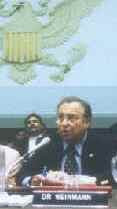
Senate Bill 923 (De Leon) is supposed to assist injured workers by increasing access to care. More likely, if it gets signed into law, it'll protect them out of much of the care they currently get.
As if Utilization Review by doctors without licensure in California weren't bad enough, we now have another opportunity to stick it to injured workers by making them subject to the Medicare RBRVS fee schedule. This schedule was tried in Hawaii and in Texas. Both states lost the participation of so many specialists that both states had to increase the conversion factor to keep their specialists in the system. With this dismal record well known in healthcare circles, it remains a wonder that the good Senator De Leon wants to try it out again with injured workers in California as the latest guinea pigs.
The current method of reimbursement to physicians who treat injured workers in California follows the Office Medical Fee Schedule (OMFS) which currently pays doctors some of the lowest reimbursement rates in the USA. If that's so, then how could the RBRVS be worse? The answer is that the Medicare RBRVS is geared to the elderly and provides largely geriatric care whereas the OMFS is geared to injured workers so they can return to work. The RBRVS is supposed to provide care although at the present time even that is in danger because of Section 10320 of the Affordable Care Act and the directive to establish an unelected Independent Payment Advisory Board (IPAB) whose primary purpose is to cut costs to Medicare. Installing the Medicare RBRVS system into workers comp and replacing the OMFS with it only shows that the researchers for SB 923 didn't do enough homework.
If the RBRVS is inserted into the system, we can count on many specialists including surgeons to withdraw from workers comp and industrial medicine. When the injured workers discover as a community that they've been shortchanged -- such discoveries take a few years -- the politicians who put the screws to them will have left office and gone to greener pastures, e.g., some will be working for insurance companies. The legacy they leave if SB 923 gets signed into law will be one of deprivation and denial of care.
Our advice: since SB 923 is expected to be heard in the Assembly Insurance Committee on June 23rd, there's still time to tell 'em what you think by faxing the committee at 916-319-2086 and its Chair, Assemblyman Jose Solorio, 916-319-2169.
Aside from Texas and Hawaii, the RBRVS has been tried in other states, e.g., Florida, Massachusetts, and Maryland, all without success. In this report we've named five states in which the RBRVS failed. The RBRVS should not be foisted upon our injured workers in California. SB 923 (De Leon) desrves to be soundly defeated, badly enough so that it won't come back for a long time.
Tuesday, June 21, 2011


Wednesday, June 1, 2011
Assembly Bill 584 (Fong): stops the unlicensed practice of medicine
AB 584 (Fong) is an important step in the right direction and should be supported by physicians and by all of their organizations.
As matters stand now, injured workers may legally be denied access to diagnostic tests and treatment needed to diagnose and treat their injuries even when properly prescribed by duly licensed California doctors.
The legal maneuver used to deprive injured workers of indicated and necessary treatment is based on the Schwarzenegger adaptation of utilization review. Utilization review is required by California law -- it's supposed to be a way to supervise treating doctors and prevent overutilization of services. It is primarily a cost control measure.
In 2005 the Schwarzenegger administration persuaded the Office of Administrative Law to agree that utlization review wasn't medical practice and, therefore, did not require California state licensure. Never mind that the Medical Board of California stated that utilization review was certainly an aspect of medical practice. Once the leash was relaxed on the insurance companies, several insurance groups and their management cohorts hired doctors for utilization review who were not licensed in California and who would not, therefore, be required to take the special 12-hour course in pain management that is required of California licensed doctors.
The upshot is that under current law utilization review doctors who are not licensed in California are allowed to overrule California doctors who are licensed in California.
These non-California licensed doctors are not responsible for their mistakes before the Medical Board of California because they're not licensed in California. They're also not responsible to the medical boards of the states in which they are licensed because those states don't have jurisdiction in California.
The non-California licensed doctors are also not obliged to pay licensure fees to the Medical Board -- they get a free ride while their licensed colleagues are obliged not only to pay for licensure but also for a mandatory pain management course.
Injured workers in California are subjected to delays and denials of treatment by doctors who should not have been allowed to practice in California in the first place.
The Schwarzenegger workers comp policy has caused innumerable delays and denials of treatment and has caused countless workers to lose out on the treatment that could have returned them to work.
Physicians in California should reach out in support of AB 584 (Fong). The bill has already passed the Assembly. It should clear the Senate. Then Gov. Brown should sign it into law.
As matters stand now, injured workers may legally be denied access to diagnostic tests and treatment needed to diagnose and treat their injuries even when properly prescribed by duly licensed California doctors.
The legal maneuver used to deprive injured workers of indicated and necessary treatment is based on the Schwarzenegger adaptation of utilization review. Utilization review is required by California law -- it's supposed to be a way to supervise treating doctors and prevent overutilization of services. It is primarily a cost control measure.
In 2005 the Schwarzenegger administration persuaded the Office of Administrative Law to agree that utlization review wasn't medical practice and, therefore, did not require California state licensure. Never mind that the Medical Board of California stated that utilization review was certainly an aspect of medical practice. Once the leash was relaxed on the insurance companies, several insurance groups and their management cohorts hired doctors for utilization review who were not licensed in California and who would not, therefore, be required to take the special 12-hour course in pain management that is required of California licensed doctors.
The upshot is that under current law utilization review doctors who are not licensed in California are allowed to overrule California doctors who are licensed in California.
These non-California licensed doctors are not responsible for their mistakes before the Medical Board of California because they're not licensed in California. They're also not responsible to the medical boards of the states in which they are licensed because those states don't have jurisdiction in California.
The non-California licensed doctors are also not obliged to pay licensure fees to the Medical Board -- they get a free ride while their licensed colleagues are obliged not only to pay for licensure but also for a mandatory pain management course.
Injured workers in California are subjected to delays and denials of treatment by doctors who should not have been allowed to practice in California in the first place.
The Schwarzenegger workers comp policy has caused innumerable delays and denials of treatment and has caused countless workers to lose out on the treatment that could have returned them to work.
Physicians in California should reach out in support of AB 584 (Fong). The bill has already passed the Assembly. It should clear the Senate. Then Gov. Brown should sign it into law.
Senate Bill 866 (Hernandez) re prescription drug benefits
SB 866 (Hernandez) will facilitate the efforts of physicians to care for patients. It will ease the burden of prior authorization and utilization review. It will cut down on wrongful delays and denials of treatment.
This bill is analogous to AB 584 (Fong) in that it reduces how utilization review obstructs the practice of medicine. Here are the essential points: only one universal form will be required for prior authorization. The form is supposed to be limited to two pages; however, there's nothing in the bill that specifies font size (rumors that the insurance companies are shopping for microscopic print fonts are probably exaggerated). The information is then supposed to be electronically available and transmissible. Most important, the company has 48 hours to reply. After that, in the absence of a reply, automatic approval of the physician's prescription ensues (even though I can think of a way around that). All the same, the bill is unequivocal in its support of patients and their doctors.
Support can be expected from the pharmaceutical industry which stands to benefit from reduced prior authorization. Opposition can be expected from the insurance industry which benefits from as much utilization review and prior authorization as it can foist on the public and the healthcare profession generally. Practicing physicians should support SB 866.
This bill is analogous to AB 584 (Fong) in that it reduces how utilization review obstructs the practice of medicine. Here are the essential points: only one universal form will be required for prior authorization. The form is supposed to be limited to two pages; however, there's nothing in the bill that specifies font size (rumors that the insurance companies are shopping for microscopic print fonts are probably exaggerated). The information is then supposed to be electronically available and transmissible. Most important, the company has 48 hours to reply. After that, in the absence of a reply, automatic approval of the physician's prescription ensues (even though I can think of a way around that). All the same, the bill is unequivocal in its support of patients and their doctors.
Support can be expected from the pharmaceutical industry which stands to benefit from reduced prior authorization. Opposition can be expected from the insurance industry which benefits from as much utilization review and prior authorization as it can foist on the public and the healthcare profession generally. Practicing physicians should support SB 866.
Assembly Bill 369 (Huffman) re "stepwise" prescriptions
AB 369 (Huffman) will put the brakes on a favored method insurance companies use to control prescriptive medication. The method is "stepwise" prescribing and works like this: doctor Kindguy wants to prescribe the medication he believes will most likely relieve his patient's pain but finds that he is obstructed in so doing by the patient's insurance company which requires the doctor to try at least two lesser level, that is, cheaper medications, first. Doctors will be obliged to follow this pathway even against their own medical judgment and will retain medical liability while the lesser level medications are foisted upon hapless patients.
Huffman's bill will authorize physicians to decide how long a lesser level drug should be used and would restrict the insurance company from requiring patients to try more than two such medications. Insurance companies want to increase profits without increasing premium costs. This way allows them to shift the cost burden to medications. Pharmaceutical companies object because it makes their best, and sometimes their most expensive, medications less accessible. Physicians should be supportive of the legislation because it'll dispense with still another layer of utilization control.
This writer call the office of Speaker Perez and asked that AB 369 be sent to the floor for a vote.
Huffman's bill will authorize physicians to decide how long a lesser level drug should be used and would restrict the insurance company from requiring patients to try more than two such medications. Insurance companies want to increase profits without increasing premium costs. This way allows them to shift the cost burden to medications. Pharmaceutical companies object because it makes their best, and sometimes their most expensive, medications less accessible. Physicians should be supportive of the legislation because it'll dispense with still another layer of utilization control.
This writer call the office of Speaker Perez and asked that AB 369 be sent to the floor for a vote.
Assembly Bill 310 (Ma) re "tiered pricing" of medications
Assembly Bill 310 (Ma) would put a stop to so-called "tiered pricing" of medications. Currently, an insured person may be required to make co-payment for prescribed medication. Usually the payment will be a fixed amount, that is, a fixed-dollar amount. Insurance companies want patients to pay more for some medicines than others, that is, not a fixed-dollar ammount, but a percentage of the cost. That means patients will pay more for certain medications than for others despite being insured. The percentage may rise or fall at the pleasure of the insurance company which may use this method to delay or defray outright raises in insurance premiums. AB 310 will limit the amount of co-payment that the insurance company can force subscribers to pay. At the time of this writing this legislation would target medications costing more than $150 per month.
Pharmaceutical companies favor the bill because it'll make their medications, especially the expensive ones, more accessible. Physicians should favor the bill because it'll remove one more layer of bureaucratic utilization control. Currently, physicians may prescribe the best medication for their patients only to find out that the insurance company for the patient has put the medication out of reach. Meanwhile, the physician retains medical liability.
Assemblywoman Fiona Ma previously carried AB 245 which would have required government agencies including the medical board to expunge unproved allegations against accused physicians from government websites. That bill did not pass. This one should.
This writer called Speaker Perez's office to request that AB 310 come to the floor for a vote.
Pharmaceutical companies favor the bill because it'll make their medications, especially the expensive ones, more accessible. Physicians should favor the bill because it'll remove one more layer of bureaucratic utilization control. Currently, physicians may prescribe the best medication for their patients only to find out that the insurance company for the patient has put the medication out of reach. Meanwhile, the physician retains medical liability.
Assemblywoman Fiona Ma previously carried AB 245 which would have required government agencies including the medical board to expunge unproved allegations against accused physicians from government websites. That bill did not pass. This one should.
This writer called Speaker Perez's office to request that AB 310 come to the floor for a vote.
Wednesday, April 6, 2011
OBAMACARE REVISITED
OBAMACARE, technically, the Affordable Care Act or ACA, is due for a revision, something we were originally told couldn't be done. In our previous piece on this subject, we pointed out flaws in Section 10320, the part of the ACA that creates an IPAB or Independent Payment Advisory Board. This part of Obamacare establishes the authority for an unelected group of bureaucrats, appointed by politicians, to have authority over what is payable and what isn't, including Medicare. Section 10320 poses danger to hospitals, their patients, and their doctors. It is a plain and simple alternative to classical rationing. It's the Obamacare answer to the Palin-protagonists whose fear of rationing began a hubbub that won't end. Senator John Cornym introduced legislation to repeal Section 10320. He has been joined by Congressional Representative Phil Roe. Sponsors and supporters include the American Hospital Association, the American Academy of Orthopedic Surgeons, and the American Osteopathic Association. The general objection is that Section 10320 sets up an unelected IPAB whose members will be responsible to their own patrons, the politicians who appointed them, and that the first casualty will be quality of care.
The rub is that there is a cadre of political activists who, while opposing Section 10320, don't necessarily want to repeal only that section if it means that the rest of the bill would survive. For this cadre it's an all-or-nothing game. Improving the bill is for this group a kiss of near-death since so doing might lessen the drive for total repeal.
The drive for repeal of the 1099 section, however, which would also improve the bill, appears headed for success. The ACA would require all business entities to file 1099 tax forms whenever they buy $600 or more of either goods or services. In the past 1099s were required for purchase of services, e.g., from sole proprietors. This provision applied to services only -- its expansion to goods, e.g., a laptop, was expected to bring in about $20 billion to government. The objections of local doctors' offices, their associations and unions, was joined into heartily by business interests of all kinds. So it looks like Congress agrees and anticipates the signature of President Obama on a repeal bill. Hence, we have a definite crack in the ice. A part of the ACA can be repealed or changed after all. Section 10320 should be next.
Disappointingly, it appears that Budget Chair Paul Ryan has been caught in a statement that would deceive the American voter about Medicare. Ryan announced in the WSJ a plan to provide what he sneakily called "premium support" for Medicare. The idea of "premium support" is to award Medicare recipients a pre-decided amount of money and then let the recipients find and purchase their own health care on the private market. The fiscal motivation is to reduce Medicare inflation. So far, so good. But Ryan couldn't resist saying that "Medicare beneficiaries will be enrolled in the same kind (bold added) of health care program that members of Congress enjoy." False, false, false! The program Members of Congress get pays them a fixed percentage of costs, hence, the amount rises if the costs rise. By contrast, the program for Medicare recipients would award only fixed costs that would not automatically go up if Medicare costs were to rise. The expectation is that Medicare costs would go up and leave the fixed costs mired in the dirt.
Ryan's explanation was either a big mistake or an attempt at deception. In any case, his explanation is wrong and will deservedly cost him credibility.
The rub is that there is a cadre of political activists who, while opposing Section 10320, don't necessarily want to repeal only that section if it means that the rest of the bill would survive. For this cadre it's an all-or-nothing game. Improving the bill is for this group a kiss of near-death since so doing might lessen the drive for total repeal.
The drive for repeal of the 1099 section, however, which would also improve the bill, appears headed for success. The ACA would require all business entities to file 1099 tax forms whenever they buy $600 or more of either goods or services. In the past 1099s were required for purchase of services, e.g., from sole proprietors. This provision applied to services only -- its expansion to goods, e.g., a laptop, was expected to bring in about $20 billion to government. The objections of local doctors' offices, their associations and unions, was joined into heartily by business interests of all kinds. So it looks like Congress agrees and anticipates the signature of President Obama on a repeal bill. Hence, we have a definite crack in the ice. A part of the ACA can be repealed or changed after all. Section 10320 should be next.
Disappointingly, it appears that Budget Chair Paul Ryan has been caught in a statement that would deceive the American voter about Medicare. Ryan announced in the WSJ a plan to provide what he sneakily called "premium support" for Medicare. The idea of "premium support" is to award Medicare recipients a pre-decided amount of money and then let the recipients find and purchase their own health care on the private market. The fiscal motivation is to reduce Medicare inflation. So far, so good. But Ryan couldn't resist saying that "Medicare beneficiaries will be enrolled in the same kind (bold added) of health care program that members of Congress enjoy." False, false, false! The program Members of Congress get pays them a fixed percentage of costs, hence, the amount rises if the costs rise. By contrast, the program for Medicare recipients would award only fixed costs that would not automatically go up if Medicare costs were to rise. The expectation is that Medicare costs would go up and leave the fixed costs mired in the dirt.
Ryan's explanation was either a big mistake or an attempt at deception. In any case, his explanation is wrong and will deservedly cost him credibility.
Tuesday, March 8, 2011
GETTING AROUND THE CORPORATE PRACTICE ACT
Hospitals may hire physicians to manage specialized departments. These physicians aren't hired to practice medicine since in California so doing violates the state's prohibition against the corporate practice of medicine. The purpose of this prohibition is to prevent hospitals from controlling doctors and to prevent doctors from being under the thumb of corporate hospital interests. An example would be hospitals that push doctors to discharge patients too soon to increase utilization and enhance the bottom line. Such complaints are taken seriously and may lead to investigation. Some hospitals have come under the gun for allowing unindicated and unnecessary surgeries to be done.
On the other hand, it is not a violation of the corporate practice act to hire a doctor to manage a group of specialists. The stated purpose is to make sure that staffing is covered around the clock, to make sure that the most highly qualified doctors are hired, and to optimize patient care by retaining professional management. That's the theory.
Here's what we've heard as a variation on the theme.
Hospital X hires a physician manager. His job is to hire as many specialists as he judges necessary to cover the hospital's promise of service to the community. His allocation or budget for this administrative job is, let's say, $100,000 per month or a total of $1,200,000 per year. This amount is not his take-home pay. He in turn is supposed to form a specialty group and hire the doctors who'll actually provide service. Let's say the administrator hires a group of doctors whose combined pay is $50,000 per month or $600,000 per year. The administrator is then entitled to the other $600,000 for himself.
Let's say the administrator-doctor judges that he'll need 6 doctors. He knows that he's allotting a total of $600,000 to pay for their services -- so that's $100,000 for each of the hired doctors. Now the trick is to hire them at less than the allotted $600,000. If the administrtor-doctor can hire them at $75,000 each, saving $25,000 from each one of them, he can pay himself $150,000 more than the $600,000 originally envisioned. He now gets $750,000. The actual treating doctors get $450,000. They are not hospital employees. They are employees of the owner or founder of the group. There is no violation of the corporate practice act.
There's nothing illegal in this arrangement. Since the hired doctors are unlikely to be skilled in collective or even solo bargaining through unions, they're easy prey. When they find out that they can unionize, they'll be afraid to make the move. Fear is key. Some doctors retained for this administrative role understand better than others how to hire doctors who'll be less likely to complain about hours, working conditions, or pay -- the tricks of the trade include understanding ethnic, gender, and family differences. In some cases the key to getting hired may be how little one will accept in payment or how much overtime one may be willing to contribute. Credentialing becomes secondary.
"Medical Red-lining, Economic Credentials for Physicians," is the title of my op-ed from the San Francisco Examiner, 12 January 1995. It tells one way that corporate entities select doctors -- by determining which ones spend the least on diagnostic testing and therapeutic options for their HMO patients. This piece was reprinted in The Congressional Record, Vol. 144, # 118, 9/9/98. The trouble is that hospitals have learned how to act like HMOs.
The Los Angeles Times in its edition of 5 March 2011 published this story by Sam Allen: "State controller finds more big public employee salaries, including $875,000 for hospital chief." Nancy Farber, CEO of the Washington Township Healthcare District with its major hospital in Fremont, is reported to have been paid total wages in 2009 of $873,598.
The next step should be to review departmental expenses to learn how each department's budget was distributed. This effort would require prying into what some recipients might consider private business. It could be discomforting. It should be done.
"As They Consolidate, Hospitals Get Pricier," by Julie Appleby, produced by Kaiser Health News in collaboration with The Washington Post, 9/26/10, tells us in the title what we need to know. Are some administrations paying out so much to executives that there's not enough left for actual medical and surgical care? On the other hand, if "pricier" is connected to "better," there would be less room for complaint.
"State Report: Even fewer bypass surgery deaths," by Tom Abate, San Francisco Chronicle, 4/08/09, points out that the average mortality rate for this surgery in California was 2.65 percent but that Washington Hospital in Fremont reported a mortality rate of 5.83 percent for one of its surgeons. The trouble is that statistics don't take into account individual variation on a case-by-case basis. The rub comes when one asks the inevitable question, namely, was quality of care sacrificed on a monetary altar of greed so that executive compensation could be raised?
San Francisco Chronicle, 3/09/11, states that one of the "biggest winners" in health care, "No. 1 on the list is Nancy Farber, the CEO if Washington Township Health Care District in Fremont, who took home $873,598 last year." Washingon Hospital has 339 beds. This piece then states that "by comparison, Mark Laret, who heads UCSF's 690-bed hospital system, was paid $748,616."
People need to know how the health care dollar is distributed. Are hospital CEOs more valuable to hospitals than their physicians, surgeons, and nurses? One may reasonably ask if there's any relationship of administrative compensation to contracted out services that skedaddle around the corporate practice act.
On the other hand, it is not a violation of the corporate practice act to hire a doctor to manage a group of specialists. The stated purpose is to make sure that staffing is covered around the clock, to make sure that the most highly qualified doctors are hired, and to optimize patient care by retaining professional management. That's the theory.
Here's what we've heard as a variation on the theme.
Hospital X hires a physician manager. His job is to hire as many specialists as he judges necessary to cover the hospital's promise of service to the community. His allocation or budget for this administrative job is, let's say, $100,000 per month or a total of $1,200,000 per year. This amount is not his take-home pay. He in turn is supposed to form a specialty group and hire the doctors who'll actually provide service. Let's say the administrator hires a group of doctors whose combined pay is $50,000 per month or $600,000 per year. The administrator is then entitled to the other $600,000 for himself.
Let's say the administrator-doctor judges that he'll need 6 doctors. He knows that he's allotting a total of $600,000 to pay for their services -- so that's $100,000 for each of the hired doctors. Now the trick is to hire them at less than the allotted $600,000. If the administrtor-doctor can hire them at $75,000 each, saving $25,000 from each one of them, he can pay himself $150,000 more than the $600,000 originally envisioned. He now gets $750,000. The actual treating doctors get $450,000. They are not hospital employees. They are employees of the owner or founder of the group. There is no violation of the corporate practice act.
There's nothing illegal in this arrangement. Since the hired doctors are unlikely to be skilled in collective or even solo bargaining through unions, they're easy prey. When they find out that they can unionize, they'll be afraid to make the move. Fear is key. Some doctors retained for this administrative role understand better than others how to hire doctors who'll be less likely to complain about hours, working conditions, or pay -- the tricks of the trade include understanding ethnic, gender, and family differences. In some cases the key to getting hired may be how little one will accept in payment or how much overtime one may be willing to contribute. Credentialing becomes secondary.
"Medical Red-lining, Economic Credentials for Physicians," is the title of my op-ed from the San Francisco Examiner, 12 January 1995. It tells one way that corporate entities select doctors -- by determining which ones spend the least on diagnostic testing and therapeutic options for their HMO patients. This piece was reprinted in The Congressional Record, Vol. 144, # 118, 9/9/98. The trouble is that hospitals have learned how to act like HMOs.
The Los Angeles Times in its edition of 5 March 2011 published this story by Sam Allen: "State controller finds more big public employee salaries, including $875,000 for hospital chief." Nancy Farber, CEO of the Washington Township Healthcare District with its major hospital in Fremont, is reported to have been paid total wages in 2009 of $873,598.
The next step should be to review departmental expenses to learn how each department's budget was distributed. This effort would require prying into what some recipients might consider private business. It could be discomforting. It should be done.
"As They Consolidate, Hospitals Get Pricier," by Julie Appleby, produced by Kaiser Health News in collaboration with The Washington Post, 9/26/10, tells us in the title what we need to know. Are some administrations paying out so much to executives that there's not enough left for actual medical and surgical care? On the other hand, if "pricier" is connected to "better," there would be less room for complaint.
"State Report: Even fewer bypass surgery deaths," by Tom Abate, San Francisco Chronicle, 4/08/09, points out that the average mortality rate for this surgery in California was 2.65 percent but that Washington Hospital in Fremont reported a mortality rate of 5.83 percent for one of its surgeons. The trouble is that statistics don't take into account individual variation on a case-by-case basis. The rub comes when one asks the inevitable question, namely, was quality of care sacrificed on a monetary altar of greed so that executive compensation could be raised?
San Francisco Chronicle, 3/09/11, states that one of the "biggest winners" in health care, "No. 1 on the list is Nancy Farber, the CEO if Washington Township Health Care District in Fremont, who took home $873,598 last year." Washingon Hospital has 339 beds. This piece then states that "by comparison, Mark Laret, who heads UCSF's 690-bed hospital system, was paid $748,616."
People need to know how the health care dollar is distributed. Are hospital CEOs more valuable to hospitals than their physicians, surgeons, and nurses? One may reasonably ask if there's any relationship of administrative compensation to contracted out services that skedaddle around the corporate practice act.
Subscribe to:
Posts (Atom)

 Posts
Posts